No power.. Ammeter questions.

-

Ibach73dart

Well-Known Member
Joined
Feb 14, 2011
Messages
83
Reaction score
0
Location
NorCal
To make long story short, i had no power to the whole car, bought new battery and still no power and car won’t start. Read couple of treads about same situations and when I remove the cluster and connected the red ammeter wire to the black ammeter post and I have dome light and car started up!

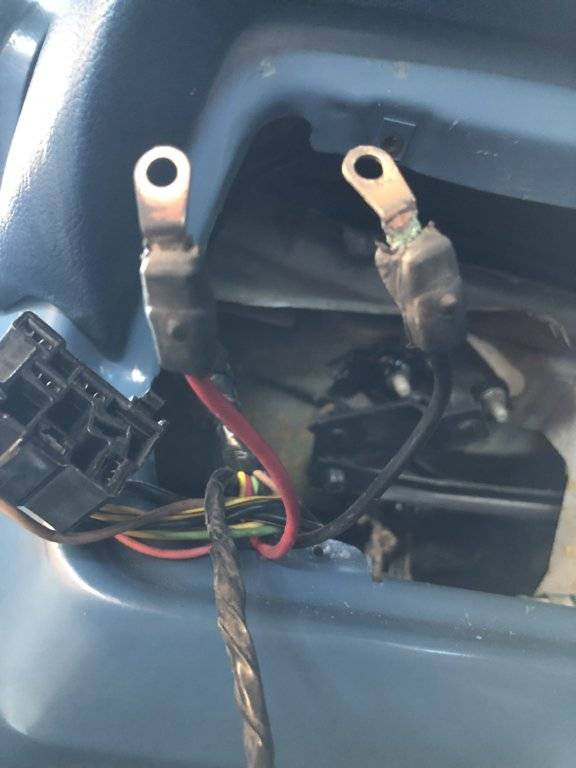
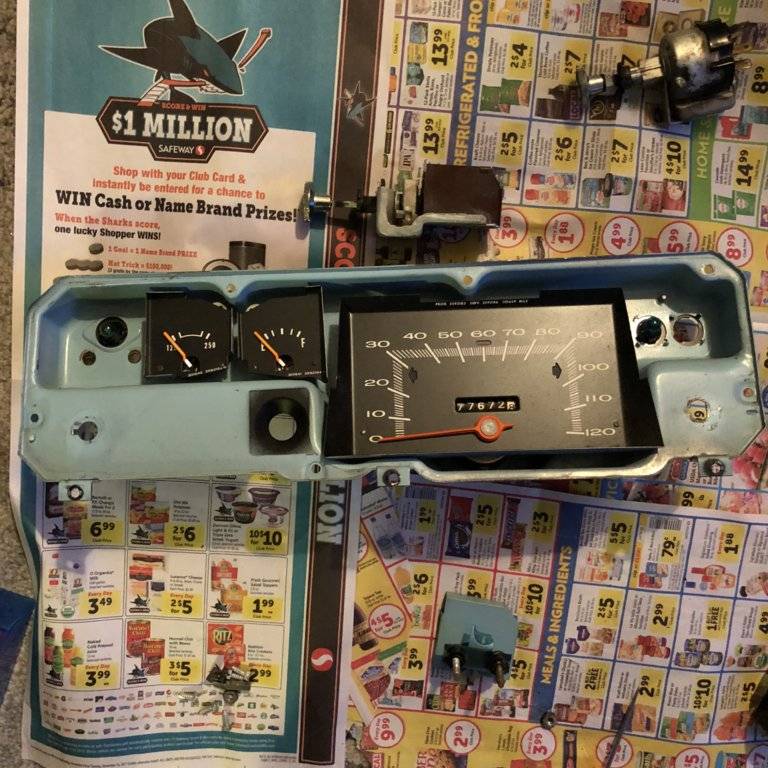
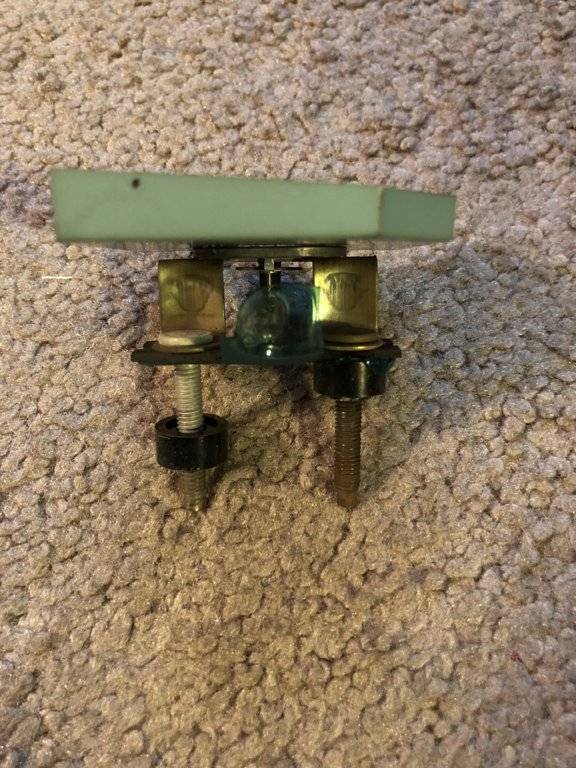
While driving I realized I have no radio, turn signals and wipers doesn’t work. Could this be because of the bypass?? Below are pictures of my ammeter. Where can I get one for a good price lol. Or is there a way I can fix it?

Thank you
10F1AD46-2FDE-4F76-BFFB-C9719F5C8D78.jpeg


80C37ACD-833F-4694-8336-8992086BFFDE.jpeg


CABC6ABD-49F2-4E95-B937-A8D64E74DF06.jpeg


15F2B5D0-1869-47B9-B263-886E16AE8F3F.jpeg


FECDEF4B-C21A-4BAE-A4F6-EC3CBAF6B7F7.jpeg


58A6D234-B15C-4971-9410-DA59E2A717B5.jpeg
 
Do you have a an ohm meter or multi-meter with resistance measurement?
If so, with power disconnected. Test for continuity through the ammeter. That is, one probe on each post. This will verify that the ammeter shunt is damaged - which seems to be the situation. But, if not, then its likely there is a loose or damaged connection - and when you bypassed the ammeter it was the moving of the wires that made the connection.
The black ring terminal is the only thing that I see that shows damage in the photos. I'm talking about the copper corrossion and damaged insulation.

no radio, turn signals and wipers doesn’t work.

All of these require the switch to be in Run or Accessory. Additionally they all are fused.
Check the fuses and if they are good use the meter to check for power to the fuse box.

Take a look at the basic circuit layout here, and see if that will help you diagnose the situation.
Understanding Charging Systems with Ammeter
 
View attachment 1715108848 Is this burnt and would I need to replace the whole panel?
Ah ha. The board shows it excessive heating. I hesitate to call it 'burnt' as its not a circuit. For the ammeter, the board itself is only a support. If the material is solid, you probably can use it as is. If so, maybe add a fiber washer to add a little more insulation. If the material is really burnt so its crumbling and has no strength, might be able to reinforce it.

Definately excessive heat at the ring connection. Since its only one side - something related to that ring terminal had high resistance. Nut was loose, or the crimp is poor, or wires corroded. The other end of that wire goes into the welded main splice. I'd also check that for signs of heating on that end.
 
You would be wasting time with a multimeter, that ammeter is toast. Most ammeters have poor connections from the studs to the internal "guts" which is sort of a shunt and the meter itself, 'a brass strip.' The studs actually rely on the compression of the "sandwich" from the nuts. Any looseness and heating causes MORE looseness and heating, which ends up as you see

Also suspect a problem in the wire ends themselves.
 
Ah ha. The board shows it excessive heating. I hesitate to call it 'burnt' as its not a circuit. For the ammeter, the board itself is only a support. If the material is solid, you probably can use it as is. If so, maybe add a fiber washer to add a little more insulation. If the material is really burnt so its crumbling and has no strength, might be able to reinforce it.

Definately excessive heat at the ring connection. Since its only one side - something related to that ring terminal had high resistance. Nut was loose, or the crimp is poor, or wires corroded. The other end of that wire goes into the welded main splice. I'd also check that for signs of heating on that end.
Thank you for a fast reply! Yeah both red and black wires are corroded and I’m gonna fix that. And if I get a new Ammeter like an aftermarket one I can just hook it to those two wires right since the board itself is just a support? I thought it was part of the board.
 
Why would it be a waste to do a simple test? A waste of what? Its not like these parts are easy to come by. It's always worth doing an A-B, A-B test when possible. Made enough mistaken diagnostics by not taking the extra step of verifying. That's time or money besides egg on face. The fact that the other circuits are out means we only have a partial picture of what may have happened.
 
You would be wasting time with a multimeter, that ammeter is toast. Most ammeters have poor connections from the studs to the internal "guts" which is sort of a shunt and the meter itself, 'a brass strip.' The studs actually rely on the compression of the "sandwich" from the nuts. Any looseness and heating causes MORE looseness and heating, which ends up as you see

Also suspect a problem in the wire ends themselves.
Thank you! I was reading another post that you were helping him also. Yeah I’m gonna see if I can get another ammeter or an after market one. Any recommendations?
 

Is this from a 73 Dart? Please post your car info, I can look up the wiring schematics.
Also, did you at times turn on the ignition key past the accessory (no engine running) position for a long period of time? In that position, the ammeter draws a lot of current that otherwise would be absorbed thru the charging system when the engine is running, which could burn the contacts or the meter (and can fuse points in the distributor if not electronic ignition.. been there, done that)
When you bypassed the meter to get car running, did you plug the connector back together? The connector may power other components, like the radio, signals...

The wiring schematic will give you many answers.

I suggest rebuilding the meter printed circuit board and rebuild/replace the ammeter, there are companies that rebuild the meter clusters.
 
Thank you for a fast reply!
Just a twist a fate I noticed it. :) Just got in from working the polls and took a quick look at the forum.
Yeah both red and black wires are corroded and I’m gonna fix that. And if I get a new Ammeter like an aftermarket one I can just hook it to those two wires right since the board itself is just a support?
You can if the old one is really dead. Aftermarket ones used to be common. Instrument repair place may be able to fix the original.
I thought it was part of the board.
The copper you see laid on the back of the board - those are circuits. For example the one immediately above looks to be instrument lighting and the black plastic is the bulb holder.
Why the ammeter is seperate should make more sense when you look at the circuit diagram I linked to earlier. Basically its job is simply to indicate how much current is flowing into or out of the battery.
 
Why would it be a waste to do a simple test? A waste of what?

Because you can tell from the photo. That stud, and the wire ends of the black/ red wires, have been HOT

It will likely show continuity with an ohmeter, but you cannot measure a few hundredths of an ohm that will tell the tale.

ammertertoast.jpg
 
There is an old thread about converting to a voltmeter. Otherwise if you are 'set' on an ammeter, finding a good used one or spending money to have it reworked is probably your choice. Brazing/ soldering the studs to the ammeter "guts" will prevent future heating These are a poor design.

This thread here

Ammeter to Voltmeter...who does it?
 
Is this from a 73 Dart? Please post your car info, I can look up the wiring schematics.
Also, did you at times turn on the ignition key past the accessory (no engine running) position for a long period of time? In that position, the ammeter draws a lot of current that otherwise would be absorbed thru the charging system when the engine is running, which could burn the contacts or the meter (and can fuse points in the distributor if not electronic ignition.. been there, done that)
When you bypassed the meter to get car running, did you plug the connector back together? The connector may power other components, like the radio, signals...

The wiring schematic will give you many answers.

I suggest rebuilding the meter printed circuit board and rebuild/replace the ammeter, there are companies that rebuild the meter clusters.
It’s 1973 dart 318. After the connected the red wire to the black post and put the cluster back in and I realized I didn’t plug in the wiper plug. That’s was dumb of me and I tried and plug it in while the cluster was in and the wiper still doesn’t work. Unless I didn’t plugged it correctly. But now everything is out of the car. But if I didn’t plug the wiper plug in that wouldn’t cause the turn signal not to work right?
 
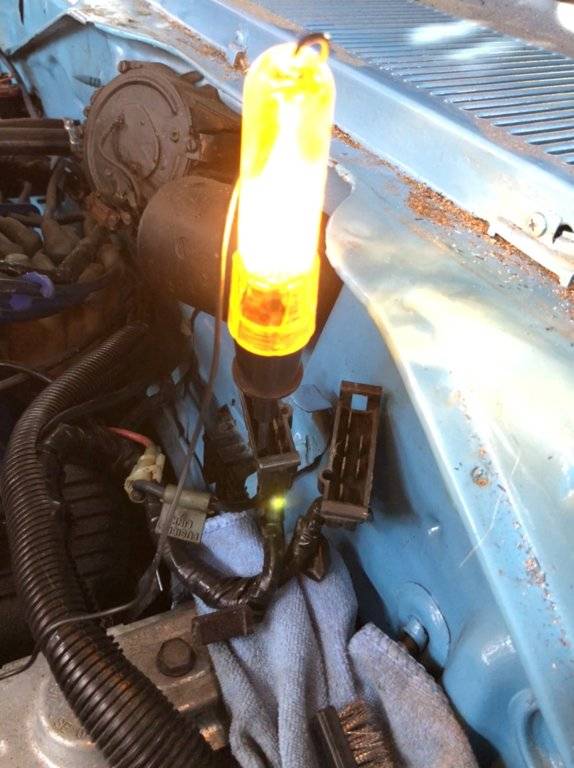
that black wire has a welded splice where it branches to several places. One branch goes to the ignition switch. At switch on it feeds a portion of the fuse box. You lost radio, wipers, signals, that portion of the fuse box, so I suspect you have another problem. Melt down at the amp meter is/was failure at the weak link. It's rarely the root problem. Have a look at a white plastic harness connector under the steering column. These multi wire connectors melt down to cause short/crossed circuits.
I have a good used amp gauge and other parts for you, but to toss it in there and toast it too is not a good plan.
 
Because you can tell from the photo. That stud, and the wire ends of the black/ red wires, have been HOT
Which suggests that the resistance was not internal. I disagree the photo shows heat on the red ring terminal and wire. It may be, but I don't see it.

It will likely show continuity with an ohmeter, but you cannot measure a few hundredths of an ohm that will tell the tale.
I agree small resistance will not show on a typical meter. However it will show if the problem is what the initial test appeared to show. That is, his test indicated there is a break in continuity internally. Initial was NO power - therefore a break in continuity.

There is an old thread about converting to a voltmeter.... Brazing/ soldering the studs to the ammeter "guts" will prevent future heating These are a poor design.
Sorry, on these points we'll just have to disagree. I'm with those who view the weakest point of the design as the multiple connections.

I agree with Redfish on all points.
that black wire has a welded splice where it branches to several places. One branch goes to the ignition switch. At switch on it feeds a portion of the fuse box. You lost radio, wipers, signals, that portion of the fuse box, so I suspect you have another problem. Melt down at the amp meter is/was failure at the weak link. It's rarely the root problem. Have a look at a white plastic harness connector under the steering column. These multi wire connectors melt down to cause short/crossed circuits.
I have a good used amp gauge and other parts for you, but to toss it in there and toast it too is not a good plan.
 
What ever you do do it right... I've seen more than one car burn because of a bad ammeter.
 
The welded splice MAY be the problem and MAY have transmitted heat to the ammeter but I doubt it. Otherwise the insulation in the first photo on the black wire would be melted clear down "out of sight" in the photo. That heat CAME FROM the ammeter area in this case, judging from the evidence of heat in the direct area.

OP: There's a very simple way to find out......untape the harness following the black wire a few more inches, you will find the obvious big splice.
 
that black wire has a welded splice where it branches to several places. One branch goes to the ignition switch. At switch on it feeds a portion of the fuse box. You lost radio, wipers, signals, that portion of the fuse box, so I suspect you have another problem. Melt down at the amp meter is/was failure at the weak link. It's rarely the root problem. Have a look at a white plastic harness connector under the steering column. These multi wire connectors melt down to cause short/crossed circuits.
I have a good used amp gauge and other parts for you, but to toss it in there and toast it too is not a good plan.
Thanks Redfish! I will do more research and see if someone can rebuild the old one first and I will check the white plastic connector and I did forget to plug in the wiper connector at the back of the cluster. I did it so fast and sometime forget lol
 
that black wire has a welded splice where it branches to several places. One branch goes to the ignition switch. At switch on it feeds a portion of the fuse box. You lost radio, wipers, signals, that portion of the fuse box, so I suspect you have another problem. Melt down at the amp meter is/was failure at the weak link. It's rarely the root problem. Have a look at a white plastic harness connector under the steering column. These multi wire connectors melt down to cause short/crossed circuits.
I have a good used amp gauge and other parts for you, but to toss it in there and toast it too is not a good plan.

Thanks redfish! You are right, I found the problem there also. The black wire was loose and I shook on it and everything came on! And then it just felt out... I think I can take the pin out and reconnected? Or do you have any suggestions? Thank you for all your help!

01F47CE4-F35E-4108-9884-B91DC2264E1A.jpeg
 
Thanks Redfish! I will do more research and see if someone can rebuild the old one first and I will check the white plastic connector and I did forget to plug in the wiper connector at the back of the cluster. I did it so fast and sometime forget lol

3BC5A7CD-BA2B-4B93-A235-840912F6CC3F.jpeg
 
Cut that thing out of there and permanently splice the wiring. Older cars did not have it, it's not needed, and it's TROUBLE
 
That entire charging circuit has seen a LOT of amperage. You might want to determine if it's got a fairly big "amp" alternator
 
That doesn't show overheating. I think someone pulled too hard on the wires, separating them to place aftermarket T-taps on them. That white square scotch lock was placed too close to the harness connector. I have to add, I've never seen so many wire taps in one picture.
 
That doesn't show overheating. I think someone pulled too hard on the wires, separating them to place aftermarket T-taps on them. That white square scotch lock was placed too close to the harness connector. I have to add, I've never seen so many wire taps in one picture.
Yeah a lot of wiring from the previous owner and it’s all over the place!
 
-
Back
Top Bottom