Verification, please?
Almost. During 'start', available voltage (battery, through a switch, through a bunch of wire) is supplied through the 1/2 ohm or compensating resistor.
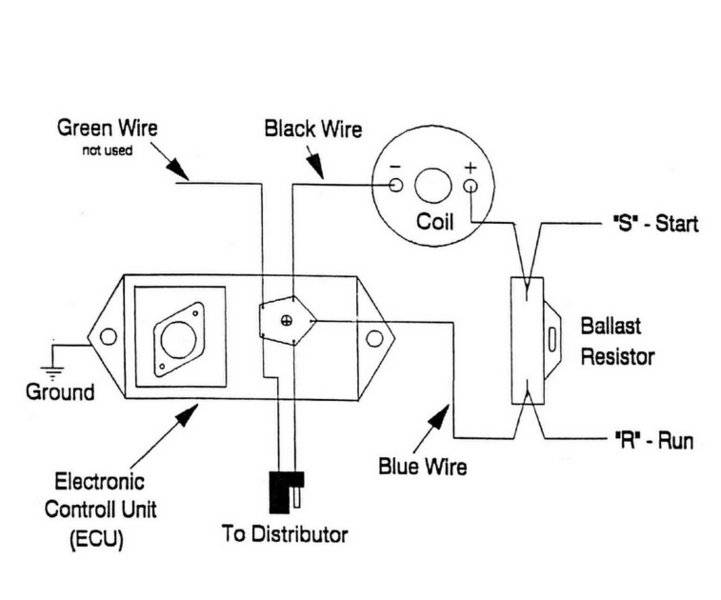
A basic ignition 2-pin ballast pic is attached. Not what you find on a '73, but the wiring in question is shown.
During Run, system voltage to ECU-1 is NOT reduced. I could understand wanting to route the supply V through the resistor on Run because the voltage is higher, but that's not what happens.
There is a tie point to coil+ in the harness on the Start wire.
Italic tags get all messed up in edits. Don't know why. I don't seem to be able to fix 'em.
Thanks. I recalled the 'Packard' part, but not the number(s).
I ordered some Packard 58s from Mouser. The local NAPA retailer had no idea what I was after, was not familiar with the Packard number or the back clip retainer design.
Almost. During 'start', available voltage (battery, through a switch, through a bunch of wire) is supplied through the 1/2 ohm or compensating resistor.
A basic ignition 2-pin ballast pic is attached. Not what you find on a '73, but the wiring in question is shown.
During Run, system voltage to ECU-1 is NOT reduced. I could understand wanting to route the supply V through the resistor on Run because the voltage is higher, but that's not what happens.
There is a tie point to coil+ in the harness on the Start wire.
Italic tags get all messed up in edits. Don't know why. I don't seem to be able to fix 'em.
Thanks. I recalled the 'Packard' part, but not the number(s).
I ordered some Packard 58s from Mouser. The local NAPA retailer had no idea what I was after, was not familiar with the Packard number or the back clip retainer design.