Darn Electrical Bugs
Each has a wire that connects to the main circuits at a welded junction.
This junction is hidden in the harness.
Power goes to the junction and then can continue on. All of the wires attached at this junction are attached to the battery positive, so they are always hot.
The main feeds go to:
1. Fuses that are always hot. (wire Q3)
2. Headlight switch for headlights (wire L1)
3. Key switch. (wire J1)

Power to the horn is an exception. In '66 its connected at the starter relay. In 1967 its attached at the alternator's output terminal.
The ammeter shows whether current is flowing in or out of the battery.
The battery can supply power at only at 12.8 Volts in the best of situations.
The alternator can supply power at 14 volts give or take a little.
So between the two possibilites, electricity always flows from the higher voltage source, as long as it has enough power and the resistance is about equal.
After starting the current should flow from the alternator to the battery as well as the ignition and field.
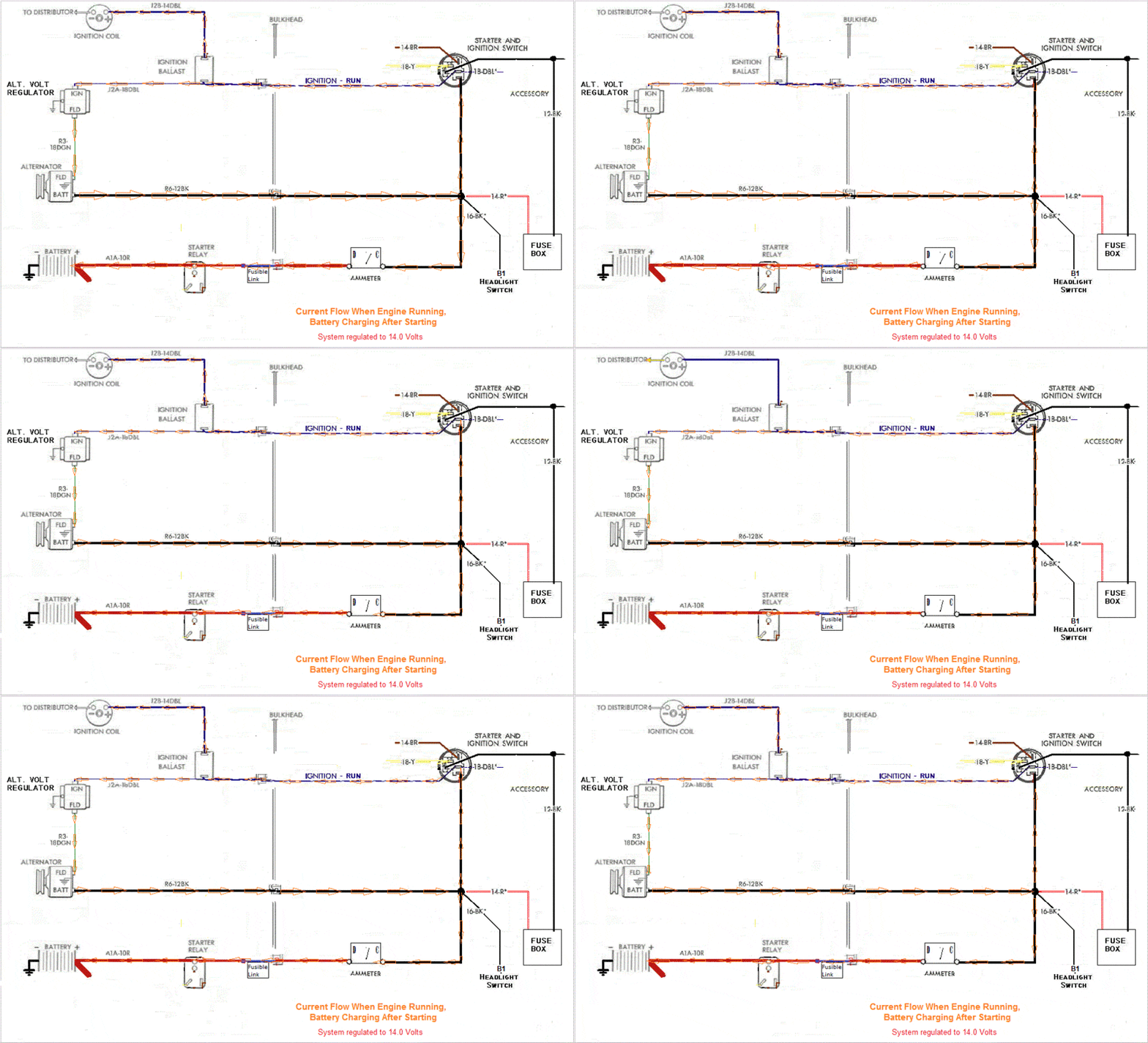
After a few minutes the battery should be recharged.

So that's how it works.
Voltage differences reveal a loss of energy in the path the electrons are moving.
Here is an illustration of voltages measured in a '66 with the key in run, engine off.

This narrowed down the likely problem locations
There's no loss in voltage from the ammeter to the regulator.
There was a slight loss between the starter relay and the ammeter, and there was no connection in the alternater feed to the main junction.
Finally the regulator should have been full fielding because the voltage was low. So something has probably failed in the regulator. His is transistorized so it can't be checked visually. An electro-mechanical one can be examined for issues.
The car has two power sources; battery and alternator.
Each has a wire that connects to the main circuits at a welded junction.
This junction is hidden in the harness.
Power goes to the junction and then can continue on. All of the wires attached at this junction are attached to the battery positive, so they are always hot.
The main feeds go to:
1. Fuses that are always hot. (wire Q3)
2. Headlight switch for headlights (wire L1)
3. Key switch. (wire J1)
Power to the horn is an exception. In '66 its connected at the starter relay. In 1967 its attached at the alternator's output terminal.
The ammeter shows whether current is flowing in or out of the battery.
The battery can supply power at only at 12.8 Volts in the best of situations.
The alternator can supply power at 14 volts give or take a little.
So between the two possibilites, electricity always flows from the higher voltage source, as long as it has enough power and the resistance is about equal.
After starting the current should flow from the alternator to the battery as well as the ignition and field.
After a few minutes the battery should be recharged.
So that's how it works.
Voltage differences reveal a loss of energy in the path the electrons are moving.
Here is an illustration of voltages measured in a '66 with the key in run, engine off.
This narrowed down the likely problem locations
There's no loss in voltage from the ammeter to the regulator.
There was a slight loss between the starter relay and the ammeter, and there was no connection in the alternater feed to the main junction.
Finally the regulator should have been full fielding because the voltage was low. So something has probably failed in the regulator. His is transistorized so it can't be checked visually. An electro-mechanical one can be examined for issues.