
Tach filter needed for ready to run distributor?

-

ESP47

Well-Known Member
Joined
Jul 3, 2009
Messages
2,818
Reaction score
1,929
Location
Sacramento, CA
Car is a 68 Barracuda and I'm using a stock in dash rallye tach. I'm running a Blueprint 408 and it came with this ready to run distributor. I'm also using an MSD blaster 2 coil.


The PDF says: It also comes with a fully adjustable mechanical advance, vacuum advance, magnetic pickup trigger, and a high-output circuit board module with digital tachometer output.

I'm not utilizing the tach wire from the distributor. I just wired it up per the "Canister coil" section of the PDF and connected the tach's signal wire to the negative side of the coil.

Then I bought one of these tach filters from summit. https://www.summitracing.com/parts/cin-sn20
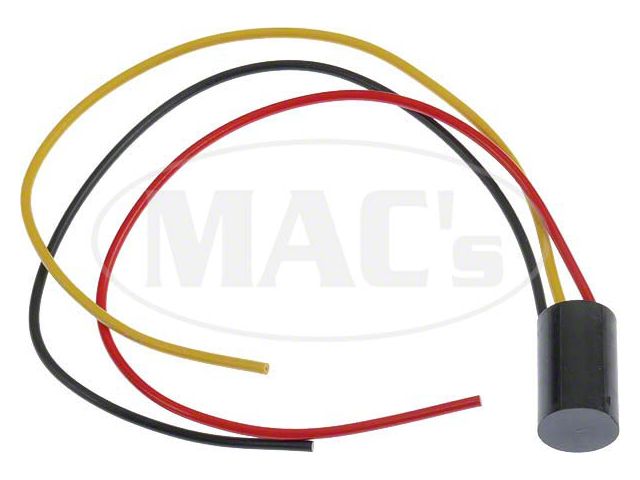
hei-ignition-tachometer-filter-66-74728-1.EK-66-74728-1.jpg


I wired the filter in line between the coil and the tach and to my surprise, the tach was operational and accurate.

I've only driven the car about 15 miles since I got the engine going and I noticed the tach no longer works. I have 12v coming in to the filter but 0v coming out. Filter is obviously blown but I'm not sure if it's blown because it's junk or because I've made some sort of mistake.

What do you guys think? If it looks like I'm wiring it up correctly, do you know of any better tach filters? I'm honestly not even sure if the filter is necessary or not but I'm a bit afraid to hook it up and try it without a filter because I'd hate to blow my tach and have to tear the dash bezel back out.
 
Have you tried it without the filter? All it will do is make the tach read wrong if it needs it.
 
I thought the old tach's wouldn`t work with electronic distributers. Mine wouldn`t. I hear you can send them out to modify to where they will.
 
So, when you install a MSD Ready-To-Run distributor also add a 8920 Tach Adapter to properly convert the signal so you tachometer works properly.
Might help someone out in the future i hope.
You’ll need one of these.

MSD 8920
 
Car is a 68 Barracuda and I'm using a stock in dash rallye tach. I'm running a Blueprint 408 and it came with this ready to run distributor. I'm also using an MSD blaster 2 coil.

[/URL][/URL]

The PDF says: It also comes with a fully adjustable mechanical advance, vacuum advance, magnetic pickup trigger, and a high-output circuit board module with digital tachometer output.

I'm not utilizing the tach wire from the distributor. I just wired it up per the "Canister coil" section of the PDF and connected the tach's signal wire to the negative side of the coil.

Then I bought one of these tach filters from summit. Classic Instruments SN20 Classic Instruments Tachometer Filters | Summit Racing

hei-ignition-tachometer-filter-66-74728-1.EK-66-74728-1.jpg


I wired the filter in line between the coil and the tach and to my surprise, the tach was operational and accurate.

I've only driven the car about 15 miles since I got the engine going and I noticed the tach no longer works. I have 12v coming in to the filter but 0v coming out. Filter is obviously blown but I'm not sure if it's blown because it's junk or because I've made some sort of mistake.

What do you guys think? If it looks like I'm wiring it up correctly, do you know of any better tach filters? I'm honestly not even sure if the filter is necessary or not but I'm a bit afraid to hook it up and try it without a filter because I'd hate to blow my tach and have to tear the dash bezel back out.
This circuit board is for A- Body Rallye dash tach with msd.

Easily installed and works great with electronic ignition.

Great service and support from the supplier as well.

68- 74 Tachometer Circuit Board A B and E body MSD ignition - Premium Dash Decals by Mr.Heaterbox
 
You should not need a filter / adapter if you have a neg coil switched ignition, IE electronic replacing points. Only CDI and other similar should need that

I would however, run a radio supression cap on the coil positive, whether you have a radio or not.
 
Also, pretty sure the 8920 adaptrer is for MSD 6, 7....CD ign. The ready-to-fail dist is an inductive ign, different animal. You are paying a looooot of money for a $30 GM 4 pin HEI module laid out on a printed cct board.....
 
Tach adapters come in two basic types - I've designed one of each before. Filters take a signal off the coil, remove high voltage spikes and short pulses, and send out a cleaned up 0-12 volt signal. You use these if the tach isn't steady, reads too high, or for some non tach application like triggering an ECU off a line lock. If a ready to run distributor uses a tach filter, it's one of these - and it is likely to work without it.

Then you have tach adapters that almost do the opposite. These take a low voltage pulse and use an indicator that acts like the primary side of a coil with no secondary, generating short high voltage pulses. You see these when using a low voltage tach output off a CDI or fuel injection when a stock tach won't trigger. The distributor in the original post shouldn't need this.
 
Well I wired the tach up straight to the coil negative and it was reading about 300rpm too high at idle. I let it idle a bit and blipped the throttle to kick the choke off and the needle hit 3000 RPM and is now stuck there and unresponsive.

Looks like I'm going to have to tear the dash back apart and install one of those circuit boards. Ugh.
 
Sounds more like meter problems, AKA the movement itself. There are all sorts of problems. Rough treatment damages them over the years, and I'm sure humidity does as well. Debri works it's way inside ad causes "sticking" of the movement. I have a tube tester that I gingerly and successfully swapped a similar old meter movement, using the scale off the original (they were same full scale current, 1 ma.) as the old oe was full of machinists grit
 
rt-eng has this on their FAQ page. Seems promising.

My tach needle is sticking, how can I fix it?​

If your tach needle seems to be sticking, back off the jewel screw (under the tach board) 1/4 turn to free up the needle. You can tell the needle is sticking if you move it up and then it does not automatically go back to zero reading using only the spring pressure. You MUST fix this problem before you try to calibrate the tach board!
 

Tach adapters come in two basic types - I've designed one of each before. Filters take a signal off the coil, remove high voltage spikes and short pulses, and send out a cleaned up 0-12 volt signal. You use these if the tach isn't steady, reads too high, or for some non tach application like triggering an ECU off a line lock. If a ready to run distributor uses a tach filter, it's one of these - and it is likely to work without it.

Do you have any advice on how to make a DIY tach filter? I'm guessing it requires a resistor and cap but I'm not sure what values they should be.

Maybe a potentiometer to make it adjustable?
 
The cct below works. I use a piece of plastic tube...or a medicine pill bottle & shove the componnts inside, & bring out 4 wires for the connection. I then fill the bottle with neutral cure silicon which keeps the components secure. I tie wrap the bottle to the harness under the dash.

img042.jpg
 
The cct below works. I use a piece of plastic tube...or a medicine pill bottle & shove the componnts inside, & bring out 4 wires for the connection. I then fill the bottle with neutral cure silicon which keeps the components secure. I tie wrap the bottle to the harness under the dash.

View attachment 1716361973

Thanks Bewy! I'll gather up the components and give it a shot.

Just so I'm straight here, I'll have two separate switched ignition sources going to the tach? One to power the tach and the second for the filter?
 
No. You should have a wire that runs from either the dist { or the coil [-] terminal } that goes to the tach. You have to cut this wire somewhere along it's length. The end that went to the tach now connects to the right hand side of the 680 ohm res. The other end [ which comes from coil or dist ] connects to the 3.9k ohm res. Nothing else needs to be done to the tach wiring.
12v switched pos. Can be connected to the coil [+] terminal or any source that has power [+] connected to it with the ign sw in the 'on' position, eg radio, heater, etc.
 
No. You should have a wire that runs from either the dist { or the coil [-] terminal } that goes to the tach. You have to cut this wire somewhere along it's length. The end that went to the tach now connects to the right hand side of the 680 ohm res. The other end [ which comes from coil or dist ] connects to the 3.9k ohm res. Nothing else needs to be done to the tach wiring.
12v switched pos. Can be connected to the coil [+] terminal or any source that has power [+] connected to it with the ign sw in the 'on' position, eg radio, heater, etc.

I'm following what you're saying here but what is connected to the left side of the 680 ohm res? Your drawing shows switched ignition on the left side.
 
Yes, that is correct. One side of the 680 goes to switched pos, other side to tach. Don't forget the grd wire!
 
Yes, that is correct. One side of the 680 goes to switched pos, other side to tach. Don't forget the grd wire!

Thanks for your time, I definitely appreciate it. I'm going to be annoying because I think I'm missing something here and I want to get this right. My tach has two terminals. A stud for 12v switched ign on top and a spade connector for the neg coil signal on bottom.

img_2641-1024x831-jpg.1714628819


I already have a 12v switched ign source going to the stud to power the tach.

If I wire the other side up per the schematic, I'll have to bring in a second 12v switched ign source to that 680ohm res. Which means that the switched ignition and the neg coil signal will both be going to the bottom spade connector.
 
standard old tach expects a 100-300 spike from the coil negative for each spark

high power ignition can cause that spike to be 400V+ and an aged old tach doesn't like it....
the tach uses a range of capacitors resistors and transistors to count the rate of sparks, those capacitors have to charge and discharge to switch a transistor on and off to make the little needle move, if they are hit with more voltage than designed for, the simple circuit that puts pulses into the coil that drives the tach pointer is just kinda ON for too much of the time when it should be offonoffonoffon at a rate the illustrates your rpm.

causes the needle to quiver a few hundred rpm over what it should be at idle then at high revs be all over the place or pinned to the 7000 rpm end stop.

fixed mine with one of these

Vs-40hfr40 for sale | eBay

VS-40HFR40 zener diode

you bolt it to your coil mount or a bit of angle bolted to your car, using its nut and washer,
run a wire from the solder tab to a connector which you put onto coil negative. that's all you do with it.

absolutely dictates that the spike that triggers your tacho will never be greater than 400 V
but doesn't do anything else. one of those 40s in its name means 400 volt so a one with 20s would be 200 volt or 35 would be 350 volt etc R is an indicator that the bolt end of it is earth.
i chose this oen cos i had one 350 or 300 v version would also be fine

350 Volt one was standard fitment along with an HEI module on a XJS jaguar.
its a clamp in electronics terms

if you were running a modern tach it counts 12 volt square wave pulses, that is when you need a special feed from the ignition box or ECU or a converter of some type.

there are only 2 types of electronic tachos really direct to coil negative or modern ones that like a proper 12 volt feed from some other electronics.
direct drive don't count they use a speedo drive cable off the distributor

each one of those solutions for a modern tacho is creating the right feed either off the circuitry triggering the spark, or is converting the spikes of 100s of volts at the coil negative into something nice square and 12 volt ish, just by a different route

modern car instrumentation is all 5 and 12 volt stuff our old style 60s/70s stuff is generally connected direct to the thing it is measuring hence old style tacho likes big 100+volt signal and a standard 12 volt feed for anything fancy it may have in addition, some for its function and potentially one for illumination.
 
Last edited:
ESP.

Post #20. You can use the 12v switched source on the back of the tach as the 12v switched source to power this filter. Just add a wire to that terminal & run it to the filter. Yes, essentially, the 680 res is connected across the 12v switched source & the coil [-] terminal on the tach. However, rather than separate the 680 res & have it on the back of the tach, I would keep it with the rest of the electrical components & run the 4 wires to their respective positions.
 
ESP.

Post #20. You can use the 12v switched source on the back of the tach as the 12v switched source to power this filter. Just add a wire to that terminal & run it to the filter. Yes, essentially, the 680 res is connected across the 12v switched source & the coil [-] terminal on the tach. However, rather than separate the 680 res & have it on the back of the tach, I would keep it with the rest of the electrical components & run the 4 wires to their respective positions.

Thanks for clarifying that. I'll get to work on it this week and report back.
 
-
Back
Top Bottom















