
Last time I smelled raw gas - it was mechanical fuel pump squirting the bottom of the alternator.

I suffered from exhaust fumes in my convertible with a .245/ .250 duration cam in a stroked 408 Magnum. It was so bad that people walking by would wave their hands in front of their face to fan away the smell wafting over to them on the sidewalk. The car was even EFI'd with a factory JTEK and a tune.
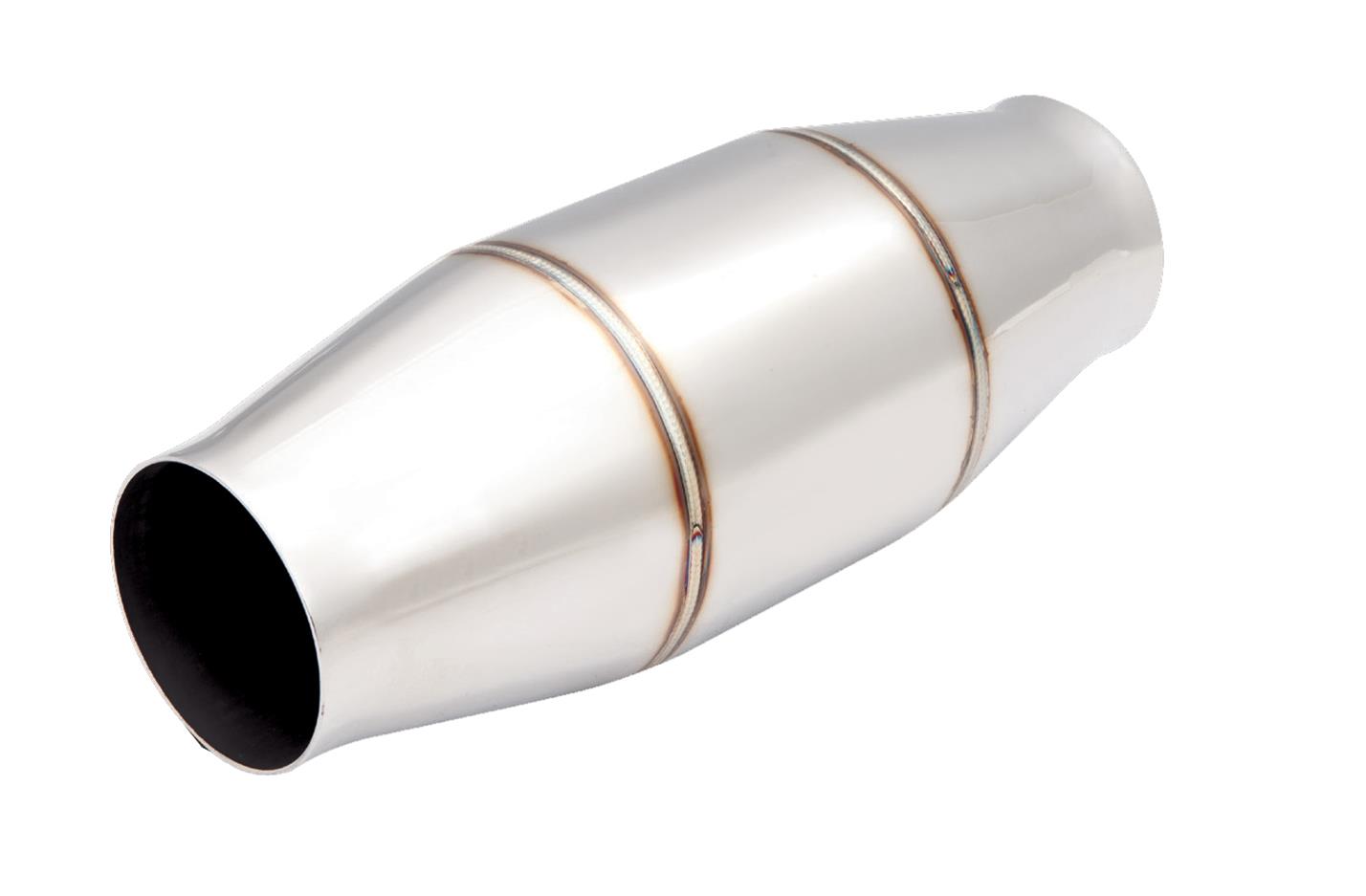
I welded on a set of High-Flow Racing cats behind the header collectors and before the crossover, and the smell was gone. I could not detect any power lose or sound change after. The were about $100 each at Summit.
View attachment 1716454952
It be hard to believe that the idle bypass or lack there of wasn't adding to the excessive emissions in the vehicle.Are you saying having a large cam with significant overlap, where both valves are open at the same time, has nothing to do with tail pipe emissions/raw fuel smell?

"High flow cats" I always chuckle to myself about that, because there is no such thing. LOLIt be hard to believe that the idle bypass or lack there of wasn't adding to the excessive emissions in the vehicle.
Though adding the high flow "cats" is an interesting concept.
Hilarious! Hopefully the term "friend" is used loosely...Get a friend and throw him in the trunk with a lit cigarette and a flashlight and gently drive around. Let him take the cigarette all around the trunk seal, around the back side of the tail lights and anywhere else that might be a suspect for a leak. He will find it.
Hmm... there must have been some improvements since the can full of pellets..."High flow cats" I always chuckle to myself about that, because there is no such thing. LOL

Use a teenager, or even better your wife. That way you can also get some peace and quiet…..jump in your trunk have a buddy close by close the lid and see if theres any day light, my old 69 DART did just what you said.thats how i found my fummmmssss.
It wasn't a joke. We used to do it all the time to find air leaks in new cars at the dealerships. It works. Very well, I might add.Hilarious! Hopefully the term "friend" is used loosely...
Very, very little. A converter requires heat in order to remove NOX gasses. A lot more heat than a "normal" exhaust produces. That extra heat comes from the restriction of the media. Whatever it is. There ARE no high flow cats. I don't give chit what the BS marketing says. Believe what you will.Hmm... there must have been some improvements since the can full of pellets...
I don’t disagree with you.Very, very little. A converter requires heat in order to remove NOX gasses. A lot more heat than a "normal" exhaust produces. That extra heat comes from the restriction of the media. Whatever it is. There ARE no high flow cats. I don't give chit what the BS marketing says. Believe what you will.
Golden!Use a teenager, or even better your wife. That way you can also get some peace and quiet…..
When she gets out, she'll more than make up for any peace and quiet you got. lolUse a teenager, or even better your wife. That way you can also get some peace and quiet…..

Full TTI with 3 inch out the back. The cats are 3"inlet/outlet with a 4" body. You can actually see through the metal hybrid matrix, so significantly more flow than a factory style converter. They are designed differently for different end results. One for maximum emissions reduction and the other for higher flow at the expense of maximum emissions control.What size exhaust is that and do you have a part number for those cats?
I got your uninformed hangin and swangin. Here's a little tidbit for the uninformed. It's called marketing. You believe the BS. That's why they throw it out there. To sucker weak minded people in and make them believe anything. I don't care what any sales pitch, articles or graphs and charts say.Full TTI with 3 inch out the back. The cats are 3"inlet/outlet with a 4" body. You can actually see through the metal hybrid matrix, so significantly more flow than a factory style converter. They are designed differently for different end results. One for maximum emissions reduction and the other for higher flow at the expense of maximum emissions control.
Even though I was running the factory JTEK computer on my 408, I used an electronic O2 simulator to get a consistent square wave and avoid the check engine light the CEL code would likely have popped up. There was no noticeable drop in power output from the engine.
XForce CAT11-300(100) XForce Hi-Flow Racing Catalytic Converters | Summit Racing
Free Shipping - XForce Hi-Flow Racing Catalytic Converters with qualifying orders of $109. Shop Catalytic Converters at Summit Racing.www.summitracing.com
For the uninformed:
A 100-cell catalytic converter flows significantly better (less restriction, more power) than a 200-cell one because it has fewer internal passages (cells per square inch) for exhaust gases to navigate, but it offers less surface area for emissions control, making it more prone to triggering a Check Engine Light (CEL) and potentially failing emissions tests. A 200-cell cat balances better flow than stock (600-800 cells) with improved emissions cleaning, making it a common choice for performance street cars, while 100-cell cats are for maximum flow in motorsport.
Awesome, thanks for the information!Full TTI with 3 inch out the back. The cats are 3"inlet/outlet with a 4" body. You can actually see through the metal hybrid matrix, so significantly more flow than a factory style converter. They are designed differently for different end results. One for maximum emissions reduction and the other for higher flow at the expense of maximum emissions control.
Even though I was running the factory JTEK computer on my 408, I used an electronic O2 simulator to get a consistent square wave and avoid the check engine light the CEL code would likely have popped up. There was no noticeable drop in power output from the engine.
XForce CAT11-300(100) XForce Hi-Flow Racing Catalytic Converters | Summit Racing
Free Shipping - XForce Hi-Flow Racing Catalytic Converters with qualifying orders of $109. Shop Catalytic Converters at Summit Racing.
For the uninformed:
A 100-cell catalytic converter flows significantly better (less restriction, more power) than a 200-cell one because it has fewer internal passages (cells per square inch) for exhaust gases to navigate, but it offers less surface area for emissions control, making it more prone to triggering a Check Engine Light (CEL) and potentially failing emissions tests. A 200-cell cat balances better flow than stock (600-800 cells) with improved emissions cleaning, making it a common choice for performance street cars, while 100-cell cats are for maximum flow in motorsport.
I got your uninformed hangin and swangin. Here's a little tidbit for the uninformed. It's called marketing. You believe the BS. That's why they throw it out there. To sucker weak minded people in and make them believe anything. I don't care what any sales pitch, articles or graphs and charts say.


I meant to use the pokin stick thing too, but I guess I didn't. So here. lol

Just something to check, the lower steering column seal. Mine was toast and I was getting engine fumes/smells in the cabin.After spending most of last year trying to get my 69 Cuda notch with a 318 , 904 trans running, this year was finally able to get to some car shows. Just yesterday drove about 40 miles and back from a very large show [ Gasket Goons near Hellertown Pa.] driving both ways with windows down keep getting a strong exhaust order into car. Car has a 2 1/2 stainless steel exhaust, I see/hear not leaks in system. Had noticed this prior also, have exhaust tips clamps on end of pipe, moved them out to extend them hoping that would help but did not. I am not sure what else to look at, trunk is sealed [ finished off with trim panels] , all door seals are new. Could engine just be running that rich/lean [ no black smoke seen any time ] to cause this issue?
Absolutely a good idea! Some of them are slap missin and people don't even realize something is supposed to be there!Just something to check, the lower steering column seal. Mine was toast and I was getting engine fumes/smells in the cabin.

















