How much head milling = how much more compression?

-

timk225

Well-Known Member
Joined
Jun 2, 2024
Messages
313
Reaction score
137
Location
Pittsburgh
I'm sure some here have already done the math and CC measurements on this. I'm planning some mild mods for my 1973 Dusters' 225. Among them is to pull the head, hot tank it, give it a good port clean up job (not hogging out the ports, just smooth the rough spots), back face the valves (stock size), and mill the head to boost the compression some.

Since the stock head gasket is about 0.020" thick and the replacement Fel-Pro head gasket is 0.040", cutting the head 0.080" would effectively reduce it by 0.060" because of the thicker head gasket.

So on a stock 8:1 compression engine, what should that raise compression to? And if because of factory tolerances the engine is really at 7.5 compression, then what might the head chop raise it to?
 
You can easily mill the head .100" and still use the factory thin steel head gasket with no problem. Doing that will get you into the 9:1 area. The head I have on my car's current engine was "accidentally" milled about .180" (long story). The chambers went from 58-60 cc stock down to 34cc. It blueprinted at 10.6:1. If you're going to port the head AT ALL then DO IT. Don't just smooth it out. Port the snot out of it. Makes no sense otherwise.
 
I'm sure some here have already done the math and CC measurements on this. I'm planning some mild mods for my 1973 Dusters' 225. Among them is to pull the head, hot tank it, give it a good port clean up job (not hogging out the ports, just smooth the rough spots), back face the valves (stock size), and mill the head to boost the compression some.

Since the stock head gasket is about 0.020" thick and the replacement Fel-Pro head gasket is 0.040", cutting the head 0.080" would effectively reduce it by 0.060" because of the thicker head gasket.

So on a stock 8:1 compression engine, what should that raise compression to? And if because of factory tolerances the engine is really at 7.5 compression, then what might the head chop raise it to?
You also need to take into account the piston to deck dimension at TDC. It can vary quite a bit. As Rusty said "MEASURE".
 

I've seen those and I'd much rather measure. lol Just personal preference. I mean really. It's just a little math.
A whistler is a good alternative when the motor is already assembled. Saves a lot of work.
 
How many hobby car guys can afford the price?
 
A whistler is a good alternative when the motor is already assembled. Saves a lot of work.
I agree, but I believe this thread is discussing an engine yet to be built if I am not mistaken.
 
How many hobby car guys can afford the price?
Oh Charlie, we can get 8 or 10 of them a piece. LOL
 
Circle track racing sometimes has classes that have a max compression rule. The tech man at those tracks will often times have access to a whistler. Also engine building shops and dyno shops that cater to racers that race under a compression rule might have one.
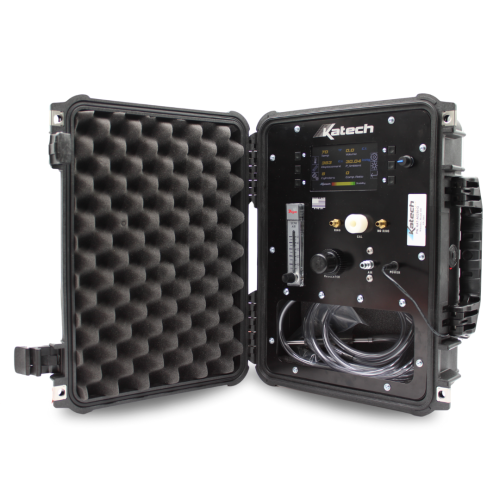
I have one here at the dyno. Motors come here to be dynoed and the customer has no idea what the compression ratio is. Or worse they think they know the compression ratio but have measured, calculated or guesstimated incorrectly. Sometimes they receive the info from a previous owner or " builder" and it is incorrect. The whistler has saved the day at dyno on more than one occasion.
 
Oh Charlie, we can get 8 or 10 of them a piece. LOL
I wouldn't suggest buying a whistler if your not going to use it enough to justify the cost. Rather, you can pay someone who has a whistler to check your compression. Most people don't know where to find one. There are 3 of them counting mine less than an hour from me that I know of. I charge $20 to whistle a motor on the dyno. I would charge $50 to do it in the car.
 
I wouldn't suggest buying a whistler if your not going to use it enough to justify the cost. Rather, you can pay someone who has a whistler to check your compression. Most people don't know where to find one. There are 3 of them counting mine less than an hour from me that I know of.
Yet anyone with a grammar school education can do the math required. Let me see. Do I spend 3000 bucks, or do some grammar school math? Yeah.
 
Link to a video on how they work.


Oh I know exactly how they work. They use those on most of the higher dollar dirt track races around here. But once again, we're not talking about an assembled engine HERE.
 
Yet anyone with a grammar school education can do the math required. Let me see. Do I spend 3000 bucks, or do some grammar school math? Yeah.
You mean do the math or $50. Too bad you're not closer I would do it for you for $100. lol
 
Oh I know exactly how they work. They use those on most of the higher dollar dirt track races around here. But once again, we're not talking about an assembled engine HERE.
If you watch his video you will see that he uses his whistler on mock up to determine how much to cut the head.
 
I have never seen one before this. But I'm wondering if cylinder leakage would have an adverse effect? From the video I get the impression it would.
 
I have never seen one before this. But I'm wondering if cylinder leakage would have an adverse effect? From the video I get the impression it would.
Like from an worn out engine? No. From a burned valve or a hole in a piston , Yes.

It partially works like an autotuner for a musical instrument. Think of Three beer bottles. One is 1/4 full. One is half full. One is 3/4 full. When you blow across the top of each bottle a tone is made. 1/4 full = low pitch . 1/2 full = medium pitch. 3/4 full = highest pitch. Think of the level of the beer as the top of the piston at top dead center and the air space above the beer as the combustion chamber volume.
The whistler has two hoses. One blows the air into the cylinder to create the tone the other hose listens to the pitch of the tone that is created.
The whistler knows how much volume there is in the combustion chamber with the piston at top dead center by the pitch of the tone. And because you have entered the cubic inches of the engine, the number of cylinders and the temperature it can accurately calculate the compression ratio of the engine.
 
I do the math for free with every one I build. I just got done with figuring my latest slant six.
The math is free the burette and plate are not. Nothing wrong with what you are doing I still do it that way sometimes. I was just pointing out that it’s not the "only way" to do it and offered an alternative.
 
The math is free the burette and plate are not. Nothing wrong with what you are doing I still do it that way sometimes. I just pointing out that it’s not the "only way" to do it and offered an alternative.
Sure and that's fine. But you're not going to convince "ME" to do it differently. I do however appreciate your input.
 
-
Back
Top Bottom