Installing one wire alternator

-
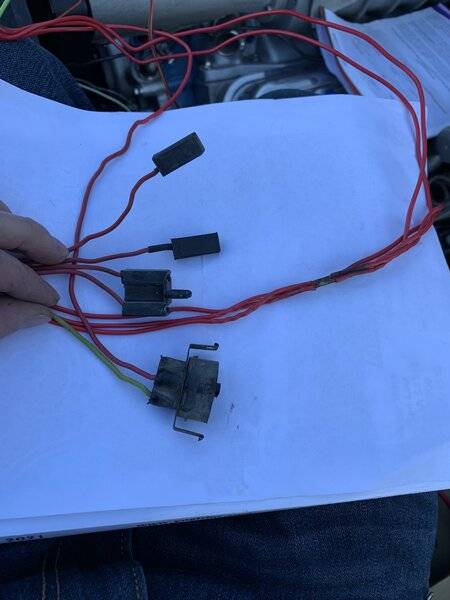
Another question I have, all these plugs go to the ‘big splice’ I call it. (The other end of of VR plug I’ll be removing, ballast resistor, choke, alternator plug.)
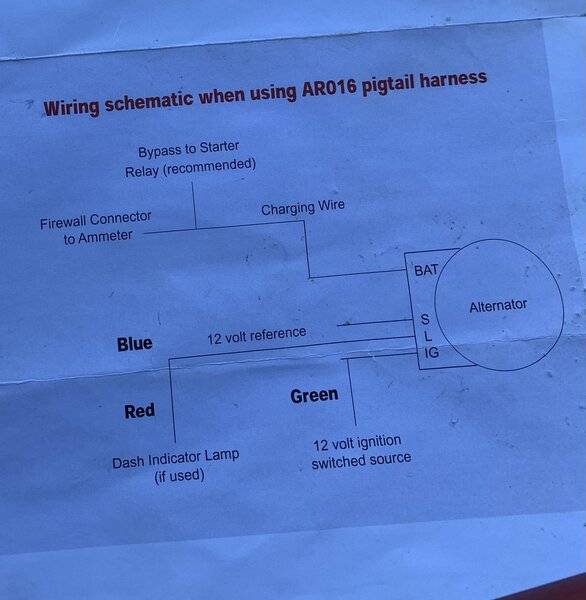
This splice is where I’ll be connecting the new Alternator’s 12 volt ignition switched source wire to, correct? This splice is active when the key is on engine running, but inactive when cranking?

And the 12 volt sense wire will go to the same battery lug on the starter relay.

0605B25D-2EDB-4828-BFB9-F0629D319EA6.jpeg
5D40DC69-7020-4357-8420-3C3762F73F4D.jpeg


This might get a little interesting when I start removing the electronic ignition/ballast resistor to use MSD ignition. I wanted to start with the alternator first. Maybe that was backwards.
 
The big thing you need to do when connecting "big" alternators--or really doing anything in that line--is to make sure the bulkhead connector terminals and the original wiring (if retained) is in good shape. Even though you are greatly reducing the strain on the bulkhead connector--by "shunting" the original ammeter--there is still current through the big black and big red wires--to feed loads in the pass. compartment.
 
Another question I have, all these plugs go to the ‘big splice’ I call it. (The other end of of VR plug I’ll be removing, ballast resistor, choke, alternator plug.)
This splice is where I’ll be connecting the new Alternator’s 12 volt ignition switched source wire to, correct? This splice is active when the key is on engine running, but inactive when cranking?

And the 12 volt sense wire will go to the same battery lug on the starter relay.

View attachment 1715855977 View attachment 1715855978

This might get a little interesting when I start removing the electronic ignition/ballast resistor to use MSD ignition. I wanted to start with the alternator first. Maybe that was backwards.

The basic thing about bypassing the ballast is to get all the wires connected together so that the bypass circuit still functions

You also want to insure the sense wire is connected to a good battery connection that does not see voltage drop. The starter relay "stud" should accomplish ;that.

In the future, it is WAY better not to tag onto an old thread. Things have a habit of getting confusing.
 
I’m reviving this thread because I need a little help. Working on a ‘1974 Dodge W200 truck.

I’m installing an internally regulated Denso 60 amp 3 wire unit. I’m kinda following 2 sets of instructions.

I have a 6ga wire from the alt output going to a fuse as you can see on the firewall, and from there I’ll be going to the starter relay battery lug. I think ANDY AR Engineering’s instructions call this a “Shunt” to keep the whole load going into the firewall on the original black 10ga alternator wire to bulkhead.

Now can I still place this same 10ga black wire on the output stud of the new alternator along side the other heavy 6ga? (this one goes through the bulkhead)

View attachment 1715855727

View attachment 1715855737

(this is the old alternator output wire going to bulkhead, which then connects to many things like ignition switch, high & low beams, ammeter, fuse panel) Because of all this I thought it would be a good idea to also use this wire. ?
View attachment 1715855743

View attachment 1715855744
The American Wire wiring harness gets rid of all those extra components like the voltage reg, ballast, and resistor in the original electrical system. I replaced our entire wiring system with one, see our schematic - very simple.

image.jpg
 
Worth noting that while the starter terminal is a convenient place to connect for 12V power, it can be a problem if you are using EFI or other digital electronics that need to be powered while starting. You get a significant voltage drop through the cable plus a lot of extra electrical noise while cranking. I had an EFI setup wired like that once, and redoing the wiring so it took 12 volts from the other end of the starter cable at the battery helped with several startup issues. Less of a problem if you're running a carb with a non-exotic ignition.
 
Late to the party, but in the middle of something similar, so thought I'd chime in. If I'm screwing up, please say so.

For those who remember, I'm working with a 318 small block Chrysler on the hay monster........a piece of farm equipment from early to mid 70's era. For as long as I've had it, been running an AC Delco single wire alternator somebody grafted on using some creative redneck engineering. For past two years, has caused all manner of problems, so am in the process of converting it to an actual engine mounted alternator as it would have been when new. In my case, going from the Delco unit that tested to something like 30 amps, to a Powermaster 90 or 95 amp retro square back, but with the internal regulator and single wire setup.

The old..........


IMG_1793.jpg


Wiring on this is single wire to the battery (except it runs thru a relay). For some reason, we also ran a wire from this connection to the voltmeter on the dash. Then there is the short jumper from hot output wire to the other connection on the back. There is no ground wire, so must be grounded to frame by mounting bolt.

This is the new.........new mounting brackets (will have to figure those out).......along with back of unit. Hot wire stud to battery under the stop sign. Plus ground wire. That is it.

IMG_1796.jpg


IMG_1797.jpg


Reason for the big bump in amps is two fold. First.......this may be the smallest amp output I could find with a one wire self regulated system. Second.......the hay monster has a six lamp array on the front for operation at night. Four floodlights and 2 spots. It will light up the night. And when it does, it sucks the battery down PDQ and when that happens, she won't start until battery sits on a charger for at least a few hours. Aside from all that, don't see the harm in the excess capacity. If not needed it's just there.

I am going to have questions when it comes time to make the swap. I'm missing parts like the correct bolts and the mounting spacers.


Will also upgrade wiring to battery to #6 AWG.
 
If you know where to look, can find a whole bunch of photographs of old Dodge D600 farm trucks from 1975 +/- era, and this alternator appears to be a dead ringer for what those old trucks were wearing, including the double belt pulley. So if I get the mounting brackets sorted, should bolt right up. Those same photos sometimes also include the original stickers showing equipment and features. They all list a 43 amp alternator.
 
Make doubly sure that thing ACTUALLY has an integrated regulator.

At that amperage level, you need a BIG wire direct to the battery, I would not use less than no4 battery cable. Also double check the ground circuit. I know must industrial equipment has lots of framing/ metal, but if that uses EG rubber engine mounts, it may not actually be grounded as well as you think. You need a GOOD ground between the engine block and frame to battery, and if there is a separate ground stud on the alternator, run at least a no4 ground jumper from it to the block and from there to the batt neg, AKA a big main cable.

DO NOT run the alternator output line to the battery through any stock wiring and or stock ammeter. If you have an ammeter on the rig now, replace it with a voltmeter.

Since you have a pretty big load with those lamps, I would spend a bit of time calculating total draw on the system, and making certain the various feeds are up to snuff, meaning adequate wire size, in good condition, as well as terminations switches and relays.

Near a hundred amps of charging current is no joke.

When you get it all in, running, and believe that you have the battery "up and normalized," I would get an accurate multimeter and make certain that the battery is running at the required voltage, aka 13.8--14.2, when normalized, up to warmth, proper cell water level if accessable, etc. Check with engine running fast enough to charge, and check both with normal engine only running loads, and again, with all loads running, aka, lights, heater, whatever you have.
 

Instructions that came with alternator say to use #8 to battery (I'm using #6......run is about 5 feet) and #10 to ground. I'll probably use # 6 for that too.

No ammeter. Voltmeter from Auto Meter. This thing has none of the stock charging system. No ammeter, voltage regulator, none of it.

The lights array is a concern. They are now all halogen. Day may come when all those get converted to LED. Good news on that front is I seldom have to run at night. Aside from the lights, regular electrical load is very light.

I put together a utube video on and and was surprised when a previous owner found it and posted some comments. Among other things, he said electrical charging system, or lack of adequate one was a big problem when he had it. There are actually two standard sized battery boxes on the frame, so power drain may have been heavy all the way back to the beginning.
 
Does this small cube look like it could have once been part of the charging system? Voltage regulator perhaps? It is mounted on frame near battery. Disconnected to anything and serves no purpose now. If memory serves, when it showed up here, still had orginal, faded, non-working gages, one of which I think was an ammeter. Others were oil pressure, engine temp, fuel gage and a tachometer. All have since been replaced with auto meter, except the ammeter is now a volt meter. When running it has only been showing 12 to 12.5 volts. Did show 14 +/- once, but not now.

IMG_1798.jpg


IMG_1800.jpg
 
That looks like a relay. What is the print on the one end?

6 would get you by I would use 4. The thing about a "one wire" is, that the regulator senses right at the alternator. So if the battery is low, charging, and or there are heavy loads, like your lights, the system generally is going to be BELOW the proper running/ charging voltage, because of the drop on the charge line.

That is the main reason I cautioned you to check voltages once you get it up and running.
 
OK guys, am in the process of installing the new alternator, and once again, nothing is ever easy.

Have pulled the old AC Delco off, and have replacement powermaster one wire square back to fit this engine. Also found, ordered and have replacement alternator bracket that should fit this engine. Not having ANY experience with this engine, it took hours of looking to figure out how it was supposed to mount up. Pretty sure I now know...........and that is when the trouble started.

Looks to me like the base bracket is supposed to fit thru these two holes.........(sorry iphone camera truely sucks in low light).......

IMG_1822.jpg


So top hole has an existing bolt......which I believe is going to be long enough to run all the way thru to the engine block.......about 5 inches or so thru the water pump. Bottom hole and bolt should be the same, except it isn't. Hole bottoms out about 1/2" in. My guess is there is either a stud in there, or a bolt that has been twisted off. Either way, there is no way to bolt the bracket up as is.......so looks like I get to pull the water pump to find out. When I loosened the top bolt, antifreeze started leaking out, so to even pull that, looks like I need to drain radiator. All this just to swap out the alternator to what should have been there in the first place. :mad:

So questions are..........am I right to think there are two 5 inch or so bolts needed to bolt bracket base to the water pump? If I pull the water pump, is there a rubber or other gasket that has to be replaced?

Also, when ordering bracket, choices were cast iron (pre 70's) water pump or aluminum (1970's and later). I went with aluminum.........does that also look right?
 
So top hole has an existing bolt......which I believe is going to be long enough to run all the way thru to the engine block.......about 5 inches or so thru the water pump.
some of the water pump bolts go into the water jacket (and need thread sealer) of the engine AND if you use a bolt that is too long can crack the cylinder wall.


Bottom hole and bolt should be the same, except it isn't. Hole bottoms out about 1/2" in. My guess is there is either a stud in there, or a bolt that has been twisted off.
I agree that sounds like it. get a coat hanger sized wire and see how deep it goes ( this can be used on ALL bolts) then accounting for bracket thickness be sure the bolts are a 1/4" shorter then the max depth of the wire

Either way, there is no way to bolt the bracket up as is.......so looks like I get to pull the water pump to find out. When I loosened the top bolt, antifreeze started leaking out, so to even pull that, looks like I need to drain radiator. All this just to swap out the alternator to what should have been there in the first place. :mad:

Yep its a water pump and you will need to drain the coolant no matter what you do. as stated earlier some of the bolts go into the water jacket

Which bolts reach water jacket on 340

from post #3 thanks TMM
Measure Measure Measure the max depth and subtract 1/4" (the numbers here might be right for the particular engine bracket combo it has yours might be different)

Did I mention Measure!
1752083013917.png


So questions are..........am I right to think there are two 5 inch or so bolts needed to bolt bracket base to the water pump?
Not knowing which bracket you are using AND the need to use the correct bracket so the ALT will align with the other pulleys you might be better off to make something yourself

If I pull the water pump, is there a rubber or other gasket that has to be replaced?
There is a water pump gasket, most likely fiber of some type and it only goes on one way to the pump but can be applied either way on the timing cover so be sure its on correctly

Also, when ordering bracket, choices were cast iron (pre 70's) water pump or aluminum (1970's and later). I went with aluminum.........does that also look right?

Your water pump looks like a cast iron water pump, can you stick a magnet to it?
BUT it might be an industrial water pump vs and automotive pump (It looks odd from the angle the photo was taken)


There are differences between the heights of mounting bosses for Cast Iron vs Aluminum

Note the inlet on the Cast Iron is on the drivers side and the Aluminum is on the passenger side


Cast iron water pump
1752081808041.png

Aluminum water pump

1752081851293.png


This is very typical of the Alternator mounting bracket and adjuster arm on SB mopars

The bolts are longer or shorter for the CI vs AL pump and there are spaces that might be longer or shorter


I believe this is 70 and newer
1752082350659.png


And this is 69 and older
1752082419818.png


sorry iphone camera truely sucks in low light

Your phone is fine, its the light I circled blinding your camera so it reduces the aperture and gets a bad photo

1752082590423.png
 
Last edited:
OK, started puling her apart and this is what I found...........this pump seems to be an odd fit. There are two extra holes that end in unsported space, both of which were being used. One on passenger side was holding old alternator. One on driver side.....as shown.....supporting a bracket that holds a large spring that runs to throttle lever on the carb. The large heavy spring needed to counter all the linkage drag of throttle cables running about 10 feet and thru 3 or 4 turning blocks. This pump uses the steel pipe and has a fitting that was being used for engine temp sensor. I thought the steel pipe might be the ultimate redneck solution, but it appears that may have been the actual solution used on that pump.

Anyway, found a replacement water pump at auto parts store, but it doesn't look anything like this one. Replacement has a cast stub for the bypass hose (instead of the pipe), but also has a smaller stub for what may be a hose to heater (which this does not have). No stub for engine sensor......but think there is a nearby unused fitting on the head for that.

Also, as suspected, one of the bolts in the hole needed for alternator bracket was snapped off. There is half an inch of it protruding. It is stuck tight......which may be why is was snapped off to begin with.

Any ideas on how to get it out? Can go no further until it is out.

IMG_1824.jpg
IMG_1825.jpg
IMG_1826.jpg
 
Isn't that an early pump? (lower outlet on driver side?" May be that the spacing front to rear is different, you may or may not get it to work and may have to use washers/ make sleeve spacer(s) etc.

I don't know. You get into "industrial" stuff, you will find differences
 
Bolt in question........about 1/2" protruding. Small vice grips I have wouldn't budge it. Shot some Free All into hole, but threads way back in there.
IMG_1826.jpg
 
This is what we found as a new replacement. Since 1970's "industrial" isn't an option (and neither is Dodge D600 2 ton truck.......which this may have been once upon a time), at the auto parts store we use a 1975 Dodge D200 with 318 engine as the search category. This is what turned up..............

The gasket sent with this fits perfect, and it could probably be made to work. But still have to get that broken bolt out.

IMG_1831.jpg
 
OK, started puling her apart and this is what I found...........this pump seems to be an odd fit. There are two extra holes that end in unsported space, both of which were being used. One on passenger side was holding old alternator. One on driver side.....as shown.....supporting a bracket that holds a large spring that runs to throttle lever on the carb.
ok here's what you have

1752095362736.png

The middle hole (red arrows) on the passengers side of the pump is for the Cast Iron Alternator bracket you have the aluminum water pump alternator bracket and it may not fit. The hole spacing should be the same but the 3rd hole is absent and it might have different bends in it as compared to the CI bracket

The hole on the drivers (red circle) side is where the power steering pump would mount if it was in an automotive application

The (blue circle) is not standard on automobile applications ( I have never seen it before) looks to be a temp sensor

the green circle is the bypass hose nipple ( redneck)
This pump uses the steel pipe and has a fitting that was being used for engine temp sensor. I thought the steel pipe might be the ultimate redneck solution, but it appears that may have been the actual solution used on that pump.
the steel pipe is the bypass hose fitting

Normally it would Look like this

1752095257820.png


Anyway, found a replacement water pump at auto parts store, but it doesn't look anything like this one. Replacement has a cast stub for the bypass hose (instead of the pipe), but also has a smaller stub for what may be a hose to heater (which this does not have). No stub for engine sensor......but think there is a nearby unused fitting on the head for that.

you are describing the Aluminum water pump. photos in post 38

Also, as suspected, one of the bolts in the hole needed for alternator bracket was snapped off. There is half an inch of it protruding. It is stuck tight......which may be why is was snapped off to begin with.

Any ideas on how to get it out? Can go no further until it is out.
heat, penetrating fluid, time, patience,

THEN try vice grips and try slight tightening then loosening then tightening then loosening nothing extreme. once it starts to turn it will come out. PATIENCE is your friend.

If all else fails you might have to drill it out. cut it square near the block. Use a center punch to put a dimple in the end of the bolt. start with a small bit and get really well centered and drill carefully Remember there is a cyl wall right behind it (don't do too deep) then go bigger a little at a time stopping at or smaller then the tap drill size for the bolt diameter and thread. then pick at the remnants of the bolt out. They make left hand drills for this purpose as sometimes the drilling causes the bolt to come out and left hand drills will unscrew the bolt
 
I did not see that you for sure have an aluminum pump.

the alt bracket should work with that pump BUT the hoses are going to be a new issue for you.

Red circle is the OEM temp sender you might be able to move your existing temp sender to that location. Unscrew the upper sender from the lower adapters, remove the OEM temp sender (red circle) and see if the threads are the same If so add some thread sealer and screw it in

Green circle is a petcock used to blead air out of the system NOT automotive stock and not needed

Blue arrow is the bypass hose and will connect to the aluminum water pump


1752097164256.png


bypoas hose connects to the blue arrow

the black circle will either need to be capped or connected to the hose on the top of the manifold (red hose next to the upper rad hose / t-stat cover)

1752097219873.png


One last thing... IIRC the aluminum pump is longer than the cast iron so pulley alignment MIGHT be an issue the number 5.5" from the pulley mounting flange to an back side of the pump where it mounts to the block.
 
Last edited:
Plot thickens.

With new info, went back and took a closer look at the alternator bracket that had been holding the Delco in place. Lo and behold.......the hole patterns fit. This may actually be the bracket that was supposed to go with the cast iron pump. They had only been using the one center hole in it and I figured it had been drilled to fit. Not so......it......along with two big stacks of washers..........was holding the alternator base in place. The matching center hole in the pump is threaded, which is what was holding it in place......and the only thing holding it in place.

So if all else fails, this could go back on......with new alternator. The gasket fits and is the same.

Exciting stuff.


IMG_1832.jpg
 
This is what we found as a new replacement. Since 1970's "industrial" isn't an option (and neither is Dodge D600 2 ton truck.......which this may have been once upon a time), at the auto parts store we use a 1975 Dodge D200 with 318 engine as the search category. This is what turned up..............

The gasket sent with this fits perfect, and it could probably be made to work. But still have to get that broken bolt out.

View attachment 1716428266
But your old pump, in "car" terms IS NOT a 70. It's an "early" pump with the hose on the opposite side. You should be asking for about a 68 or so
 
With new info, went back and took a closer look at the alternator bracket that had been holding the Delco in place. Lo and behold.......the hole patterns fit. This may actually be the bracket that was supposed to go with the cast iron pump.
1752103204207.png
 
But your old pump, in "car" terms IS NOT a 70. It's an "early" pump with the hose on the opposite side. You should be asking for about a 68 or so
1969 and older SB was cast iron and drivers side inlet. 1970 they changed to Aluminum and pass side inlet.

He will be fine with what he has with a hose relocation.

The confusion here is buying parts for an engine that was put in place for an earlier engine But with the older external components

like a 79 318 in a 67 dart with the 67 dart front timing cover and the cast iron water pump etc. the internals are 79 the externals are 67 AND you have to remember that forever and not mix them up
 
Last edited:
-
Back
Top Bottom