
Old school alignment guys; gauge mount idea. What am I missing?

-

DionR

Well-Known Member
Joined
May 7, 2008
Messages
6,731
Reaction score
3,912
Location
Spokane, WA
After another pointless frustrating encounter with an alignment shop, I bit the bullet and bought a Longacre camber/caster bubble gauge.

While I was waiting for it to show up, got to thinking about mounts for the gauge and such. I found some large mounts that was more expensive than I was willing to spend. But it got me to thinking about making something.

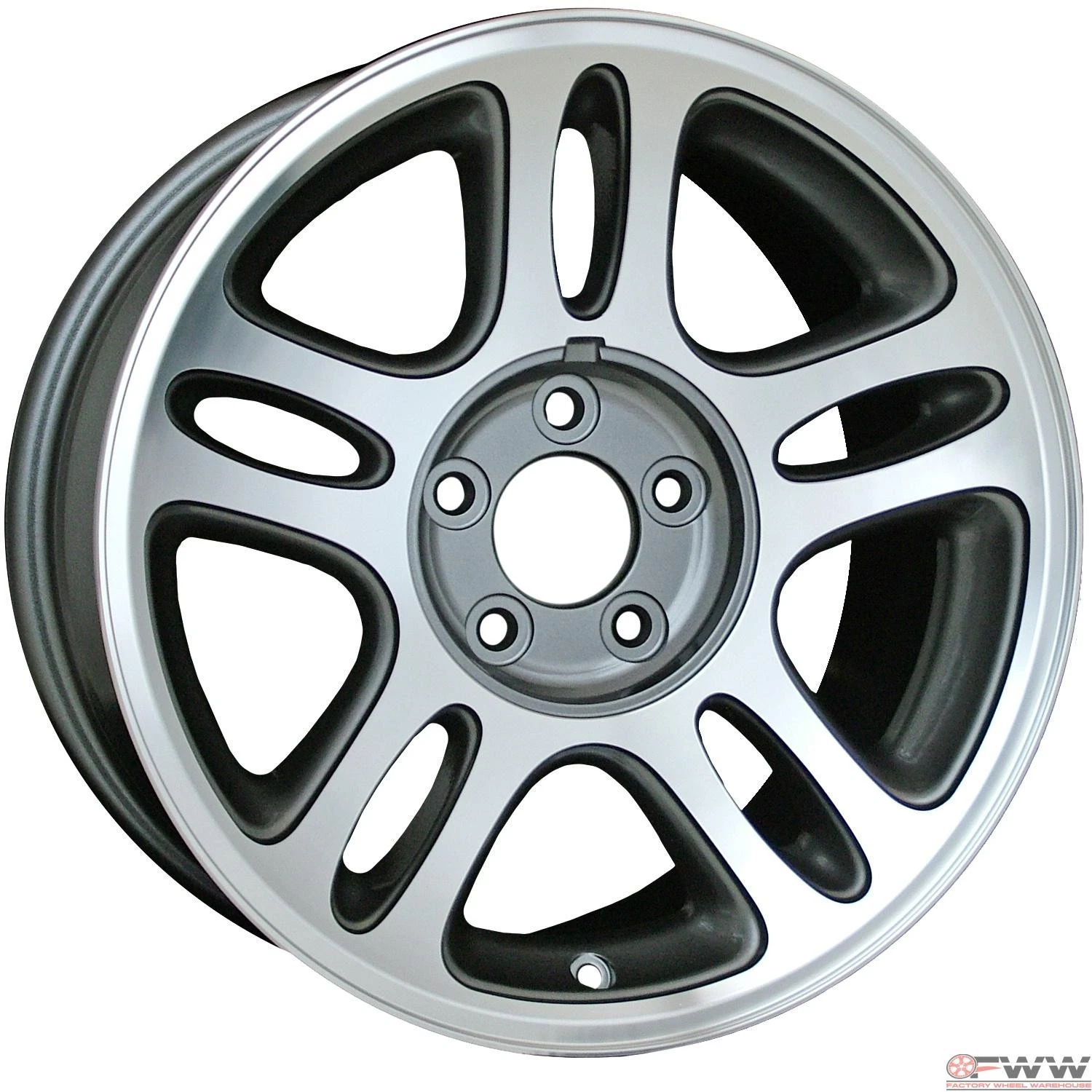
I am running a '97 Mustang wheel that looks like this:
s-l1600.webp


It's got a nice flat spot out at the edge that I have been using. Much better than the clamp on things the last shop used that has to be centered in the wheel so the concave face doesn't make everything read wrong, but that a different story.

I've been using that surface with a stick of 1x1 aluminum tube to set camber. But the Longacre gauge isn't going to work as well with that since the magnet won't stick to it.

So I came up with this idea. The ring being just the very outer lip of my wheel.

1759536546444.png


The idea being that I could bungy the tool to the face of the wheel and the gauge would stick to the face of the mount. It's like $42 for one from SendCutSend, or $52 for 2 of them, out of 14ga with no finish. I figured I would add some small holes in the flanges so I could run the bungy around the spokes of the wheel rather than across the face of the tool.

Then I thought maybe I could make a stand that rests on the lug nuts.

1759536765998.png


I have extra long studs so I could run some regular nuts down on top of the legs and finger tight them. That idea is $49 for a pair with matte black powder coating out of 14g, or $38 bare.

The idea being that both would allow the gauge to stick and hold itself. Neither is going to work well with other wheel designs outside of maybe the second one with a steel wheel. The second one depends on the lug nuts being all the same height, but I think they should be close enough. And the second one feels more securely mounted since it doesn't depend on bungy tension.

But I'm no expert in this stuff and don't know what I don't know. So all you guys that do your own alignments and/or have been doing this stuff for years, what am I missing? Do you think these would work?

Thoughts?
 
Not overly cheap…I found one of these used for $100. They are $175 new on Amazon….cheaper in the US I’m sure

IMG_4307.jpeg
 
Not overly cheap…I found one of these used for $100. They are $175 new on Amazon….cheaper in the US I’m sure

View attachment 1716462678

I saw similar tools when I searched, not excited to add another $200 in tools to do my own alignment. At least not yet. I was thinking I could do a simple tool for much less, both ideas ended up being more than I expected.
 
Ammco camber/caster gauge
They're magnetic and stock well to the hub where the grease cap goes
Lots of caster camber gauges with magnets that mount to the outside of the hub where the grease cap attaches....
 

Magnetic does not work with some wheels. I had some version of torque thrust, and the center hole is too mall to get the gauge in there. The hub does not come clear through the wheel

Dion, can you fashion, wood, anything, some sort of anchor that would fit into the wheel holes from the rear, and allow you to run a bolt/ all thread through to clamp a fixture onto the face of the wheel?
 
Another option is to remove the grease cap, cotter pin & retainer... Replace those with a 3/4-16 coupler nut with a plate welded to the end.. To be accurate the plate should be welded to the coupler nut then mount the coupler nut in a lathe & take a skim cut to true up the surface...

Now the gauge mounts to the plate...
 
I just use a Fastraxx gauge, it clamps onto the outer lip of the rim. You have to make sure it's tight to the wheel, but it works well once you practice a bit with how much tension to put on the gauge to hold it to the wheel. They make a version for 13-17" wheel and 17-22" wheels.

SPC Performance 91000 SPC Performance FasTrax Camber Caster Gauges | Summit Racing

I’ve seen you talk about those before. My guess is that when I step up to 18” wheels, I will have to get something like that. But right now, I was hoping to avoid another big outlay of cash.

Edit - worse yet, I would have to buy both sets at some point. My ‘74 has 17” wheels while the ‘73 will get the 18” Forgestars.
 
Last edited:
I should have been clearer. One thing I really want to avoid is having to pop the dust cap off. And I refuse to remove the nut. I want something I can place on the wheel that doesn’t require removing parts and such.

So far I haven’t seen anyone tell me my ideas won’t work.
 
Dion, can you fashion, wood, anything, some sort of anchor that would fit into the wheel holes from the rear, and allow you to run a bolt/ all thread through to clamp a fixture onto the face of the wheel?

I could run a j-hook of some type on the first idea instead of a bungy.

Both of my ideas give me a fixture on the face of the wheel.
 
The Longacre has a magnetic base too but its common it won't reach hub center with thick aluminum wheels.

Funny thing is, my hub is actually fairly exposed. No idea if the pin on the spindle is short enough past the hub that my Longacre gauge could attach. It is even a steel hub.

But I don’t want to be popping my dust cover off when I do an alignment.

And if I ever get my fabricated spindles designed, they won’t use a candlestick spindle, so there won’t be anything to attach to at that point.
 
After another pointless frustrating encounter with an alignment shop, I bit the bullet and bought a Longacre camber/caster bubble gauge.

While I was waiting for it to show up, got to thinking about mounts for the gauge and such. I found some large mounts that was more expensive than I was willing to spend. But it got me to thinking about making something.

I am running a '97 Mustang wheel that looks like this:

s-l1600.webp


It's got a nice flat spot out at the edge that I have been using. Much better than the clamp on things the last shop used that has to be centered in the wheel so the concave face doesn't make everything read wrong, but that a different story.

I've been using that surface with a stick of 1x1 aluminum tube to set camber. But the Longacre gauge isn't going to work as well with that since the magnet won't stick to it.

So I came up with this idea. The ring being just the very outer lip of my wheel.

View attachment 1716462669

The idea being that I could bungy the tool to the face of the wheel and the gauge would stick to the face of the mount. It's like $42 for one from SendCutSend, or $52 for 2 of them, out of 14ga with no finish. I figured I would add some small holes in the flanges so I could run the bungy around the spokes of the wheel rather than across the face of the tool.

Then I thought maybe I could make a stand that rests on the lug nuts.

View attachment 1716462673

I have extra long studs so I could run some regular nuts down on top of the legs and finger tight them. That idea is $49 for a pair with matte black powder coating out of 14g, or $38 bare.

The idea being that both would allow the gauge to stick and hold itself. Neither is going to work well with other wheel designs outside of maybe the second one with a steel wheel. The second one depends on the lug nuts being all the same height, but I think they should be close enough. And the second one feels more securely mounted since it doesn't depend on bungy tension.

But I'm no expert in this stuff and don't know what I don't know. So all you guys that do your own alignments and/or have been doing this stuff for years, what am I missing? Do you think these would work?

Thoughts?
Depends on the degree of accuracy you are looking for. You either need to have a provision for squareing the gauge with a rim compensation or check for runout on your adapters some other way.
 
After another pointless frustrating encounter with an alignment shop, I bit the bullet and bought a Longacre camber/caster bubble gauge.

While I was waiting for it to show up, got to thinking about mounts for the gauge and such. I found some large mounts that was more expensive than I was willing to spend. But it got me to thinking about making something.

I am running a '97 Mustang wheel that looks like this:

s-l1600.webp


It's got a nice flat spot out at the edge that I have been using. Much better than the clamp on things the last shop used that has to be centered in the wheel so the concave face doesn't make everything read wrong, but that a different story.

I've been using that surface with a stick of 1x1 aluminum tube to set camber. But the Longacre gauge isn't going to work as well with that since the magnet won't stick to it.

So I came up with this idea. The ring being just the very outer lip of my wheel.

View attachment 1716462669

The idea being that I could bungy the tool to the face of the wheel and the gauge would stick to the face of the mount. It's like $42 for one from SendCutSend, or $52 for 2 of them, out of 14ga with no finish. I figured I would add some small holes in the flanges so I could run the bungy around the spokes of the wheel rather than across the face of the tool.

Then I thought maybe I could make a stand that rests on the lug nuts.

View attachment 1716462673

I have extra long studs so I could run some regular nuts down on top of the legs and finger tight them. That idea is $49 for a pair with matte black powder coating out of 14g, or $38 bare.

The idea being that both would allow the gauge to stick and hold itself. Neither is going to work well with other wheel designs outside of maybe the second one with a steel wheel. The second one depends on the lug nuts being all the same height, but I think they should be close enough. And the second one feels more securely mounted since it doesn't depend on bungy tension.

But I'm no expert in this stuff and don't know what I don't know. So all you guys that do your own alignments and/or have been doing this stuff for years, what am I missing? Do you think these would work?

Thoughts?
Putting the gauge directly on the hub (clean and undamaged) most likely will result in not needing to do a rim compensation for camber or caster. Depending on how you measure toe and how accurate you want to be you will still likely need to do a rim compensation to set toe.
Don't forget before any alignment you first need to do an alignment qualification.
 
Putting the gauge directly on the hub (clean and undamaged) most likely will result in not needing to do a rim compensation for camber or caster. Depending on how you measure toe and how accurate you want to be you will still likely need to do a rim compensation to set toe.
Don't forget before any alignment you first need to do an alignment qualification.

Rim compensation? Not even sure what that is or how and if the laser alignment machines do that. How would I do something like that?

Alignment qualification?

I was guessing that any alignment difference between the hub, wheel, etc. was just ignored. The deal they clamped to my wheel last time could have been off a fair amount just due to the concave face of my wheel and the tech not even caring if it was up, down, left or right of the center of the wheel. I figured it was all more just a “close enough” type measurement.

Thanks!
 
the problem with this idea is there are no way to calibrate/check the true wheel to measuring device and stacked tolerances will prevent an accurate measurement, when dealing with half a degree or 1/16 inches or less.
 
I should have been clearer. One thing I really want to avoid is having to pop the dust cap off. And I refuse to remove the nut. I want something I can place on the wheel that doesn’t require removing parts and such.

So far I haven’t seen anyone tell me my ideas won’t work.
I went through this whole process recently and I didn't want to remove the rallye centers either. I didn't find a design that would clamp on without spending a decent amount of time and money. The wheel alignment fixture I have is similar to the one on Amazon for $90 in the US. I bought a pair of used Hoffmann's that retail for over $3k for $150. Its handy to have 2 but you could get by with one. I didn't have time to design and fab something after the alignment shop couldn't do my alignment.
 
How do you do a rim compensation with that setup?

The only "rim compensation" needed with a clamp set up is to check the run-out. The Snap-On wheel clamps I have cover how to compensate for run out in their instructions, but it's a bit of a process and truly the amount of correction is usually small.

The SPC gauge instructions don't even cover run out compensation, because unlike with a magnetic set up on a wheel clamp you can't flip the gauge over when you're rotating the wheel to check the run out. I was a little concerned about that myself so when I initially got the SPC gauge I experimented with moving the gauge around and trying to set it up so that it wasn't 100% flush to the wheel to see what kind of measurement errors I got. Having done that I found that the changes in measurements were really small unless the gauge was obviously not flush to the wheel.

The thing is that you're only measuring camber and caster with that gauge. Camber is literally just the angle the wheel is at, so as long as you try and get the gauge seated flush to the rim it's going to be more than accurate enough. Caster is actually a difference measurement, if you look at the equation to calculate caster you see that what you're doing is actually using the difference between the two positions you're measuring to get the spindle angle. So, unless the gauge is completely out of whack (or moving between measurements) a lot of the error is subtracted out in the difference.

For home use I don't think any kind of compensation is necessary with the SPC gauge. If you practice using the gauge and use the same procedure for mounting it each time it's not difficult to get repeatable, consistent numbers. And quite frankly, even with the modern alignment systems the actual accuracy is very dependent on how the gauges are set up, and given that most of the alignment shops out there aren't going to be familiar with dealing with our cars and are trying to cram in as many alignments as possible you may get better results doing it at home. Using a laser alignment system and printing out a nice color coded sheet doesn't mean jack if the sensors weren't placed accurately, and on these cars that usually takes some adaptation, which can mean errors.
 
Using a laser alignment system and printing out a nice color coded sheet doesn't mean jack if the sensors weren't placed accurately, and on these cars that usually takes some adaptation, which can mean errors.

I couldn’t even get a print out last time because “the printer is broken”. The boss kicked me out due to the tech getting nervous because he couldn’t figure out how to do the alignment while I did. If I hadn’t stayed at the door and walked in periodically I would have gotten a stock 1974 alignment (which I specifically asked not to get) and would have had no idea what alignment numbers I would have gotten at all. Then I got an argument out of them about the toe-in and how I should run a slight bit of toe-out.

Oh, and the sensors were all over the place. They kept popping off when the tech turned the wheel because the arms would hit the fender (always good for the paint) and in the end, pretty sure they were low on the wheel and giving wrong readings.

So, whatever inaccuracy I get due to run out will be far better than dealing with those yahoos again. And I still don’t see how the laser alignment machines see that runout anyways.
 
I couldn’t even get a print out last time because “the printer is broken”. The boss kicked me out due to the tech getting nervous because he couldn’t figure out how to do the alignment while I did. If I hadn’t stayed at the door and walked in periodically I would have gotten a stock 1974 alignment (which I specifically asked not to get) and would have had no idea what alignment numbers I would have gotten at all. Then I got an argument out of them about the toe-in and how I should run a slight bit of toe-out.

Oh, and the sensors were all over the place. They kept popping off when the tech turned the wheel because the arms would hit the fender (always good for the paint) and in the end, pretty sure they were low on the wheel and giving wrong readings.

So, whatever inaccuracy I get due to run out will be far better than dealing with those yahoos again. And I still don’t see how the laser alignment machines see that runout anyways.

Exactly. The laser doesn't see any run out unless the tech corrects for it when they're setting the sensors, and I would wager they usually don't. Yeah the laser machine might be really precise in a single measurement, but if it's not set up right it won't be accurate and it won't be consistent between visits either because it won't be measuring the same distance each time. Cool, I've got the wrong measurement down to a thousandth.

The SPC gauge is actually pretty easy to use, and it's pretty easy to get it attached so it sits square. I haven't had any problems getting consistent, repeatable measurements using the SPC gauge. The first few times I used it I took the measurements a bunch of different times, just getting a feel for the gauge and making sure I was getting good results. And that's something you won't get out of an alignment shop, they're gonna be one and done. Sure, the first few times I did an alignment with the SPC gauge it took a lot longer because of how many times I checked and re-checked things, but after some practice and a consistent procedure it's not bad at all.
 
I couldn’t even get a print out last time because “the printer is broken”. The boss kicked me out due to the tech getting nervous because he couldn’t figure out how to do the alignment while I did. If I hadn’t stayed at the door and walked in periodically I would have gotten a stock 1974 alignment (which I specifically asked not to get) and would have had no idea what alignment numbers I would have gotten at all. Then I got an argument out of them about the toe-in and how I should run a slight bit of toe-out.

Oh, and the sensors were all over the place. They kept popping off when the tech turned the wheel because the arms would hit the fender (always good for the paint) and in the end, pretty sure they were low on the wheel and giving wrong readings.

So, whatever inaccuracy I get due to run out will be far better than dealing with those yahoos again. And I still don’t see how the laser alignment machines see that runout anyways.
The way the machine sees the run out is dependant on the machine. Some roll the car a certain amount and some jack the wheels and rotate the wheels. When the wheel rotates the sensor measures runout and compensates for the runout whether caused by the clamp set up or the wheel or ???.
 
Exactly. The laser doesn't see any run out unless the tech corrects for it when they're setting the sensors, and I would wager they usually don't. Yeah the laser machine might be really precise in a single measurement, but if it's not set up right it won't be accurate and it won't be consistent between visits either because it won't be measuring the same distance each time. Cool, I've got the wrong measurement down to a thousandth.

The only reason I was in for an alignment was because I was chasing a weird steering problem and though maybe my settings were off. Earlier this year I read up on how caster is calculated and using a stick of aluminum tubing and a digital angle finder, I set both sides to +4 caster and -0.5 camber. Guess what their readings were on the right side? Exactly that. But the left side was more like +7/-1 so they adjusted that. The more I think about it, I am convinced that they had the left sensor low, creating an artificially greater angle. Later today I will check it myself, and my gut says I will be doing a full alignment again, not just setting toe like I planned, before I can test drive it.

The way the machine sees the run out is dependant on the machine. Some roll the car a certain amount and some jack the wheels and rotate the wheels. When the wheel rotates the sensor measures runout and compensates for the runout whether caused by the clamp set up or the wheel or ???.

This one rolled the car back and forth. It was definitely a whole process and when they kept knocking the sensors off the wheels and had to start over, the tech was getting frustrated. Guessing he didn't see my frustration that he kept whacking into my fenders with his sensors.
 
-
Back
Top Bottom















