6.4 8HP buying advice

-

64mopar64

Well-Known Member
Joined
Sep 10, 2009
Messages
67
Reaction score
105
Location
Clifton Park, NY
I'm shopping for a 6.4/8HP70 dropout with engine harness, shifter, gas pedal, etc. for the 67 Barracuda. The recyclers near me don't deal in those parts very often. Market place looks pretty sketchy, ebay usually has several but long distance buying is a little scarry. Any advice or experiences from guys who have been there, done that?
 
I'm shopping for a 6.4/8HP70 dropout with engine harness, shifter, gas pedal, etc. for the 67 Barracuda. The recyclers near me don't deal in those parts very often. Market place looks pretty sketchy, ebay usually has several but long distance buying is a little scarry. Any advice or experiences from guys who have been there, done that?
There was a member on here a while back that was selling combos. Terre haute or Indianapolis area ...I'm trying to remember.
 
Last edited:
I've been looking at COPART, numerous possabilities within 300 miles. I live in NY, not having a business license adds another $1k or so and involvment of middlemen to the process of buying an auction car. There are lots of Challenger and Chargers available because the complexity of proper repairs causes then to total easily. From the research I've done, salvage yards are selling the engine/trans package for 1.5 to 2X what they paid for the car. I don't mind the price but a little concerned about quality. A few dismantelers such as CPP do leakdown & compression tests while others don't. I was thinking hard about the 6.4 package CPP has currently but research showed the donor Charger has been totaled twice which scares me even though I think CPP does a great job.

Thanks for the suggestion Jeff, thats 1 of 4 I have on my list. I'm just scared to pull the trigger on sight unseen, far away, big ticket items. Scardy cat:).

Thanks for everyones input.
 
I've been looking at COPART, numerous possabilities within 300 miles. I live in NY, not having a business license adds another $1k or so and involvment of middlemen to the process of buying an auction car. There are lots of Challenger and Chargers available because the complexity of proper repairs causes then to total easily. From the research I've done, salvage yards are selling the engine/trans package for 1.5 to 2X what they paid for the car. I don't mind the price but a little concerned about quality. A few dismantelers such as CPP do leakdown & compression tests while others don't. I was thinking hard about the 6.4 package CPP has currently but research showed the donor Charger has been totaled twice which scares me even though I think CPP does a great job.

Thanks for the suggestion Jeff, thats 1 of 4 I have on my list. I'm just scared to pull the trigger on sight unseen, far away, big ticket items. Scardy cat:).

Thanks for everyones input.
No problem...My neighbor is a Corvette guy that uses this company. He turned me onto them. They have 100 percent positive review. They say free delivery but there is an asterisk there. The vin is available for the car this engine came from to prove documentation and mileage. Good luck. Your 67 fish should be a real gem with the retrofit. Not that a good 273 wouldn't do the trick for us old folks.:poke:LOL
 
Depends on budget...but an Gen3 isnt really a budget swap. Used engines, unless your lucky may have been rode hard, have piston ring land issues, lifter issues, etc. Look up the typical failure points on these. I see these inner city kids beat the crap out of the cars and wonder if those are the used engines being sold on marketplace. I would have to go through a used engine to feel good about it. By the time you go through it, you might be close to buying new. Run the numbers. Mopar sells long block 392's (68411264AA), buy one of those from Scoggins-Dickey. Add the Holley mid-mount accessory drive, this keeps everything close and tighter to the block over the OE design. Alot of what's on the front end you can't use anyway, AC, Alternator (depends on electronics to run the engine) etc. You need to change the oil pan. Just some thoughts here. My advice is research and build the project on paper with all the numbers $$$ and see what direction makes sense. I say research because alot of people forget the incidental items that can add up to thousands of dollars..."while im here I might as well...$$$"
 
Depends on budget...but an Gen3 isnt really a budget swap. Used engines, unless your lucky may have been rode hard, have piston ring land issues, lifter issues, etc. Look up the typical failure points on these. I see these inner city kids beat the crap out of the cars and wonder if those are the used engines being sold on marketplace. I would have to go through a used engine to feel good about it. By the time you go through it, you might be close to buying new. Run the numbers. Mopar sells long block 392's (68411264AA), buy one of those from Scoggins-Dickey. Add the Holley mid-mount accessory drive, this keeps everything close and tighter to the block over the OE design. Alot of what's on the front end you can't use anyway, AC, Alternator (depends on electronics to run the engine) etc. You need to change the oil pan. Just some thoughts here. My advice is research and build the project on paper with all the numbers $$$ and see what direction makes sense. I say research because alot of people forget the incidental items that can add up to thousands of dollars..."while im here I might as well...$$$"

I think that really depends on how far you want to take it and what your mechanical/technical ability is. I did a carb swap on mine way back when I first swapped it in the car ~15 years ago and I kept it all pretty cheap. Motor mounts, headers (could have probably made manifolds work to be even cheaper), an MSD ignition box, and the carb intake and it was like any other engine swap at that point. Granted, that also gave up a lot of the benefits of a modern engine. I also had an older engine without all the fancy stuff like the variable intake runners, MDS, and VVT. I also wasn't really going for anything in particular as far as crazy power or anything though. I just wanted a modern engine with o-ring seals and the like that was reliable and wouldn't leak oil everywhere, not the super clean near show car style builds I've seen a lot of.

Granted, I've sunk plenty into it since then as I've converted back to fuel injection with an aftermarket computer, but I still kept that pretty cheap as I got a deal on a used setup and could upgrade it over time. I also went with a manual transmission, so I didn't have to worry about any controls and computers with that either.
 
Depends on budget...but an Gen3 isnt really a budget swap.

I am at $1733 for my swap right now, not counting a motor or tuning.

Holley Swap Headers
$485.95​
Holley Motor Mounts
$226.75​
Holley Oil pan w/ pickup
$475.18​
Used PCM
$100.00​
OE harness(es)
$120.00​
Dipstick and PS hoses
$137.94​
Gas Pedal
$20.00​
90 degree adapter
$167.76​
Total
$1,733.58​

I am $350 into my fuel system for the tank and pump, but don't have lines to the front yet so cost isn't final.

SPECTRA CR11E gas tank
$158.79​
Used C5 Camaro fuel module
$75.00​
GTO tank to cut ring out of
$100.00​
VaporWorx FPRAGM5
$14.99​
Total
$348.78​

I also have my exhaust system, the stainless Hooker kit that was on sale a year ago or so for $410 to my door.

I am estimating a total of $6500 all in using the core Eagle 5.7 I picked up. To be fair, I did have a spool mount k-frame to use so even though I started with a /6 car that part didn't add to my total but would be required if you had to hunt one down.

That includes VVT, a SRV intake and a better cam (6.4) so should be a decent setup. And with the Holley mounts I don't have to hack my firewall or delete the SRV module, I can run the OEM AC compressor and my oil filter isn't remote.

So like @Map63Vette said, it depends on how far you want to go. I don't plan to hide my PCM, but if you did it would be $1K more for a longer aftermarket harness. Buying a crate motor would double my engine costs and wouldn't have the cam or intake I want. So it really depends on how you want to do it.

Add the Holley mid-mount accessory drive, this keeps everything close and tighter to the block over the OE design. Alot of what's on the front end you can't use anyway, AC, Alternator (depends on electronics to run the engine) etc.

The Holley FEAD kit actually makes the motor longer than the OEM setup. And with the Holley mounts you can actually use all of the stock FEAD stuff. The drawback is, the Holley mounts move the motor forward so the trans mount and linkage needs work if you aren't also swapping a different trans in at the same time. I planned for a T56 swap at the same time so it didn't bother me.

But for TTI or Schumacher mounts, it is true you can't easily use the AC compressor, but the alternator still fits with a small message of the PS frame rail. So the Holley FEAD kit does help with that.

 
I used the factory alternator and A/C with my setup, but I've got a pre-Eagle engine and the truck front cover that mounts them up high, so lots of room. The downside being it's not the prettiest and it can limit intake choices. My carb style intake doesn't care since it breathes through the top vs the front. I did have to clip one bolt hole on it for the A/C compressor to mount, but that was easy enough. I want to say I had my engine in my car running for under $5k (pretty sure that was engine included), but that was also over a decade ago, so prices may not be comparable.

Headers, the MSD box, and the intake were the big tickets for me. I think the headers and MSD box were each $600-700, maybe even the intake. I got the engine for $1500, but had to replace a head since it had a dropped valve seat when I got it, so it was maybe $2k total cost to buy it and have it in running condition. I didn't keep the best track of the little nickel and dime stuff though, so hard to say the final total. I'm sure I've spent a fair portion of that all over again between the conversion back to fuel injection, the T56 swap, and all the other various little updates I've made over the years, but the difference there is I could do it a little at a time.
 
I should have added that the costs I listed aren't current. And I bought parts slowly over time and it has been several years. At one point the headers were discontinued, but even if they are $300 more now at least they are available again.
 
I had a 2012 SRT 8, 6.4, 6 speed a while ago. Very strong running engines! The only caution I would give would be the cam & lifters. They have a reputation of lifters going bad and wiping out the cam. It’s called “lifter tick” if you want to do a search on the Internet. You’re rolling the dice when you get a used engine and trans. Low mileage doesn’t really mean as much as a “typical car” as most are run hard! More importantly, is where they maintained and is the cam and lifters not one of the ones that’s going to fail.It would be a cool swap though, good luck.
 
I am at $1733 for my swap right now, not counting a motor or tuning.

Holley Swap Headers
$485.95​
Holley Motor Mounts
$226.75​
Holley Oil pan w/ pickup
$475.18​
Used PCM
$100.00​
OE harness(es)
$120.00​
Dipstick and PS hoses
$137.94​
Gas Pedal
$20.00​
90 degree adapter
$167.76​
Total
$1,733.58​

I am $350 into my fuel system for the tank and pump, but don't have lines to the front yet so cost isn't final.

SPECTRA CR11E gas tank
$158.79​
Used C5 Camaro fuel module
$75.00​
GTO tank to cut ring out of
$100.00​
VaporWorx FPRAGM5
$14.99​
Total
$348.78​

I also have my exhaust system, the stainless Hooker kit that was on sale a year ago or so for $410 to my door.

I am estimating a total of $6500 all in using the core Eagle 5.7 I picked up. To be fair, I did have a spool mount k-frame to use so even though I started with a /6 car that part didn't add to my total but would be required if you had to hunt one down.

That includes VVT, a SRV intake and a better cam (6.4) so should be a decent setup. And with the Holley mounts I don't have to hack my firewall or delete the SRV module, I can run the OEM AC compressor and my oil filter isn't remote.

So like @Map63Vette said, it depends on how far you want to go. I don't plan to hide my PCM, but if you did it would be $1K more for a longer aftermarket harness. Buying a crate motor would double my engine costs and wouldn't have the cam or intake I want. So it really depends on how you want to do it.


The Holley FEAD kit actually makes the motor longer than the OEM setup. And with the Holley mounts you can actually use all of the stock FEAD stuff. The drawback is, the Holley mounts move the motor forward so the trans mount and linkage needs work if you aren't also swapping a different trans in at the same time. I planned for a T56 swap at the same time so it didn't bother me.

But for TTI or Schumacher mounts, it is true you can't easily use the AC compressor, but the alternator still fits with a small message of the PS frame rail. So the Holley FEAD kit does help with that.
I'm curious how you actually plan to make the stock harness and PCM actually work with the car. The PCM will need to be unlocked.. what year PCM btw?

A guy can save some money on relocating the PCM by lengthening the main harness, themselves. I lengthened mine something like 14".. was a lot of soldering and heat shrink but if done 1 wire at a time, it's easy. Don't just cut them all at once... I've seen people do that and then scrap it because theirs whole lotta wires that look exactly the same.
 
I'm curious how you actually plan to make the stock harness and PCM actually work with the car. The PCM will need to be unlocked.. what year PCM btw?

I have a 2010 Ram NGC PCM to use. I would have liked to use a GPEC2, but the SSR issue turned me off as at the time the only option was a Crate Motor PCM or a clone of one from Sublime and it felt like I might not have been able to get one. Add that the PCM I have only cost me $100 used while the GPEC2 seemed to be more like $500 and up. Even now the QuickCrate flash service from Sublime is $300 and a used PCM is probably going to be $200+ so still 5x what I spent on the one I have.

I originally planned to use and acquired an '09 Challenger R/T, 6M PCM but my understanding is they can't run the SRV intake even with tuning. On the other hand, the trucks came with SRV intakes which makes it a better fit in theory.

The NGC doesn't need to be unlocked, but I will have to deactivate SKIM. Should be able to do that myself if I spring for an HPTuner setup, worst case.

The base harness I have is from an '08 Charger SRT and is missing the VVT and SRV wires. But I have already checked the pinouts for the '08 harness and the '10 PCM and should only have to add the 2 missing wires. So simple enough and cheap. The only real issue with using that harness is that it only has 2 of the 3 needed plugs, but my local Pull and Save has graciously supplied me with a couple more incomplete harnesses for a very reasonable price. So I have the plug and just need to integrate it into the harness and the chassis. There is a chassis plug on the engine harness that I will splice the missing plug into and then it is just the typical EFI swap connections to the chassis like power, ground, key on, start signal, etc. Really shouldn't be too difficult.

A guy can save some money on relocating the PCM by lengthening the main harness, themselves. I lengthened mine something like 14".. was a lot of soldering and heat shrink but if done 1 wire at a time, it's easy. Don't just cut them all at once... I've seen people do that and then scrap it because theirs whole lotta wires that look exactly the same.

True. I had forgotten you had done that.

My brother bought an extended harness and GPEC2 from Hot Wire, so there is that option as well. His turned out really nice. But it was like $2K+ so way out of my price range.

Funny thing is, looks like Hot Wire wants $200 more for an NGC now, pretty sure when I was looking it was more expensive for the GPEC2a.

I had planned to get the harness(es) and PCM down off the shelf and mock them up and start work on them but still haven't gotten around to it. Maybe it will change my mind when I see it all in the engine bay, but my plan has been to just put the PCM in the back PS corner and call it good. Really don't need the extra work of extending the wires, nor figuring out where/how to mount the PCM under the dash. But we will see.
 
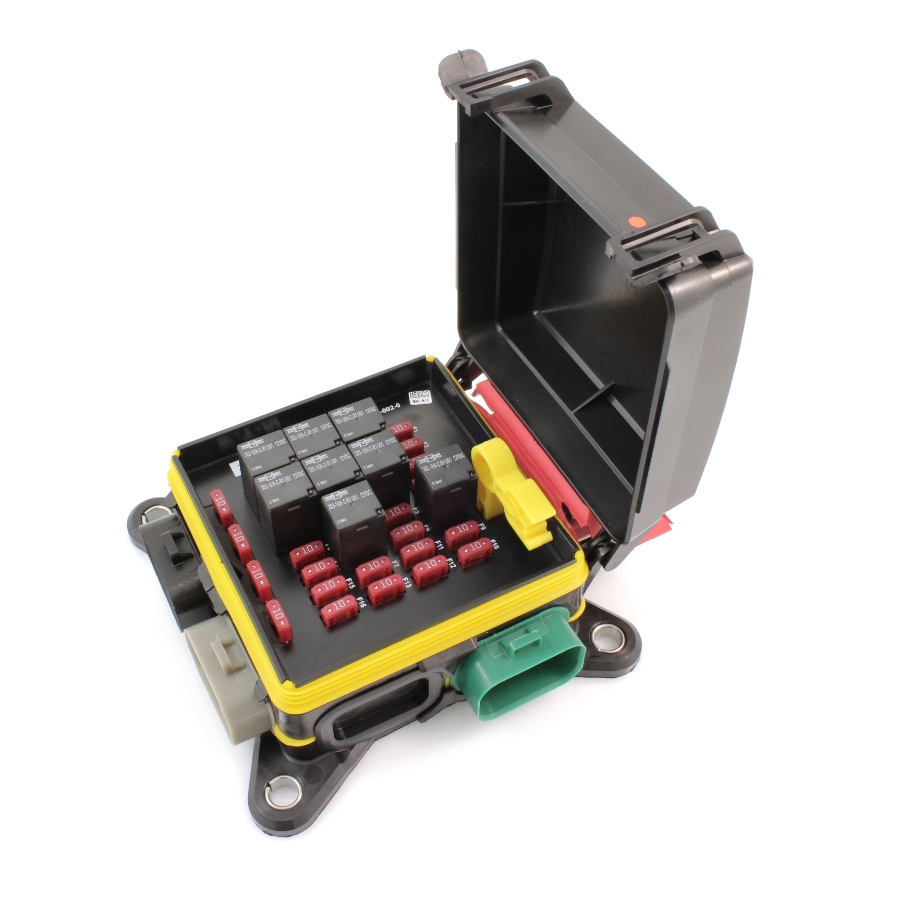
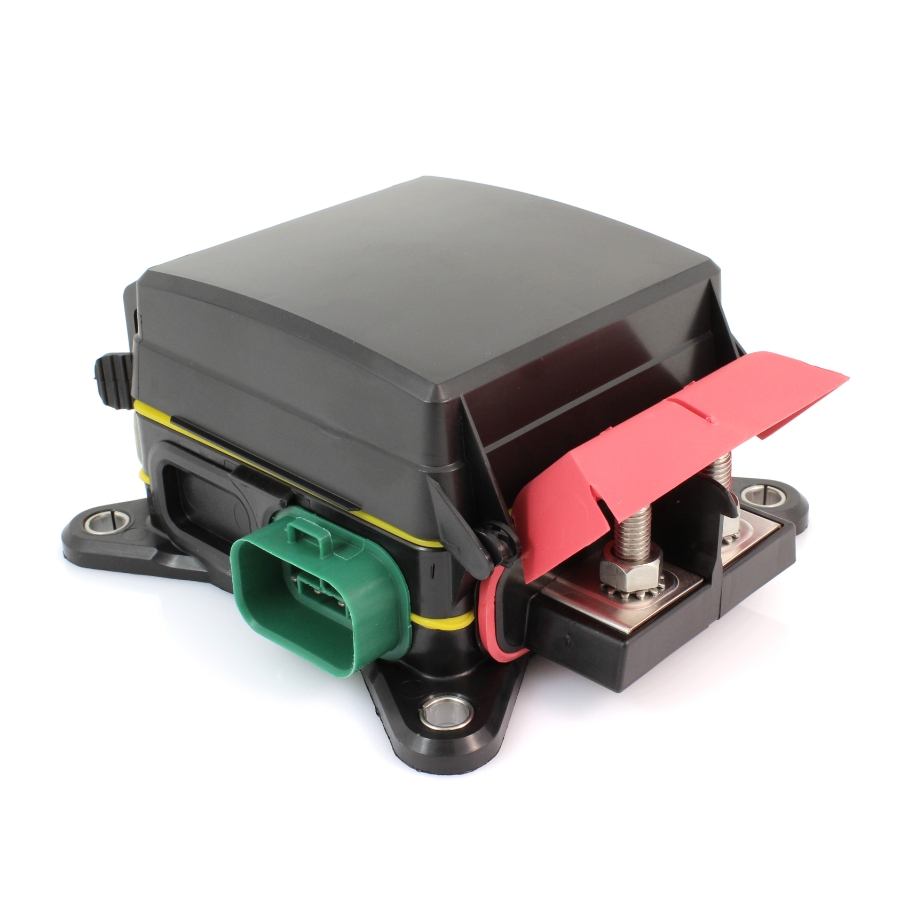
I forgot to add that the other missing piece is a relay box or something similar. The kits from Hot Wire and Sublime have them integrated but since I plan to use an OEM harness I need to add one.

My plan is to use this one:

31s-002-0

6ac2ea24cfcd13d_lg.jpg


0f8ff85e76fdf8e_lg.jpg


Here is my expected wiring for it:

PDC Wiring 31s-002-0 crop.png


It is in some ways overkill since I don't need most of the fuses, but maybe I will find a use for them later. I settled on this one because it has enough relays, plus a spare. And I like the form of the box since I just have to connect a couple of wires for each relay and don't have to figure out how to merge a bunch of power wires. I have build (but never installed) a PDC from an early 90's Jeep or something and splicing wires together and keeping it in the box was a pain. So I am going to go this route this time.

You could get away with fewer relays if you didn't add headlight relays, but I figured why not keep them together. And note that radiator fan control relays aren't part of things as the NGC can't control the fans so I will need a separate controller, unfortunately. And this box won't do relays big enough to control a fan.

There is also this option for something cheaper that might still be an ok option:


711FQXBTvbL._AC_SX522_.jpg
 
Last edited:
There is also this option:


It's a little simpler than the first one and doesn't have a bunch of unused fuses, but no place to fuse the PCM like I plan. Plus it uses bigger relays that have the option for NO circuits which my selected one does not. But the wiring isn't as simple because the power for the control circuit in the relays in separated from the input power.

But separating the control circuit power does potentially add an interesting twist. The control circuit power could be run through a hidden NO relay resulting in some sense of theft security. Just hide a switch someplace that can be used to ground the NO relay and wire the relay into the key-on circuit. Then, if the relay isn't grounded, the power stops even if the car is hotwired. But if it is grounded, the key-on power makes it to the PDC and the PCM can turn on the ASD, fuel and starter relays as needed.

I like the idea of a hidden magnetic switch myself. As long as I don't need to carry a magnet around in my pocket along with my credit cards and such. :D

Just an idea.
 

Bussed PDCs are the way to go for sure, though I would agree that having a little more flexibility on power/ground outputs would be nice. The last place I worked used ones just like what you were looking at for an EV project. They have them in a couple different configurations of all fuses or fuse/relay combos. I have a dual buss one that I have ignition power on one side and battery power on the other. It's monstrous, but I've ended up using a lot more of it than I originally thought I would: https://www.amazon.com/Cooper-Bussmann-15404-2-0-1-0A-Panel-Included/dp/B015YSZ5BQ?tag=fabo03-20. I have a small little fuse block in front of it that has two huge fuses and two smaller ones. That's my main distribution point and I've got it set up where one fuse each feeds engine side battery, engine side ignition, cabin side battery, and cabin side ignition. It's a bit messy having a couple of things chained together like that, and I'm sure I could have done it a little cleaner, but I got the fuse/relay panel for free, so I was going to use it. I replaced the one in my cabin with one of these: https://www.waytekwire.com/catalog/...eaton-s-bussmann-series-15305-1-2-3-mini-fuse. Same idea, one side is bussed for battery, the other for ignition power. I'm probably going overkill on some of my fuse/relay/wire sizes, at least when I compare them to modern vehicle harnesses, but better to have more than less I guess.
 
Bussed PDCs are the way to go for sure, though I would agree that having a little more flexibility on power/ground outputs would be nice. The last place I worked used ones just like what you were looking at for an EV project. They have them in a couple different configurations of all fuses or fuse/relay combos. I have a dual buss one that I have ignition power on one side and battery power on the other. It's monstrous, but I've ended up using a lot more of it than I originally thought I would: https://www.amazon.com/Cooper-Bussmann-15404-2-0-1-0A-Panel-Included/dp/B015YSZ5BQ?tag=fabo03-20. I have a small little fuse block in front of it that has two huge fuses and two smaller ones. That's my main distribution point and I've got it set up where one fuse each feeds engine side battery, engine side ignition, cabin side battery, and cabin side ignition. It's a bit messy having a couple of things chained together like that, and I'm sure I could have done it a little cleaner, but I got the fuse/relay panel for free, so I was going to use it. I replaced the one in my cabin with one of these: https://www.waytekwire.com/catalog/...eaton-s-bussmann-series-15305-1-2-3-mini-fuse. Same idea, one side is bussed for battery, the other for ignition power. I'm probably going overkill on some of my fuse/relay/wire sizes, at least when I compare them to modern vehicle harnesses, but better to have more than less I guess.

I never thought of them as "bussed", but you are right. That's what they are.

I don't plan to get that elaborate with mine. I will probably power my interior off the other stud on the PDC with the factory fuse box in between. Really don't expect to change much on the interior wiring other than delete the amp gauge since it won't be monitoring charge anymore, and swap the ignition switch for an F-Body one so I don't have an issue with loss of power between start and run. That might be overkill, have to see when I get to that point.
 
I replaced my cabin one because I just wanted to rebuild my harness with new terminals originally. It fixed a lot of issues with flickering lights and flakey switches. I ended up adding a bunch of fuses because that was the easier way to splice power as well instead of the factory setup, but I also needed more power points since my computer was in the cabin and some other stuff I added.

As for the ignition switch, I kept my original 67 without issue. I just jumpered two of the pins together and it hasn't been an issue. I want to say that one pin used to feed the coil directly with 12v while cranking for a hotter spark, and the other pin fed the ballast resistor once it was running to drop the voltage down. If you hook the two together they provide 12v all the time through run and crank positions since you don't need a ballast resistor anymore.
 
-
Back
Top Bottom