Engine is pulled - 273 rebuild or replacement 360 crate?

-
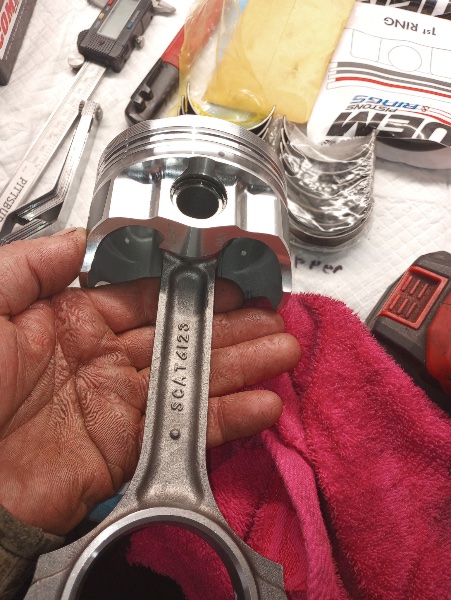
392 stroker is underway with Edelbrock heads and a Scat stroker rotating assembly
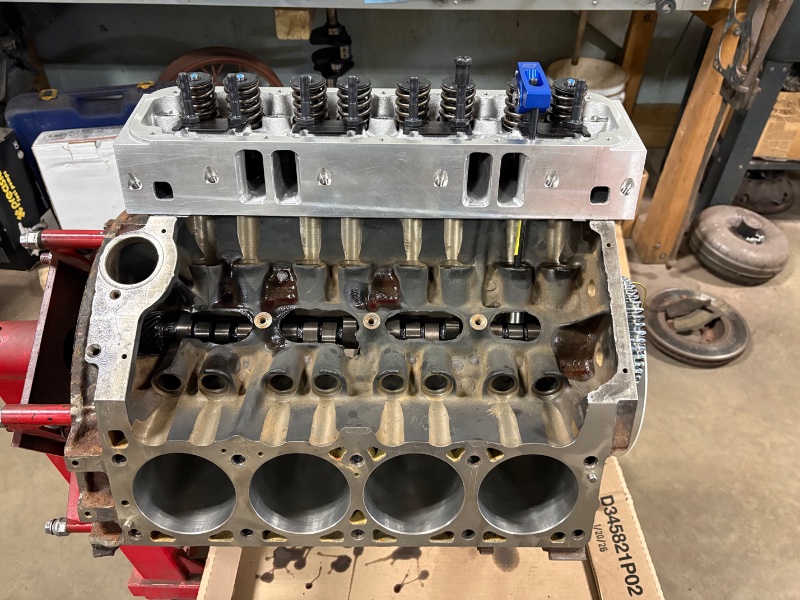
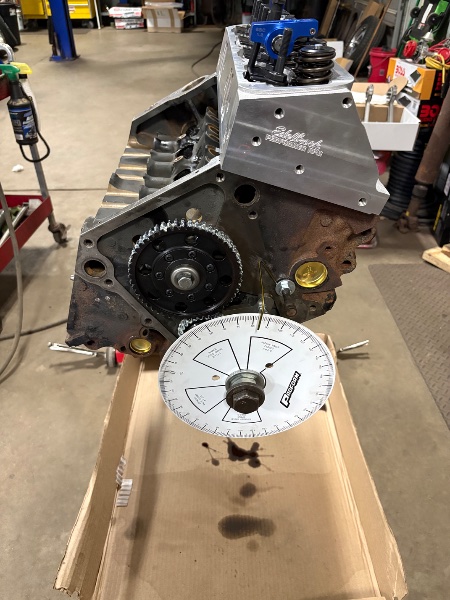
IMG_5038.jpeg


IMG_5037.jpeg


IMG_20260402_182617211.jpeg
 
15x7 steelies waiting to be painted body color CC1

View attachment 1716529382
Before you paint, you are way under tired for the motor/braking package you are building IMO, but then the age-old adage, you can NEVER have enough tire always applies. If you had noted an 8" or wider rim, I wouldn't have bothered to reply.
If you have noted an 8" or plus rim I wouldn't have bothered to reply. I suspect size limitations were set when you spec'd the Ford 9".
 
If he hasn't mini tubbed it and moved the springs into the frame rails, all he can get under there is 245/60-15's. Even then you have to use 1/2 inch offset perches and shackles to get them in. I'm doing the same thing to my 65 Barracuda and will be adding a Borgeson PS box so I can keep up with the steering to keep the *** end from passing me, lol.
 
I suspect size limitations were set when you spec'd the Ford 9".
This is correct.

Actually the conundrums started with wanting to keep the small bolt pattern wheels which as we know really limits wheel choices. I did this because the car had 15” ralleye wheels with a blue-gray center caps that look terrific with the CC1 paint. And good BF Goodrich raised white letter tires. Why spend $2k on wheels and tires when I like what I have?

While as I found out later the stock ralleye wheels have an inside taper that won’t work with the disc conversion. So ultimately I needed new wheels and tires.

Meanwhile the rear end housing I ordered was supposedly spec’d to 1966 8 3/4 A body. I got plans from the vendor and signed off on them. When the housing arrived it was 1.5 inches wider than the 7 1/4 that was in the car. It matched the plan I signed. Now I believe the 1966 8 3/4 is actually 1.5 inches narrower than the 7 1/4. Which might not be that big of a deal but the SBP wheel choices are so limited I have to go with what’s available. And that’s not much.

It didn’t help the plans I signed got put in a “pending file” and didn’t get made until I followed up a week or two later. Other decisions were made and things moved along in that time period.

Lessons learned:

1. Should have upgraded to the BBP with hindsight
2. Should have checked the factory specs for the 1966 8 3/4 against the plans I was sent. I think the plans were for a 1967 A body 8 3/4 even though they said 1966.

By the time the wheel / tire issue came to light the rear housing and carrier was installed, along with 4 wheel discs in the SBP.

So I am going to finish the car and drive it for a while to see in the real world and real usage how under-tired it is.

If it interferes with my enjoyment I will figure it out. I do have a 1966 with a stock engine and and 7 1/4 and could upgrade it with all these parts and build the motor a bit to boot.

So these parts won’t go to waste if for this car I go back and upgrade to the BBP and get a properly sized 1966 A body 8 3/4. But it’s all $$$.

There’s no magic solution but if anyone has ideas I’m all ears. But the car is almost done so I’m gonna finish it and enjoy it as is.

And take it from there….
 
This is correct.

Actually the conundrums started with wanting to keep the small bolt pattern wheels which as we know really limits wheel choices. I did this because the car had 15” ralleye wheels with a blue-gray center caps that look terrific with the CC1 paint. And good BF Goodrich raised white letter tires. Why spend $2k on wheels and tires when I like what I have?

While as I found out later the stock ralleye wheels have an inside taper that won’t work with the disc conversion. So ultimately I needed new wheels and tires.

Meanwhile the rear end housing I ordered was supposedly spec’d to 1966 8 3/4 A body. I got plans from the vendor and signed off on them. When the housing arrived it was 1.5 inches wider than the 7 1/4 that was in the car. It matched the plan I signed. Now I believe the 1966 8 3/4 is actually 1.5 inches narrower than the 7 1/4. Which might not be that big of a deal but the SBP wheel choices are so limited I have to go with what’s available. And that’s not much.

It didn’t help the plans I signed got put in a “pending file” and didn’t get made until I followed up a week or two later. Other decisions were made and things moved along in that time period.

Lessons learned:

1. Should have upgraded to the BBP with hindsight
2. Should have checked the factory specs for the 1966 8 3/4 against the plans I was sent. I think the plans were for a 1967 A body 8 3/4 even though they said 1966.

By the time the wheel / tire issue came to light the rear housing and carrier was installed, along with 4 wheel discs in the SBP.

So I am going to finish the car and drive it for a while to see in the real world and real usage how under-tired it is.

If it interferes with my enjoyment I will figure it out. I do have a 1966 with a stock engine and and 7 1/4 and could upgrade it with all these parts and build the motor a bit to boot.

So these parts won’t go to waste if for this car I go back and upgrade to the BBP and get a properly sized 1966 A body 8 3/4. But it’s all $$$.

There’s no magic solution but if anyone has ideas I’m all ears. But the car is almost done so I’m gonna finish it and enjoy it as is.

And take it from there….
Don't fret, we all have been there.
And your right foot determines largely how under tired your car might be.:thumbsup:
 
My preference would be to do a build on this motor. Already .060 is an issue. From reading numerous posts there are issues building a 273 including. Head gaskets would be a makeshift solution.

I’m willing to have the work done but I don’t want to have $7500 in 273 that won’t run right when a 320 horse 360 is available for $3500.View attachment 1716478660View attachment 1716478661View attachment 1716478663
$7500 vs $3500 Well you pretty much answered your own question. Build one for $7500 and have it puke on you because of an oversite when building it or buy the 360 for $3500 assuming that it is a crate or professionally built.
 
Last edited:

Well - keep Your fingers crossed for me. Hope to fire it up by the 4th but July 15 may be more realistic.

Got what I wanted - I think
 
The engine is in! Took the two of us 1.5 hours, it was pretty tight. We had to take a valve cover off, not a big deal.
IMG_5336.jpeg
IMG_5346.jpeg


IMG_5337.jpeg


IMG_5335.jpeg
IMG_5347.jpeg
 
Getting close

May get it started tomorrow

IMG_5366.jpeg


IMG_5370.jpeg


IMG_5369.jpeg

It needs the body color steelies and a clean up
 
Looks good, but I have never understood the use of radiant heat reflective insultation under a steel hood with a performance engine, unless car is for winter use?
 
The car came that way when I bought it in 2018, I never removed it. Being a Tucson car perhaps it was placed there to keep the thin hood metal from baking on both sides.

Or perhaps it was just one of a few quirky things about the car.
 
Maybe, but I have yet to read any complaints over the years of steel hoods being overly baked.
At speed wind would likely get hood temp back/close to ambient.
My beef wifi here regarding under hood reflective foil coverings, most of the engine generated heat is effectively reflected back to the motor, Carb/intake being first.
Not good IMO
 
Maybe, but I have yet to read any complaints over the years of steel hoods being overly baked.
At speed wind would likely get hood temp back/close to ambient.
My beef wifi here regarding under hood reflective foil coverings, most of the engine generated heat is effectively reflected back to the motor, Carb/intake being first.
Not good IMO
I am currently using foil backed dynomat on the underside of my dodge truck hood (covered with original factory type hood insulation). It has made a big difference in reducing idle sound, and highway speed noises.
Hard to quantify any reduction in performance since putting it on, but like you said, I imagine temps get pretty much back to ambient once moving
 
I suspect I am splitting hairs here, but that is our hobby, right?:lol:
I was referring to "ambient" as for as the steel hood temp, as if that was the main concern(?) with the OP's installation of the insulation, still not sure why.
But if the alum reflective film on the underside of any insulation is used, it certainly will reflect engine/header generated radiant heat back down onto the engine, no matter what air currents exist, increasing engine heat, and repeating myself, hardly can one make a case IMO that is a plus unless as I noted it is in very cold weather applications.
A bit related, on my Freightliner FL70 Cat motor straight truck, I noticed when it was delivered it had no underside fiberglass hood insulation that I had seen on other similar model Freightliners. Not sure why. Since diesels are noisy, it took a bit of doing but I was able to order the factory foam insulation, that was covered/protected by a clear plastic/mylar film, ie little radiant reflective qualities. It noticeably quieted down the noise, mostly the temp controlled mechanical large engine fan which cycles frequently depending on the operating conditions. All to share that Freightliner made a decision not to use a radiant reflective membrane insulation on a commercial vehicle with an intended use for over many 100's of thousands of miles.
 
Yeah, hard to say what freightliner's thinking was, probably part financial, probably being a commercial vehicle thing. Maybe they thought the fiberglass hood performed both duties satisfactorily by itself.
Anyway, I am probably part of the minority on this forum but, I use to enjoy open exhaust and Led Zeppelin blasting in my youth, and have and have since moved on a more of a muscular silence and NPR preference:)
I will let op get back to his question and not side track his thread and consider your hood as a heat sink theory
 
Well this car run cool as a cucumber with the tired 273 in it. If there’s a temp problem with the new engine I’ll take out the mat.

On the topic I also gave a 67 notch with a 416 stroker. Every so often the fuel would boil / evaporate and it would be very hard to start. I removed the gasket from around the shaker base an installed an electric fuel pump. No more issues after years of intermittent aggravation.

There’s a thread somewhere on FABO about it.
 
-
Back
Top Bottom