Has anyone swapped a Holley in place of an Edelbrock on a 340?

-
I ran a Mr. Gasket quick advance timing kit (springs) and set timing at 36 degrees total with the vacuum advance disabled along with a 650 double pumper. Response was instantaneous with no bog but I can't boast about gas mileage. Double pumpers are harder to tune and you need to have the pumps set correctly for a decent shot, but they work.
I would take some of the advice previously given and try to work with the Eddy before dumping a wad of cash on a new Holley, but if you end up there, don't make the typical mistake of over carburetion. It is a 340, not a 440.
 
....and nobody has bothered to ask [ or has it been stated ?] & I missed it: WHAT IS THE IDLE TIMING.

That cam in a s/block will need at least 25-30* of timing at idle for best tip in response. Tip in response? Stops bogging! How does it do it? The extra timing produces more hp. With more HP, the engine can take the extra load being applied.

Yeah put a Holley on it, that'll fix it..... Study a diagram of a H & see how provides extra fuel....

This car has a production TQ on it that I modified. Street registered, driven to the track. It doesn't bog, gets exc economy. 455 engine, 3900 lb without driver, 3.31 diff, street radial tyres, T400 trans, idles at 850 rpm in gear, factory power brakes that have enough vacuum to work, Victor intake & 850 TQ, full exhaust. Has run 119 mph, low 11s.. No tuning/testing of carb settings or ign timing done at the track. Just drive up to the line & go....This is a 120 mph car with tweaking

View attachment 1716429000
Agree thermoquad is a great carb. I yoo run one on the Victor 340 intake. Runs smooth and sweet!
 
What did you mean when you wrote: "Be sure you know the difference between a "bog" and a tip-in hesitation. Each is cured differently." The ebrock troubleshootong guide only mentions "Bogs".
>A tip-in sag can happen the instant you come off idle and no matter how slowly you open the throttle. This is usually caused by a lack of fuel coming from the Transfer slots, and can be aggravated by a too low fuel level. The fix for this is super easy, just park the throttles with more slot-opening underneath of them.

>A bog happens when
a) the throttle is opened too quickly, losing airspeed as the secondaries whack open too early/too fast; and the carb loses fuel delivery. Usually this happens on the secondary side. But a Primary side Bog is not unheard of.
b) or the accelerator pump is not timed right or of insufficient quantity.
>The fix for either of these is usually quick and easy. Slow the Secondary opening or retime it, and/or tune the pumpshot.
 
>A tip-in sag can happen the instant you come off idle and no matter how slowly you open the throttle. This is usually caused by a lack of fuel coming from the Transfer slots, and can be aggravated by a too low fuel level. The fix for this is super easy, just park the throttles with more slot-opening underneath of them.

>A bog happens when
a) the throttle is opened too quickly, losing airspeed as the secondaries whack open too early/too fast; and the carb loses fuel delivery. Usually this happens on the secondary side. But a Primary side Bog is not unheard of.
b) or the accelerator pump is not timed right or of insufficient quantity.
>The fix for either of these is usually quick and easy. Slow the Secondary opening or retime it, and/or tune the pumpshot.
So not tip-in sag. The carb works perfect except for the dead lean condition when I whack the throttle. Based on what guys have said, I'm going to try to fine adjust the air valve flap and try more timing.
 
Jus saying that if yur whacking the throttle from curb idle, then tip-in sag can still exist.
If you put more timing in it without knowing where the transfers are at idle, you could just exacerbate the condition.
 
Ign timing. Read post #31 again....& see below.....all related. Initial timing was increased by using man vac adv. When man vac increases, you have increased engine efficiency & it's ability to carry a load.

img333.jpg


img106.jpg


img287.jpg
 
This is not apples to apples, but I have been working on a lean spike at the hit for a bit now. I got it to where it shows the same AFR graph as the shift points now. Which I will take as success. Originally thought it was the air valve, but turned out to be accel pump. I have always run it with the rod in the closest hole, but never bent the rod to get the full stroke. Never entered my mind. My lean spike is unnoticeable, but can see it on the log. You want to make sure the rod just goes in the arm hole as it starts to pump fuel. That will give you the most volume. Shooter size is about shot timing, not volume.
 
Ice only ever seen 1 Holley that was an improvement over an Edelbrock. I've never had much luck with a Holley carb.
 
The shooter [ delivery from acc pump nozzle ] is about timing AND volume....
I have been messin' with AFB/AVS carbs since the mid 70s. I have never, ever used any of the inner holes on the pump arm, only used the outer hole. With the superior design, these do not need a lot of pump shot.
You have:
- size of the hole in the shooter nozzle
- the hole position in the arm, which controls how quickly the shot is delivered
- the stroke of the pump plunger.

You have many variables to play with....
A smaller hole in the nozzle is going to keep the fuel stream going longer
As will using the outer hole in the pump lever.
Using the inner holes will give more quantity of shot at any given point, but the overall shot duration will be less.

The nozzles used on the Carter AVS carbs were ingenious. I use them on AFB carbs. These have an air break, & a hood that shields the initial fuel stream leaving the nozzle. It allows some mixing of the air with the stream to help atomise it before it hits the main air stream in the bore. Smaller fuel droplets burn better & make more HP...
 
You are going to have to explain how the nozzle changes the volume of the pump shot. It changes the duration of the shot. The piston travels the same distance with a big nozzle as it does with a small nozzle. Big just dumps it faster. The hole in the arm decreases or increases the ratio of the piston stroke, just like a rocker arm. Closer you have a “1.6” farther you have “1.5” it does speed up the stroke of the piston, slightly but the spring on the plunger is what really determines the max PSI in the bore. Which always gets compressed no matter which hole you use with quick pedal movement. Also using the outer hole will not keep the flow going longer. You are actually reducing the plunger stroke length. Two things control the speed of flow. Orifice size and PSI. The plunger spring determine PSI and the nozzle is the orifice.
 
Agreed, the nozzle diam does not change the shot volume, but it does change the rate of delivery. Bigger hole, fuel gets pushed out faster. The outer hole does extend the shot duration in that the t/blades have to move further [ more rotation of the t/shaft ] before the shot is exhausted.
 
I would say delays the shot more than extend, but I think we’re saying the way things. :)
 
I’ve replaced every Edelbrock or AVS or AFB or Thermoquad on every car I’ve ever owned with a Holley. I usually give them away. But, if you know how to tune one, you can get rid of the tip in sag, or bog, or lean cough that most of them have out of the box.
I just bought a Holley 750 mech.DP. I can't get the 650 AVS off fast enough. I will say that it's pretty reliable, but performance-wise, it sucks. Not only is it kind of small for my application, it's lame. Can hardly tell when the vacuum secondaries open (after it "bogs" of course) It used to get wicked fuel boil until I got a phenolic spacer, sometimes it wants to die while making a u-turn/turning into parking spot while idling. I have the full tune kit and my tech and I have tinkered with it several times. I'm just ready for the old school Holley.

20250827_212725.jpg


20250726_195211.jpg
 
I had a 750 Edelbrock I couldn't tune the bog out of, swapped it for a Holley 750DP and never looked back. My dad has a 600 ede on his 304 Javelin that works great! Every brand has there pros and cons. If I was in the market for a different carb for just a street cruiser I'd probably be looking at a Street Demon.........
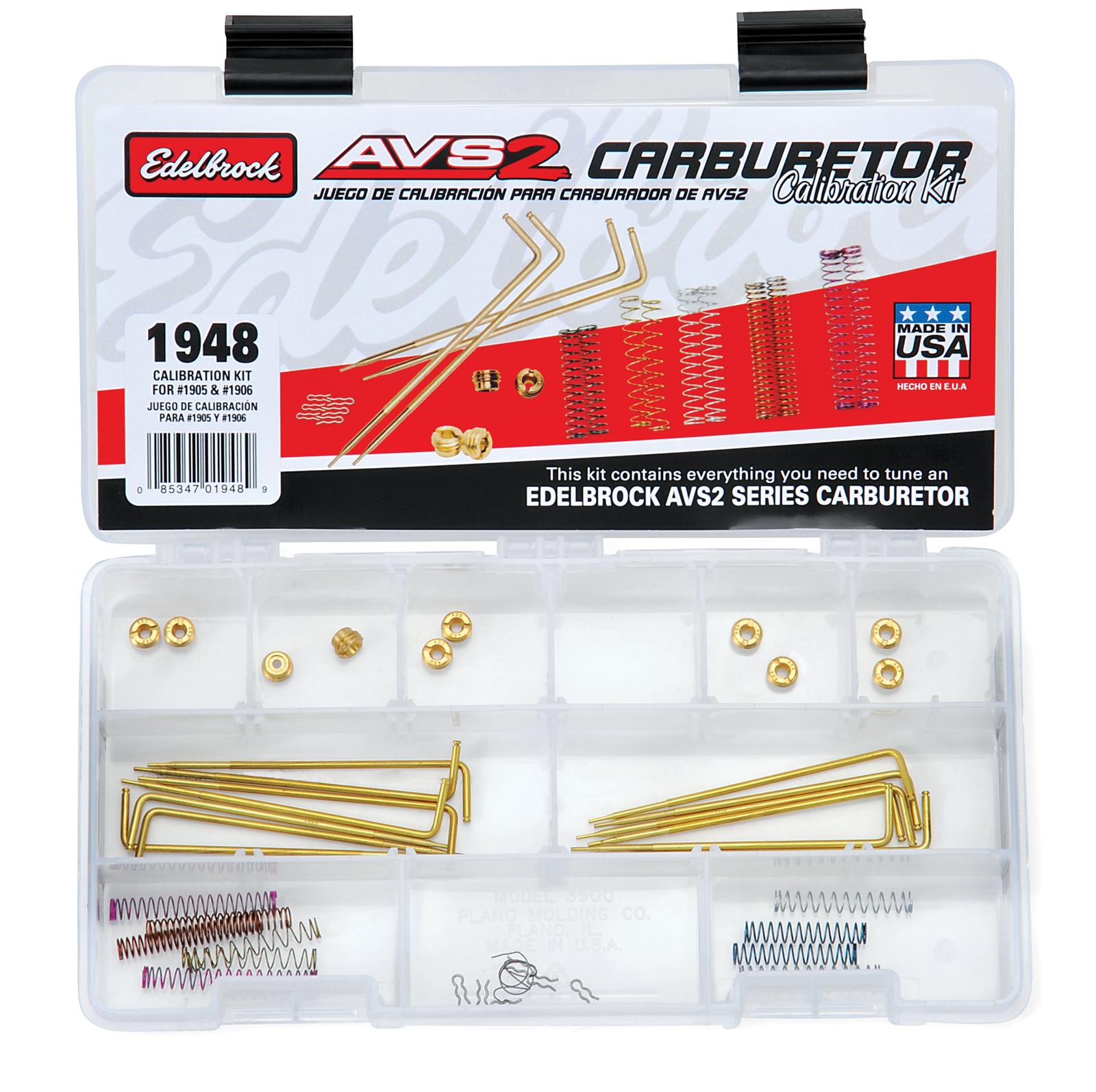
edl-1948_xl.jpg

Edelbrock 1948 Edelbrock AVS2 Series Carburetor Calibration Kits | Summit Racing

You could probably get your Ede to work right with this kit.
 
Last edited:
... There's no good reason that carb shouldn't work, - but I regularly pick up a 3310, 780/750 Holley at a swap meet for $50 ish, kit it, adjust it to my spec, and have it sitting on the shelf waiting for the next spirited driver with a Carter/Eddy, - offer to let them try my Holley free of charge, and I'll put his old carb back on for no-charge if he's not happy.

Never put an Eddy back on, donated lotsa Eddys to charity.

True story several times over.

Good luck.
I've done the opposite. I used to loan out a Factory Hp 440 AVS 750cfm to people with Holleys that could not get them tuned right, or keep it tuned. After running the AVS for a few days they would come back raving about the Carter. Same for a TQ. I/they threw a lot of Holleys in the trash. I finally got my friend to ditch his Holleys on his street cars, after his brothers' 55 Chevy caught on fire from the Holley carb and ruined the front half of the car
 
Last edited:

I had a 750 Edelbrock I couldn't tune the bog out of, swapped it for a Holley 750DP and never looked back. My dad has a 600 ede on his 304 Javelin that works great! Every brand has there pros and cons. If I was in the market for a different carb for just a street cruiser I'd probably be looking at a Street Demon.........
edl-1948_xl.jpg

Edelbrock 1948 Edelbrock AVS2 Series Carburetor Calibration Kits | Summit Racing

You could probably get your Ede to work right with this kit.
There is also a chart online that gives you combinations to choose certain items from these kits to correct the issues. Lots of combinations to try
 
I know its not the HP move, but an Edelbrock tech just told me that it may not be possible to completely cure the bog in my current set up.

Any thoughts?
You have to have a good tune on the engine first. That being done, did you tighten the spring on the secondary air valve?
 
I used to have a TQ on the 340 in my Duster and I couldn't get the factory spring on the air door to tighten up enough, so I found a stiffer spring that was the right diameter and cut it to the length I needed. I was finally able to get the bog out with the stiffer spring but it was a TQ off of a 440 so that may have been the reason the stock spring couldn't get the job done.
 
The last holleys I messed with were 1850s, and I couldn't wait to see them go away. Under otherwise same conditions mileage went to about half of what it has been, couldn't do anything about it. One of those trucks (my brother's 79RC) I found a TQ for and much better. Ran better started easier and in that case ( where I live no worries but where he lives he has to pass smog or they won't let you renew your plates) it was a huge fail no matter what we did. We bolted the TQ on and solved that problem too. (here they don't care about being exactly numbers matching original carb as long as the numbers come in)
On my 79 D100 I actually bought a new 1850 and it didn't last. After fighting with my brothers truck to get it to pass and despite running better than decent I couldn't pass a gas station. That one got an original (aftermarket) AFB put on it, from before Carter was bought out. Again it ran even better than it did with the Holley. So since those 2 I have stayed away from Holley carbs. I sold those 2 that I had.

Now fast forward to a few years ago my son was playing with a 440 in a c-wagon that didn't have a carb on it when he got it. He put a then brand new current production Holley 650 on it and that one surprised me. It was actually pretty good in all the areas that I look at for a 3 season daily driver.
Now yeah I've had a few Edelbrock "AFB copies" that weren't as good as the rest I have had .. for one reason or another. Yeah I've had some percolation issues on hot engines even when they were otherwise great to me (not all of them I've used) but I think I have that one solved.
 
I've done the opposite. I used to loan out a Factory Hp 440 AVS 750cfm to people with Holleys that could not get them tuned right. After running the AVS for a few days they would come back raving about the Carter. Same for a TQ. I/they threw a lot of Holleys in the trash. I finally got my friend to ditch his Holleys on his street cars, after his brothers' 55 Chevy caught on fire from the Holley carb and ruined the front half of the car

There is so many ways to fine tune a Holley that if its even remotely close to the right size you should be able to make it run right. I think a lot of the problems come from how Holley says to set them up....
Power Valve Selection: The Definitive Answer
 
There is so many ways to fine tune a Holley that if its even remotely close to the right size you should be able to make it run right. I think a lot of the problems come from how Holley says to set them up....
Power Valve Selection: The Definitive Answer
I could get them to run fine. I just couldn't take the constant keeping them in tune, power valve failures, not to mention the external fuel leaks. I gave up and put the original AFB back on and the 64 Barracuda and it ran just as good, carb maintenance became zero, and I was getting 20 mpg to boot. A TQ or QJ is up a whole next step up from a Holley. Power, driveability, and economy (if you can keep your foot out of the secondaries). I got over the Holley "Race Carb" baloney in the 70's. It was a great day when I got rid of all my Holley tuning parts.
 
Okay what would you call this with my edelbrock AVS carb? I have a fully programable ICE ignition and my 410 idles about 750 rpm and timing is 18 @ idle with 16 in by 2500 rpm.
Car is a manual and on take off I bring my revs up to about 1000rpm but as I load the engine with clutch engagement (without any further opening of the throttle) the engine falls over slightly for about a second then gains it momentom again! This is not a bog as if you floor it it just takes off with wheel spin and it is not a tip in as it happens without any further opening of that throttle! What do you gurus think?
 
-
Back
Top Bottom