Let's see photos of right hand drive Mopar steering geometry

-
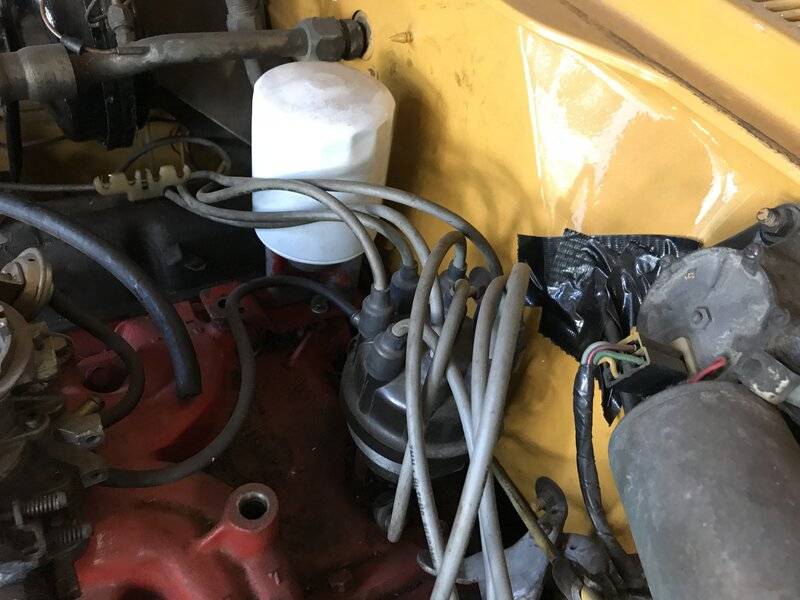
Here's a thread where I mention the oil filter location in his car:


Not a very good picture of the oil filter adapter, unfortunately.
The one spot on the car with no rust...same as a slant
 
Oh i guess it's the vg...the yellow one
Gotcha! As I understand it, the grilles were specific to the Oz/NZ models, and they changed almost yearly (I think). Not sure if I have any specific pictures of the grille/front end of the car, but you can "freeze" the video to get a good look at it here:

 
Nice thanks looks like more of a 69 dart from the back
Love stuff like that
Was it at Carsile 4 years ago ....
 
Nice thanks looks like more of a 69 dart from the back
Love stuff like that
Was it at Carsile 4 years ago ....
Pretty sure it wasn't, no. Bazza is a "home body", and he doesn't drive the car all that much, or that far. Also, 2021 would have been during Covid, and I'm pretty sure he didn't take it out during that time, as it wasn't running properly and that was when he tore the engine apart.
 
It must have been before the cov
I remember seeing a couple of rt drive cars one i thought was a dart at first
Nice build .....
 
Australian A bodies

RHD Vs LHD parts

Steering box manual
case is LHD or RHD.
LHD aluminium and RHD cast nodular Iron
internals the same physical parts but ballnut on upside down for RHD 90% were 20:1 ratio some were 16:1 ratio

power box presume its a similar arrangement the internals are likely to be mid-late 60s US style parts. with the piston/ballnut configured for RHD

spindles
same as US A body small ball joint spindles, they have the small inner bearing for the hub.

Hubs
small PCD drum, large PCD drum -rare, small PCD hub/rotor, large PCD hub/rotor, all fit the small ball joint spindle as appropriate.

Rotors
small PCD solid rotor for 14 inch wheels
Large PCD rotor vented for 14 inch wheels

upper and lower Arms
Upper small ball joint A body
lower A body with sway bar tabs

torsion bars
slant 6, small block 318, and HD 318/340/smallblock with aircon

camber bolts
same, all hardware is the same....

Brakes
solid mount 2 piston
Pin slider 1 piston (kelsey) like first year 6 cylinder US mustang
Claw slider 1 piston (girling lockheed) all local Australian produced all mount to the spindle in the same way and its the same mount as in the US like post 73 US claw slider but just different enough to make mix and matching parts not possible, you need bracket and caliper pair.

rear brakes large PCD and small PCD 9 inch drums on most, 10 inch on the last years 78-82. All 9 inch parts are 1967, coil spring shoe mounting, with square hook retainers.
US stuff fits i buy mine from rockauto and upgrade to the pin/spring cub set up and the later auto adjuster.

Ball joints
uppers small ball joint as per USA
lowers unique angle of lever arm but same mount. can use USA lowers on a RHD car by cutting 1/4 inch off each track rod sleeve otherwise you run out of adjustment.

pitman unique but came in 1 1/16 size and 1 1/8 size as per US for splines
idler unique straight, faces forward and bolts to bracket on passenger frame rail. same size bolt, same mount as 1968-73 i.e 2 sides to the mount not a cantilevered single sided mount.

bushes
upper, lower, bump stops, strut rods, rear end, all same as US, provided you get the right size

steering coupling its a rubber disk and studs a rag joint not a slip coupling

clutch all much the same ,just on the other side so it will have a RHD Z bar
the australian adjuster threaded rod is like a very early A no D shape to thhread, fatter threaded section no D hole in the washer, same insulator, 2 flat half height nuts to lock in the adjustment. US stuff fits if you buy washer insulator threaded rod with eye.
all clips and washers the same.

any 66--1970 Australian rear axle will fit a US dart if you find correct length tail shaft
Any 66 67 USA B body axle can be made to fit 1971 onwards Australian car 1/4 inch difference at the spring perch and 1/2 inch in length between back plates
Australian cars used the small Dodge joint on the prop shaft and yoke
Australian cars used 3 auto trans a Borg Warner 35 behind a 6 cylinder a 904 behind a v8 or a 727 in a 360 car or when they had no Borg Warners due to strike, behind anything
the style of BW 35 used had its roots in the UK i.e right hand drive market used by sunbeam and Humber and jaguar and 1960s london taxis had a HD version like the australian one

manual
mainly 3 speed and 4 speed both locally produced, 3 speed side shifted, 4 speed a toploader single rail. bellhousing for 3 speed used the same pattern as the usa slant 6-3 speed bell, IBR 4.35.
bellhousing for 4 speed uses 3 of the same bolt holes IBR 4.8 inch

3 speed, the BW35 auto and 904 use 904 yoke
4 speed and 727 used 727 yoke

So
if you had an early A body in the US which you upgraded with a Larger PCD 8 3/4 rear, you could use Australian Rotor and Hub on the front to give you large PCD front brakes on a small ball joint car.

OR
if you have a large PCD australian car you could use USA73 onwards upper arms and stub axles and fit a full set of USA large PCD disk brakes
or you could fit a set of 4 pot off a disk brake barracuda and keep the upper arms
or you could just fit the past 73 claw slider bracket/calipers and use your orginal stub axles and rotors

dave
 
Australian A bodies

Rotors
small PCD solid rotor for 14 inch wheels
Large PCD rotor vented for 14 inch wheels

Brakes
solid mount 2 piston
Pin slider 1 piston (kelsey) like first year 6 cylinder US mustang
Claw slider 1 piston (girling lockheed) all local Australian produced all mount to the spindle in the same way and its the same mount as in the US like post 73 US claw slider but just different enough to make mix and matching parts not possible, you need bracket and caliper pair.

dave
That's still the issue with Bazza's VG, Dave. I think we chatted about this a couple years ago, but his front rotors (vented) are "just a hair" under minimum (and thus too thin to cut), and the bleeders on the calipers are seized. Obviously I could put a cheater bar on them and force 'em open, or break 'em, but then what? It's not like we can get new calipers relatively easily....

Thakfully the pads are still good, so Bazza drives the car very conservatively, and some day we'll get the parts ordered-up out of Oz to make repairs.

Good to see your name again!

Jim
 
Australian Mopar- nobody makes the truly obsolete bits there is a core charge and return on many things

total production of every model 62-82 amounted to one years worth of US dodge darts... :)
 
Last edited:
Yes, that was me, GJ. I had Bazza's car at my place 2 years ago (has it been that long already?), and what started out as a simple "get it running" project turned into a full suspension rebuild, front and rear.

Del, do you have what you need, or is there something more specific you haven't seen yet? I have a lot of pictures of the work I did on Bazza's VG on our NAS drive at home, and if there's any way I can help you out, please shoot me a PM or give me a shout-out here.

Jim

@67Dart273
No these are GREAT. Part of what spurred this is curiosity about the geometry, AKA guys trying to put the spindle arms forward for better engine clearance. I was thinking maybe something here was applicable, but it appears the center link is essentially in the same place---Ma simply trailed the pitman and idler behind it instead of in front.
 

"Heater delete"? Are you referring only to Barracudas here? Bazza's VG has A/C, so it's definitely not a heater delete car.

But it's interesting that you mention "heater delete" with regards to the oil filter, as I think the blower motor is located here on his car (light blue circle):
View attachment 1716464260

I have a bunch of pictures at home of the engine bay sans engine, and now I'm curious as to where the blower motor resides in his car!
I think maybe the Aus heater box would have been local? So the blower motor is as you circled it. The heater box I’ve got with the barracuda (not in the car) has the motor in the centre where the oil filter would be on the VG.
 
Ok has the same "bolt" on it same color
I could send them to you ......on the cheap
 
I might be mistaken but the RHD cars seem to have engine offset to the right like the LHD cars making column room even more miserable?
 
That's still the issue with Bazza's VG, Dave. I think we chatted about this a couple years ago, but his front rotors (vented) are "just a hair" under minimum (and thus too thin to cut), and the bleeders on the calipers are seized. Obviously I could put a cheater bar on them and force 'em open, or break 'em, but then what? It's not like we can get new calipers relatively easily....

Thakfully the pads are still good, so Bazza drives the car very conservatively, and some day we'll get the parts ordered-up out of Oz to make repairs.

Good to see your name again!

Jim
If those rotors are similar build to the US brakes, AKA vented in the middle, I would not be the least afraid to cut them "under" by some amount.

(In a previous life, in two parts stores, I spent 14 years, and have turned HUNDREDS of drums and rotors, from Fiats to over the road trucks and trailers)

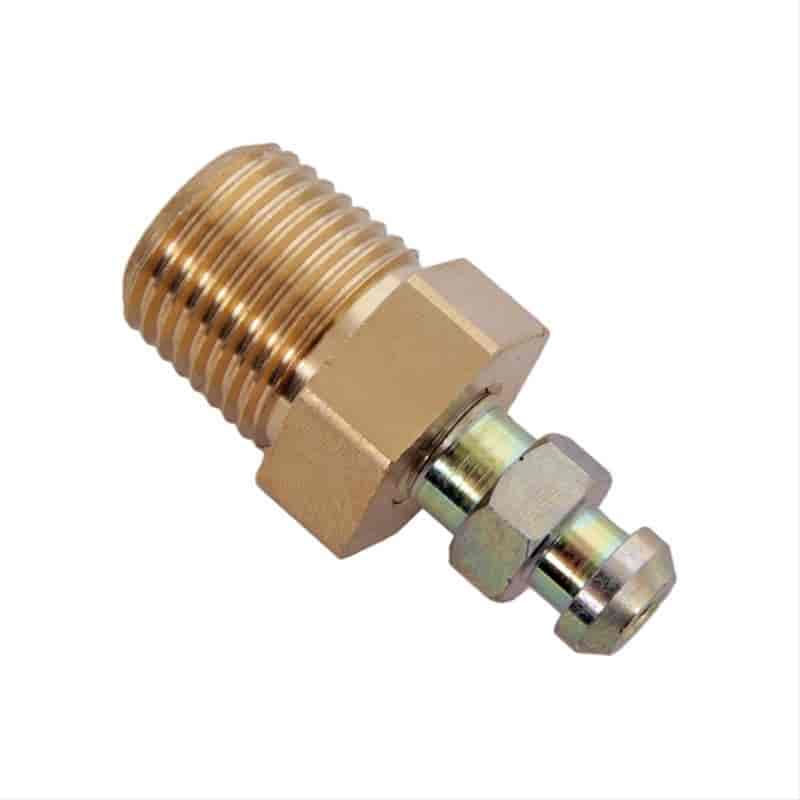
Fixing the bleeders now might actually be better, as you can clean up the caliper before rust pits become a huge problem. There are several ways to repair bleeders. You can actually buy a bleeder assy with a fitting to say, 1/8 pipe thread. If not bet some adaptor such as 1/8 male pipe to inverted flare, or even SAE flare, and get a plug/ cap to fit. You won't have bleeder hose connection, you'll have to bleed by flowing fluid and dripping it down, but at least you'll have control. Just drill the thing out and tap it.

Here's one now, right from Jegs

https://www.jegs.com/i/Strange-Engi...cGLiBaAqTT2dwvd3QpxApq3-YkOPSNTmCasLTr089ynQY

873-p2365f.jpg
 
Here are the model designations for Aussie Valiants:

R series. Early 62
S series. March 62.
AP5 May 63
AP6 March 65
VC Mar 66
VE Oct 67
VF Mar 69. Two door available
VG May 70. Two door avail
VH June 71
VJ April 73
CL & CM last two models until demise, about 1980.

* Chargers were made in the VH, VJ, CL & CM models
* small number of 340s were sold in the VH, VJ models. Early model used AVS carb, later model had #6394 TQ.
* VE used solid brake rotor, fixed calipers.
* VF & VG used ventilated rotor & 2.375" PBR floating cal; last year of the small PCD bolt circle.
* VJ & later used Girling floating 2.6" cal.
* VJ used a 1" bore short, stubby alum M/C. Still available because it was used on GM & Ferd cars. Does not have a met or prop valve but does have the front/rear circuit failure warning switch. Great for hot rods, tight spaces...& doesn't rust!
 
Should have added:

* the VJ alum m/c is made by PBR, a huge brake company that supplies braking systems for US GM cars. Their stuff is top notch. This m/c has 2 bolt mounting & was used with power brakes. Not sure about man brakes; might have used the Chrys 4 bolt cast iron m/c.
 
yeah the VJ brakes are the best for availability used on Holdens as well, and are much the same as the 73 onwards US set up just made to a slightly different spec. they were the go-to retrofit to any Aussie Valiant before aftermarket support for the earlier calipers caught up.
can't use an Aussie Bracket with A USA sliding caliper... because i tried it :)

the VG VH stuff is now well supported by the aftermarket in respect to spares and kits but calipers only available on exchange.
same with the VG VH master cylinder similar to the same vintage US part with the pipes on the other side i.e the top cover seals fit re build kits fit but the cast iron master is exchange only.

One thing i forgot to mention

Australian cars, well at least VG and VH have a safety piston in the master cylinder which switches off front or rear if there is a loss of pressure
but this is a Latched Version of what they use in the US in the distribution block

once triggered it stays stuck with one circuit off and the light on the dash stays on, unless you undo the ratiner for the switch and allow the piston to pop back.

id suggest its a danger piston rather than a safety piston......

One other thing
the VH RT charger and all VK onwards valiants had a brake bias as standard
It works really well to balance A body single pot disks verses the 9 inch but wide rear drums on cars that were light in the rear (smaller axles and is some cases a much shorter car).

visible in the engine bay on an RT it was part of the track pack set up, something worth displaying to your mates to make them feel inadequate with their standard or XL trim car that didn't have one....

But hidden inside the car behind the dash and the sound deadening on the bulkhead in a VK onwards car like they were embarrassed to have to admit they got it wrong on all earlier None RT cars :)

fit one.... and be happy...

Dave
 
Last edited:
Heater boxes and aircon boxes

follow US styling and content in mirror image
usually 1 year later

for example an airtemp air con heater box and control in 71 72 is much like a 69 70 71 set up in the US

mid 60s heaters had the square vent boxes
later had the plastic buckets
early had the transverse inside the car Fan motor
later had the through bulkhead motor

sheet metal
the bulkhead is just a mirror image of a US one
the floor and tunnel however is not a mirror image its the same floor and tunnel you would find in a 1967/68 auto transmission USA plymouth with the same Offset

i.e it take the rear mount that has the square insulator with 2 studs and the metal part has an indent on 1 side so you can not fit it the wrong way

the tunnel front is too small in standard form for a 727
so as they had their own pressing for the bulkhead they could make the tunnel bigger there
but the floor was a US pressing so each tunnel on the production line was split at the front welded to the wider opening in the bulkhead and a T shaped patch was welded over the gap.

a proportion of the cars came with HC and LC stamped on the body parts namely A B and sill parts. the HC metal is thicker than the LC metal. presumed to be a production run test of stronger thicker parts or disposal of parts that would have been used in factory race cars, under the radar of the scruitineers....

All cars got the kind of torque boxes US CARTool sell at the front rear spring hanger area and the front corners of the torsion bar cross member.

some later cars got 1/4 circle gussets added to the corners of the points where the front shock towers mount to the chassis. some got it as part of warranty after too many managed to crack the front suspension upper arm mountings .

Later cars from VH onwards had the top of the shock tower bolted through the inner fender and a strengthening plate that was braised on for this in the engine bay
the bolt appears to be a splined hub stud and the round head is visible either side of the bay on the inner fender lower ledge.

suggest this is a worthwhile modification to Any A body. mine had snapped on one side and had a nut missing on the other. fixing this problem made a noticeable improvement.

car5.jpg
 
Last edited:
Australian factory also made
Pickup/Ute under the dodge brand
a range of trucks from small to very large under dodge and fargo brands
a range of marine equipment motor stern drives etc
a range of UK Hillman hunters and pickup trucks (still made in iran as a Pekyan)
a limited range of 200 or 400 C bodies each model designation called a dodge phoenix all individually numbered with a plaque on the dash, all 4 door
a range called Centura which was the French/UK Chrysler simca 1800 with new front sheet metal and strengthened shell i.e both 1.8 litre 4 cylinder European engine and 4 litre or 4.3 litre hemi 6 available with a transmission appropriate to the origin of the engine.
a range called chrysler lancer which was a mitsubishi lancer, first version branded as a "Lonsdale" in export markets where most mitsubishi's were then called "Colt"

the engine works in Australia was built to a scale to provide every world wide slant 6 market with the "world Engine "replacement, namely the hemi 6.
But chrysler US killed that before they even got started, triggering in one action the beginning of a slow decline.

David
 
Here are the model designations for Aussie Valiants:

R series. Early 62
S series. March 62.
AP5 May 63
AP6 March 65
VC Mar 66
VE Oct 67
VF Mar 69. Two door available
VG May 70. Two door avail
VH June 71
VJ April 73
CL & CM last two models until demise, about 1980.

* Chargers were made in the VH, VJ, CL & CM models
* small number of 340s were sold in the VH, VJ models. Early model used AVS carb, later model had #6394 TQ.
* VE used solid brake rotor, fixed calipers.
* VF & VG used ventilated rotor & 2.375" PBR floating cal; last year of the small PCD bolt circle.
* VJ & later used Girling floating 2.6" cal.
* VJ used a 1" bore short, stubby alum M/C. Still available because it was used on GM & Ferd cars. Does not have a met or prop valve but does have the front/rear circuit failure warning switch. Great for hot rods, tight spaces...& doesn't rust!
Hey Bewy & Dave (@Dave999),

Both of you seem to have all of this down really well, so can I ask you a question, please?

Bazza's VG is a "Mexicana" (has the Charger-like C-pillars), and he was told there were only 200 of them built.

P6030342.JPG


However, I've found a couple people who have told me that 200 were ordered, but only 68 (or maybe it's 86?) of them were actually built. (Of course these folks were on the interwebs here....)

Do either of you know any place where I can determine which is correct? Or know anyone who may know someone?

Thanks!

Jim
 
Last edited:
-
Back
Top Bottom