Yup, another 318 thread

-
I havent picked the motor up yet so I have no idea what year it is. There isnt really much difference in compression from year to year though

 
Correct me if I'm wrong but, wouldn't the later blocks say starting in 70ish-71ish have their pistons farther down in the hole compared to earlier blocks thus reducing the overall compression? I know B/RB motors went that route but, wasn't sure on the small blocks.
 
Hi-po motors yes, 340s 383, 440s had a big compression drop but the 318 was all ready a low compression motor.
 
Sounds like a good plan to me. Although the converter is not needed, it will be a nice addition. Certainly, with the 3.91s, you'll have no trouble acheiving lockup. Just because the cam *might* not need the converter, doesn't mean it won't add to the combo. None of the later Mopar engines *needed* the factory high stall converters because of cam, but a lot still got them. Also, everybody tends to lock their brain in 360 mode. In a 318, your original cam choice is more radical than in a 360. I am sure that is ground on 110 lobes like all the rest of comp's stuff.....so 227 @ .050" in a 318 is pretty stout. The converter will certainly be a good addition there....even if not totally necessary. It will make for a fun ride.
 
great cam for a stock set up.

Tight lsa for a small cube engine with stock heads.
Lots of low end torque and it will pull higher then you would think.

Only 222 @ 50 and when combined with the tight 106 gives good cylinder pressure for the rpm range of the cam.
Most cams good to 6000 rpms will be to big.
This one gives up nothing..........................................
It will sound great and run even better.


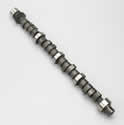
Crane Cams 690141 - Crane Racing Camshafts

large image Image is a representation of this part. Actual part may vary.


  • $253.95
  • + Wish List
  • + compare


  • Camshaft, Hydraulic Flat Tappet, Advertised Duration 294/294, Lift .480/.480, Mopar, Small Block, Each
  • sys_02_mini_info_blue.gif
  • Estimated Ship Date: 6/20/2011

    • Email


Brand
Crane CamsManufacturer's Part Number
690141Part Type
CamshaftsProduct Line
Crane Racing CamshaftsSummit Racing Part Number
CRN-690141UPC
021174047493

Cam Style
Hydraulic flat tappetBasic Operating RPM Range
2,800-6,000Intake Duration at 050 inch Lift
222Exhaust Duration at 050 inch Lift
222Duration at 050 inch Lift
222 int./222 exh.Advertised Intake Duration
294Advertised Exhaust Duration
294Advertised Duration
294 int./294 exh.Intake Valve Lift with Factory Rocker Arm Ratio
0.480 in.Exhaust Valve Lift with Factory Rocker Arm Ratio
0.480 in.Valve Lift with Factory Rocker Arm Ratio
0.480 int./0.480 exh.Lobe Separation (degrees)
106Computer-Controlled Compatible
NoGrind Number
H-222/3200-6Valve Springs Required
YesQuantity
Sold individually.
These racing camshafts from Crane are designed to provide the torque and power you need in the high rpm ranges. These cams are available for a variety of applications in mechanical, hydraulic roller, and flat tappet styles to suit your needs.
Warranty
 
Is that the cam your running ? what springs are you using ? they recommend a dual spring
 
Only 222 @ 50 and when combined with the tight 106 gives good cylinder pressure for the rpm range of the cam.
Most cams good to 6000 rpms will be to big.
This one gives up nothing..........................................
It will sound great and run even better.

T67, thank you! When going through cams, most are made for the bigger inch motors, and most don't understand the need for a tight lobe cam in a smaller engine, I have been suggesting tight lobes for a long time, even 104* on that cam would be great in a 273, sound like stink, and go like nuts. I ordered a cam from ISKY, custom grind for my truck, 228/228 .050, 440 lift, 106* C line. While it is 390 cubes, a truck needs that low end "hit" even more.

Hind end kissing over, I just don't feel so alone now!

On another pondering point off the subject, sorta, say, for example 1965, they had two 318's for the trucks. One, had 8.25-1 compression, and the heavy service 318, with 7.50-1. the Standard had a .380 lift cam, and the HD had a .381 lift cam. You couldn't hear the standard 318 idle with no muffler, and the HD 318 had a nice lump bump lump bump...... The lobes on the HD 318 were 6* closer together, same lift, 2* more duration. The HD 318 also made more torque, and HP, lower in the power band, even though the 3/4 of a point different compression. Power at an idle, even though the HD had a pretty nice lope, was greater too.

Not really relevant, just something Ma Mopar knew about making useable power a long time ago. only drawback, and why the HD 318 was only used in bigger trucks, unless ordered? The tighter lobes get worse MPG's.... Not much, but they do.

Sorry for the thread hijack. :)
 
agreed with above, tighter lobe in a 318 work great. wish id have put one in my daily driver you know however, money was of concern and I just put a melling cam in it (cheap) think its .426/.440 on 110 dual pattern. seems to work good though even with the 435 trans and heavy flywheel. still though,a tighter lobe would have been nice.
hey, one good thing is you can always change it out if necessary. btw I used 360 heads and magnum replacement pistons (more C.R.). milled the deck .025 and the heads about .006~ and used flat chevy valves. compression came out to 8.9:1~.
used a stock 1984 360 intake manifold with the original Q-jet. runs real good and strong and I am not done tuning it yet.
 
Hi-po motors yes, 340s 383, 440s had a big compression drop but the 318 was all ready a low compression motor.

True statement. Magnumminded is also correct. While the 318 didn't take the compression hit the hi-po mills did, Mopar eased up on it, too. The 67-69 318 slugs sit highest in the bore @ .036, 70-71 @ .060, 72-86 @ .056.

IMO the difference may be a point or two in the CR, but if you're building on the cheap, why leave anything on the table you don't have to. If you're going to rebuild, check the bore to make sure you don't need to poke it out. Then get your engine rebuild kit. Specify a 67-69 piston in the appropriate bore.

The intake gasket set that comes with most rebuild kits will not work with the Performer (no experience with the Action +). The Eddie needs a slightly thicker, softer gasket.

IMO the motor is going to be busy & thirsty on a freeway with 3.91s and 14" tires.
 
If I have to do a rebuild on it I will stab in a set of KBs and get the compression up to 9.5:1 The car will probably never see the freeway.
 
I havent picked the motor up yet so I have no idea what year it is. There isnt really much difference in compression from year to year though

While there has been some discussion of compression ratio as it relates to the model year, there is another issue you may wish to consider. Mopar didn't start putting hardened seats in the heads of the 318 until 1973.

When I was building the 318 for the Demon, I wanted relatively high compression that would be happy with pump gas. I have a '68 318 that I topped with 302 heads. The 302s give me improved compression and they come with hardened valve seats. We have measured the CR of 9.3:1. It's okay on regular, but the timing has to be retarded a little. It runs great on Plus grade. Wish I'd had the presence of mind to dyno test it before putting it in the car. With a peg leg 7¼ in the car I don't feel I want to risk it by putting the car on a chassis dyno. Not to worry, I've got a 8.75 in the works for the car.
 

-
Back
Top Bottom