367 vs 410 Engines Masters

-
I don’t agree, but am not willing to argue the point.

My feeling is its much easier to make 600hp from a 300cfm head using a 400” engine as opposed to a 273.
For those that prefer the 273, I say go for it.
 
I don’t agree, but am not willing to argue the point.
Fair enough, Not asking you too, to me were just talking.
My feeling is it much easier to make 600hp from a 300cfm head using a 400” engine as opposed to a 273.
For those that prefer the 273, I say go for it.
Never said it wasn't but the hp us mere mortals are at :) is like 250-450 hp and I don't see big combo differences for 318-416.
 
It's not going to happen.
I'm sure someone can with time and money and skill.

600 hp x 5252 / (273 cid x 1.4 lbs-ft per cid x 90%) = 9,160 rpm, I'm sure someone can build a 9,000 ish rpm 273 engine that up around 1.4 lbs-ft.
 
Fifteen pages hunh.
I wonder if I could get another fifteen pages out of engine masters comparison episode with the 500hp smallblock vs the 500hp big block.
 
It's not going to happen.

I'm sure someone can with time and money and skill.

600 hp x 5252 / (273 cid x 1.4 lbs-ft per cid x 90%) = 9,160 rpm, I'm sure someone can build a 9,000 ish rpm 273 engine that up around 1.4 lbs-ft.
Just remember you have to do it with the same heads that were used on the 400” combo……. Which could easily be some ported SM heads(and not the best ones ever seen either).
Off the 400 and onto the 273……. No reworking.
 
How about 416-512.
Probably depends what you think is similar, like this 410 vs 367 have a 250 ish cfm head and 242 cam and air gap and headers etc.. A 512 is a 110 cid 25% bigger than the 410 and 153 cid 40 % bigger than the 367 so if a 512 needs less cr, cam, cylinder head, carburetor, etc.. to make same hp, how much less 25-40% ? My guess there wouldn't be a huge difference to get 425 ish hp especially if we equip the 512 with similar heads and cr.
 
Just remember you have to do it with the same heads that were used on the 400” combo……. Which could easily be some ported SM heads(and not the best ones ever seen either).
Off the 400 and onto the 273……. No reworking.
That probably not gonna help, lol but Like to see someone like a Darin Morgan give it a try :)
 
A 600hp 400” engine, in the grand scheme of things is a pretty basic mid-level type build.
One that doesn’t require any exotic or exceptional parts.
Just a well thought out combo with enough cr and cam to get it done.

Those same parts that easily got you to 600hp from 400” are not going to even come close to making 2.2hp/ci from 273”.

But don’t let my negativity keep someone from trying:usflag:
 
Last edited:
A 600hp 400” engine, in the grand scheme of things is a pretty basic mid-level type build.
One that doesn’t require any exotic or exceptional parts.
Just a well thought out combo with enough cr and cam to get it done.

Those same parts that easily got you to 600hp from 400” are not going to even come close to making 2.2hp/ci from 273”.
Mainly cause it's operating above 8,000/9000 rpms where everything has to be right, the tunning of the intake to the exhaust track has to be just right.

But I don't see there being a need for huge difference in head flow and cam timing. Especially when compared to relative displacement difference a 400 being 146% bigger than a 273 but both are basically trying to move a similar amount of air (600 hp worth).

The biggest road blocks I would imagine are bore size and rpm.
 
I generally I include @ rpm to hp/ci, cause like the 365, 367, 410 are all turning quite of bit more rpm relative to the 323 peak rpm for similar hp, showing the 323 is being pretty efficient near peak hp. And since it has 2nd highest lbs-ft per cid next to the 367 to me shows it has a decent under the curve. Hence this whole discussion about these engines having similar potential :)
I wouldn't get to invested in numbers that come from different dynos when making these comparisons.
 
Here a 450-500+ hp NA 10,000+ rpm 4 cylinder

Now it don't give all the spes like cam but for a sub 200 cid engine needs 430 cfm at 16:1 cr
But is that crazily more than a 450-500 hp 400+ V8 engine ? 430 cfm x 4 cyl = 1720 total cfm, 1720 / 8 = 215 cfm per cylinder a lot less than a typical 450-500 + hp 400+ cid engine and yes 10-11:1 vs 16:1 is a fair size difference, now cam who knows even if 280 + degrees @ 0.050" for a engine that literally less than half the size and cylinders and only needs to spin 10,400 rpms, half is 5,200 rpms to make that power.

To me if the cams are reasonable that not a huge difference in combo and that's at an extreme example, I know, I know 4 valve heads lol

275 cfm x 8 = 2200 cfm, 2200 cfm / 4 = 550 cfm vs 430 cfm

Video: 4 Piston Racing Builds A 500+ HP Naturally Aspirated K24!​


kylekitchen
By Kyle Kitchen February 17, 2017

When you think of a 500 horsepower four-cylinder, unless we’re looking at a super secretive Pro Stock drag build, it has generally been safe to assume that the engine is either boosted and revving to the moon or bored and stroked with a healthy shot of nitrous — well, add another naturally aspirated build to that list.
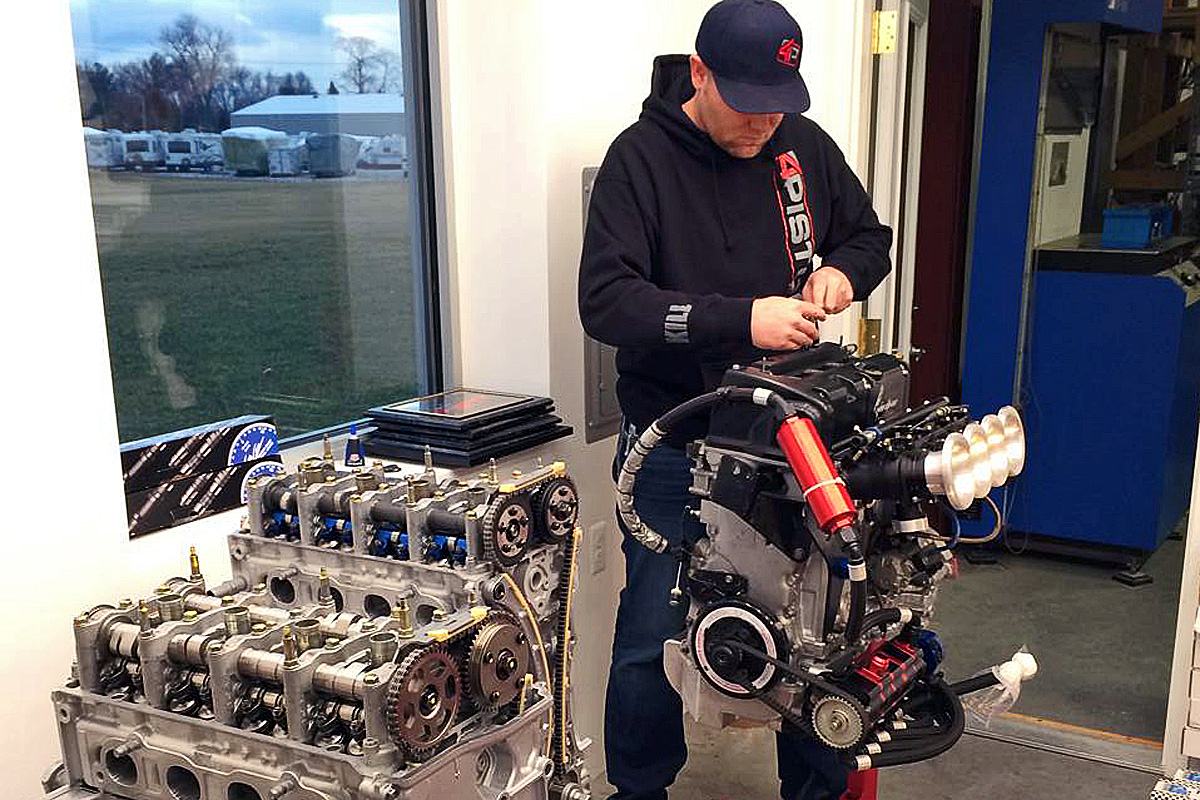
Just west of Indianapolis, Indiana, lies Danville — home to 4 Piston Racing (4P). Growing up around Indy, Luke Wilson and Josh Klein have motor oil running through their veins and started 4P together over 20 years ago to fulfill their dream of building some of the best race engines in the industry. Living by the saying “Pick one thing you’re good at, and do it better than anyone else,” Wilson and Klein chose to dedicate their lives to perfecting cylinder head development and designs.
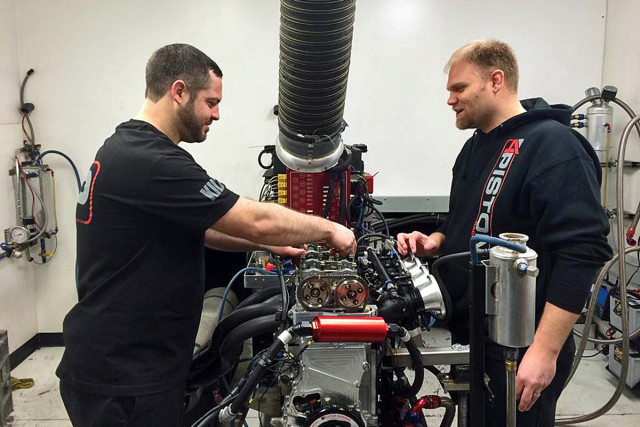
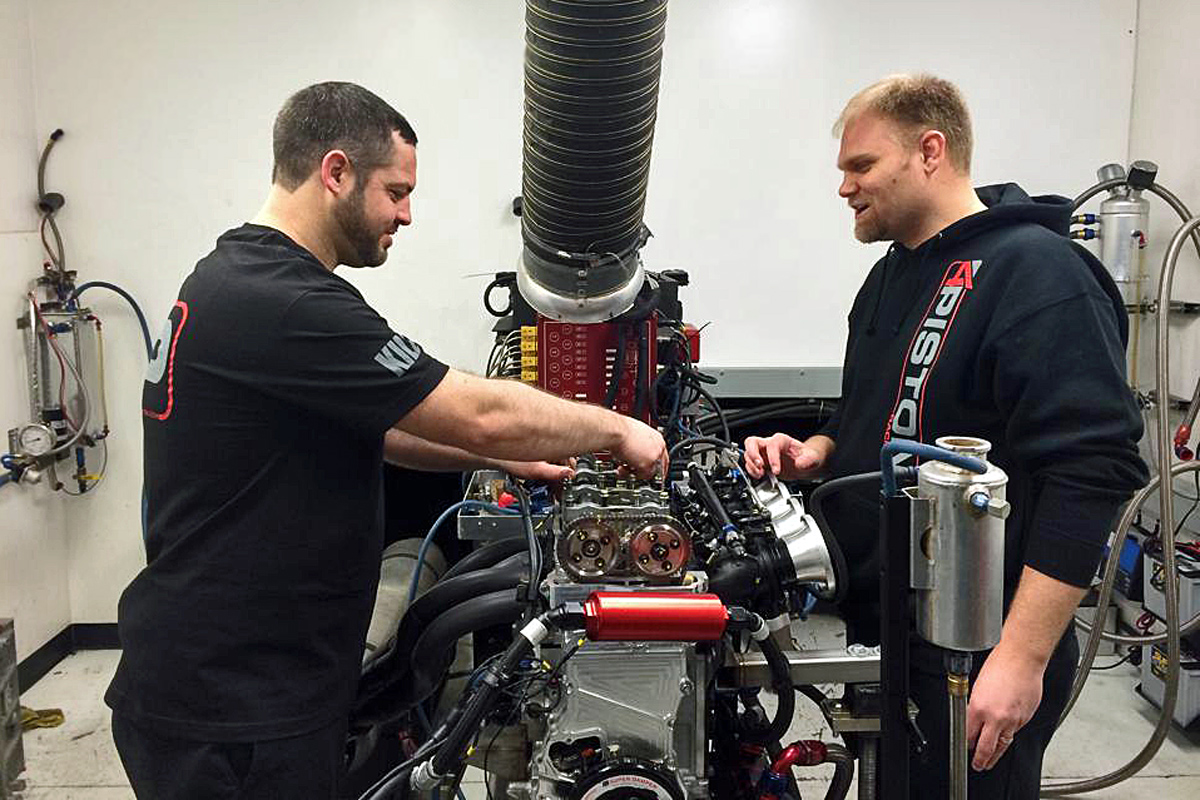
4P owners, Josh Klein (left) and Luke Wilson (right).
Wiseco Piston stopped by 4 Piston Racing and talked to Wilson about their recent 500 naturally aspirated horsepower Honda K24 build for a specific FWD drag class that limits engine displacement.
The Build
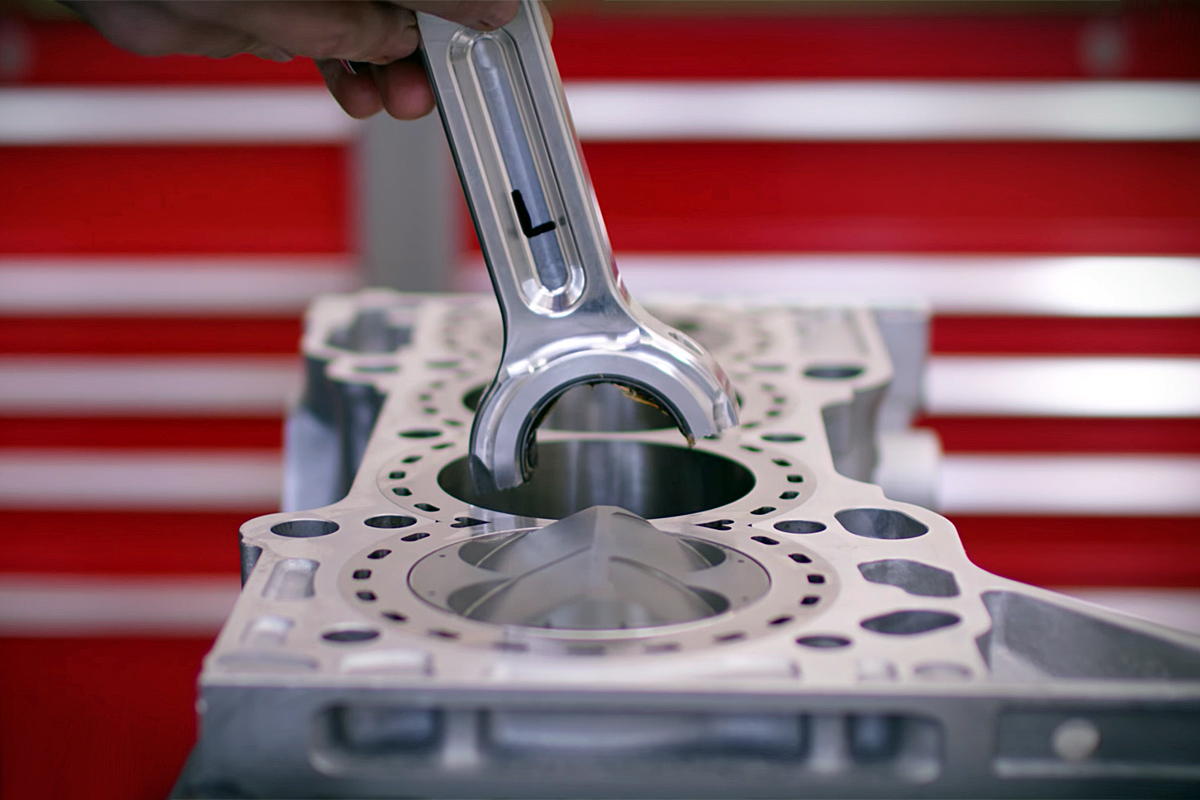
This build starts with your standard cast 2.4-liter K24 block, and then undergoes the 4P “K480” rebuild. The K480 build is specifically designed for the abuse of high-end drag racing and grudge racing — as 4P puts it on their website, this really is a “no compromises” four-cylinder build.
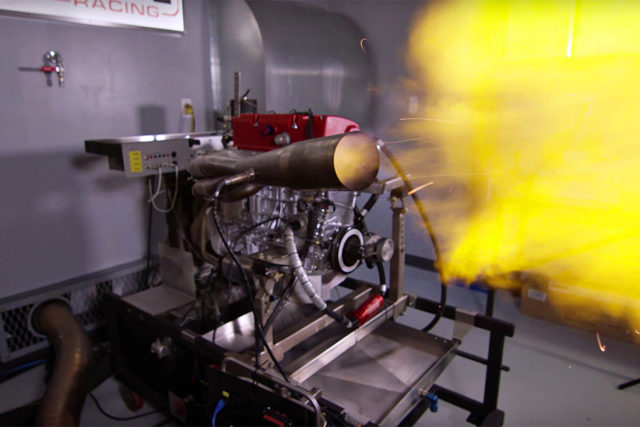

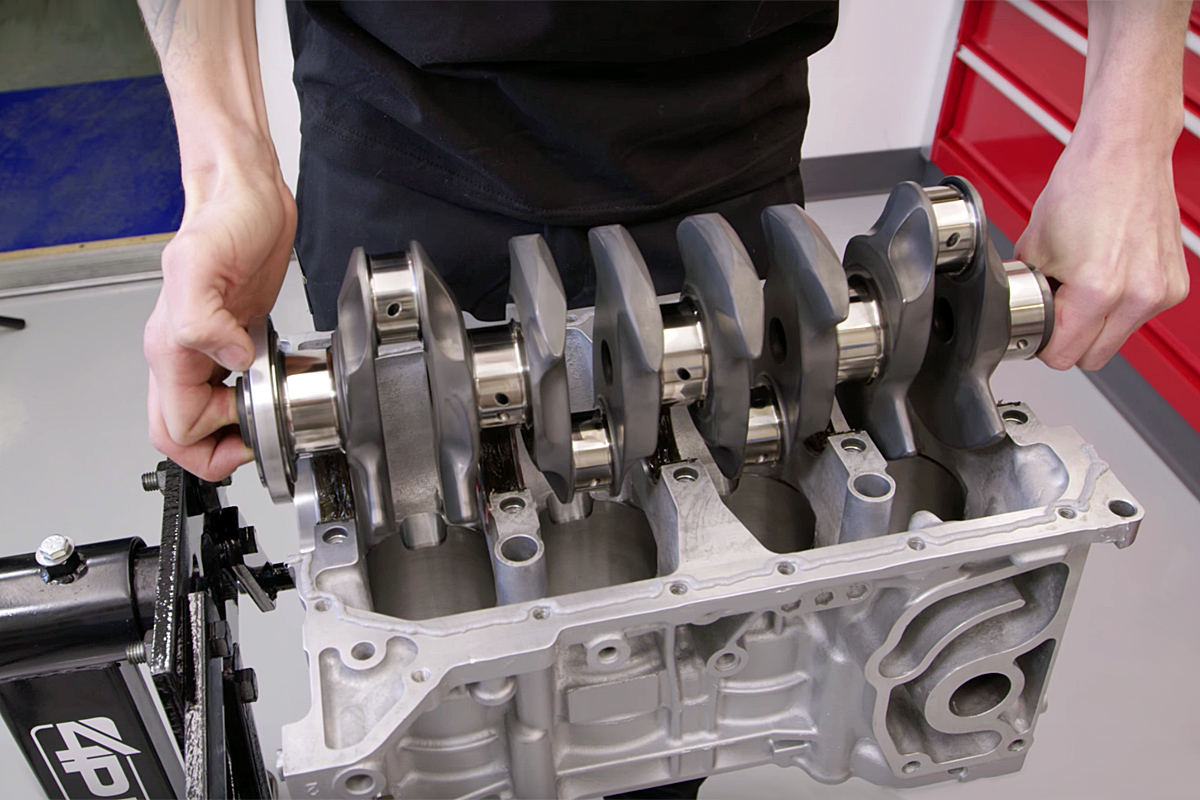
Starting with the bottom end, this K24 gets a custom Winberg crankshaft that increases piston stroke from 99 mm to 106 mm, and is encased in ACL Race Series bearings. The standard 87 mm cylinders are treated with ductile iron sleeves from L.A. Sleeve and given a slight overbore to 90 mm.
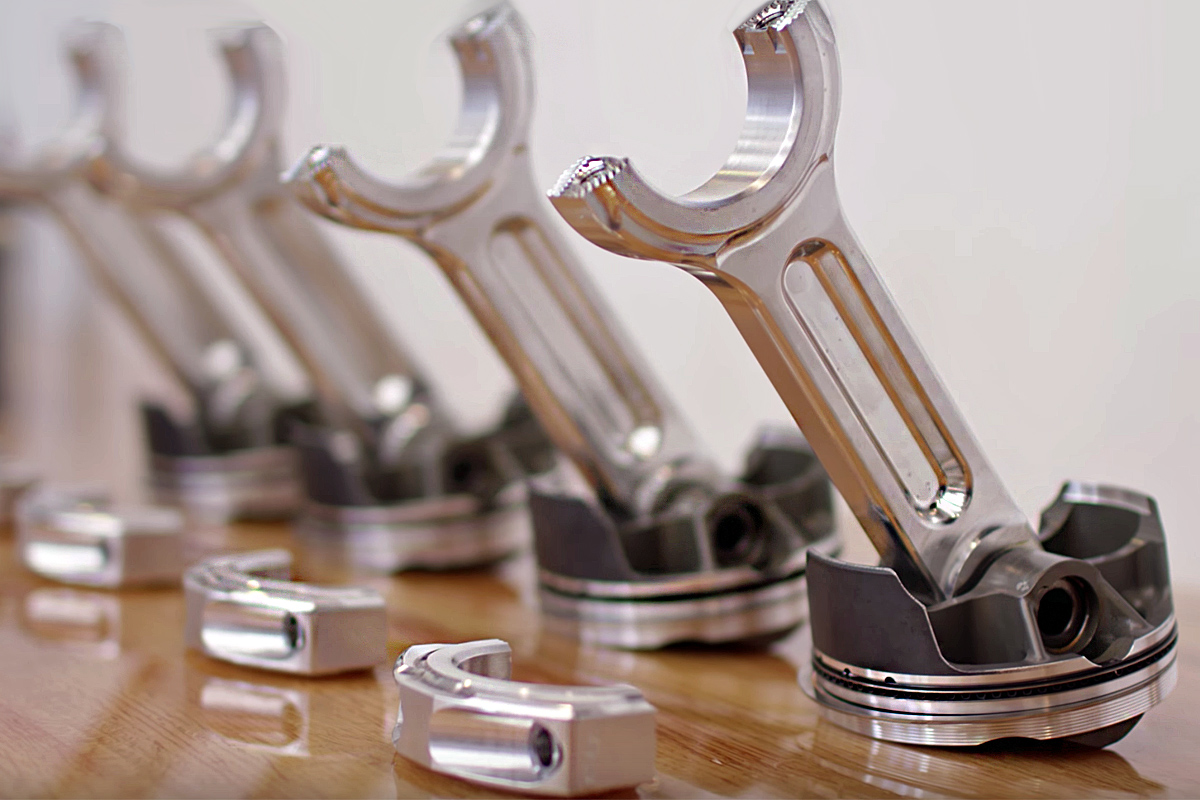
To keep the reciprocating weight as low as possible, which enables this engine to scream to 10,400 rpm, the forged Wiseco pistons weigh just 260 grams and are supported by a set of 340 gram aluminum GRP “Pro Stock” connecting rods — producing some serious cylinder pressure with a 16:1 compression ratio. A custom ported oil pump is also used to prevent pump cavitation at those high engine speeds.
Only the best parts from GRP, Wiseco and Winberg were used for this build.
Sitting in-between the deck of the block and the heads mating surface is a custom designed 4P head gasket for an optimal seal, sitting on top of that is a 4P in-house designed “Peacemaker” CNC cylinder head capable of flowing in excess of 430 CFM with 0.650-inches of lift.
A Skunk2 BMF billet camshaft times the engines breathing while a set of stiff PSI Pro Stock valve springs snap the 1.510-inch Ferrea titanium valves shut and prevents them from floating if you miss a gear. And a 70/71.5 mm Kinsler induction system pulls air in through a set of CNC ITBs before injecting the required Q16, Methanol or similar race gas.
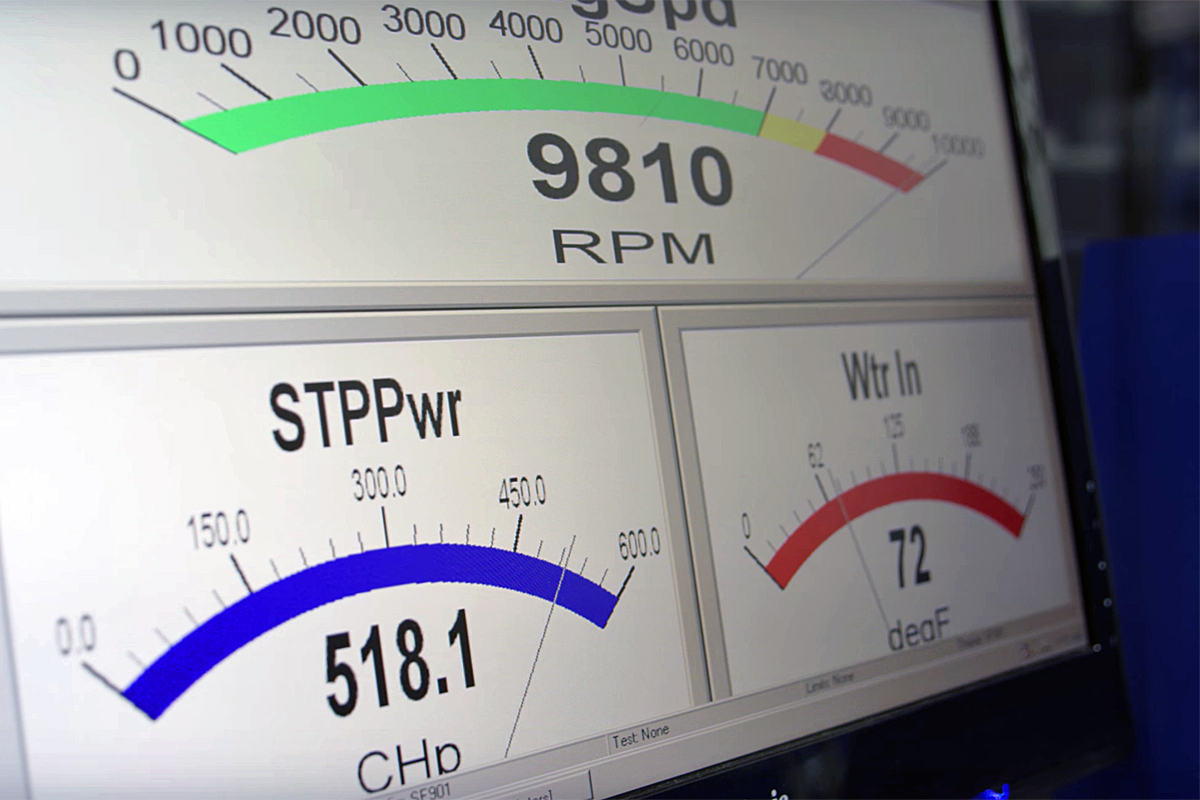
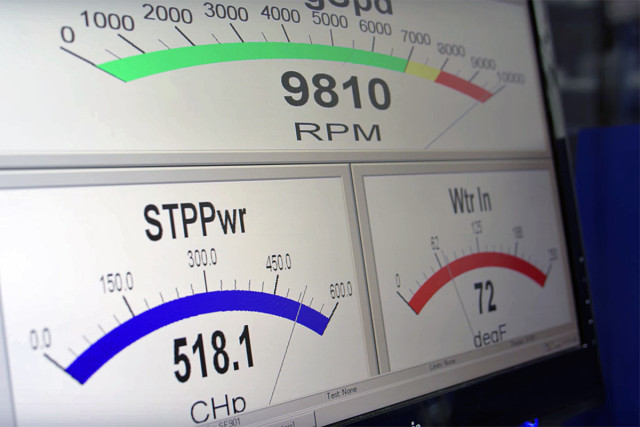
Wilson says if you slap these parts on your K24, it will be capable of producing between 460 and 480 horsepower on a Dynojet right out of the box. With some additional fine tuning of the mechanics and dialing in the calibration, this monster can move enough air on its own to produce over 500 horsepower from just four cylinders!

 
Last edited:
I wouldn't get to invested in numbers that come from different dynos when making these comparisons.
The 3 engines I'm mainly talking about here are from the same dyno and same with a lot of the engines I talk about.
 
The amount of fuel and air going through your engine over a period of time (displace) is gonna have a strong correlation with it's hp ?
Well, correlation, yes. Strong? Hmmm...

Airflow will be directly proportional to Indicated power (assuming we can deliver the proper fueling). Recall that brake power (that comes out of the crankshaft) is what's left over after subtracting the friction power at that rpm. So if you need to spin up the engine to higher rpm to get the same airflow, more brake power only occurs if the friction power to spin faster does not result in less brake power.

Oh, and don't forget combustion efficiency. Combustion efficiency is what % of the fuel consumed is turned into heat release/power. At different rpm's and airflow, mixture motion (in-chamber swirling and tumble) can reverse or otherwise be quite different. So combustion efficiency may also change. And if it degrades, then you get less indicated power and less brake power.

Just dont want to forget and leave the physics out of the discussion!!
 
Well, correlation, yes. Strong? Hmmm...
Guess depends on your definition of strong ?
Airflow will be directly proportional to Indicated power (assuming we can deliver the proper fueling). Recall that brake power (that comes out of the crankshaft) is what's left over after subtracting the friction power at that rpm. So if you need to spin up the engine to higher rpm to get the same airflow, more brake power only occurs if the friction power to spin faster does not result in less brake power.
Yes but the efficiency of the engines we use, are probably quite similar, most decently built engines fall in the 1.15 to 1.30 lbs-ft most aren't getting 1.40 to 1.70 lbs-ft. 1.15 doing ok, 1.20 your doing good, 1.25 doing really good, if your around 1.30 give yourself a pat on the back.
Oh, and don't forget combustion efficiency. Combustion efficiency is what % of the fuel consumed is turned into heat release/power. At different rpm's and airflow, mixture motion (in-chamber swirling and tumble) can reverse or otherwise be quite different. So combustion efficiency may also change. And if it degrades, then you get less indicated power and less brake power.
I didn't, why said in a somewhat narrow range. I'm rarely talking about pro engines, max effort, or super inefficient engines so that makes these ranges even smaller.
Just dont want to forget and leave the physics out of the discussion!!
 
They built the 367 to same specs as the 410 Blueprint create. Had a 241/247 .545 110 cam 10.1:1 cr airgap and edelbrock heads.

Especially for a 8.5 hp difference.
The 410 needs 2.08 valves to see its potential. Cam is way too small for a 410 effort as well. My .02$
 
Still movin along on Gladys' motor. I may be slow, but I get it done.

0a060a17-3680-4d9d-af82-a37a3ffa023d~1.jpg
 
The 410 needs 2.08 valves to see its potential. Cam is way too small for a 410 effort as well. My .02$
I honestly don't really get this point a view, what I assume it needs more cylinder head crowd means if you guys were to build a 425 hp engine you wouldn't be building 410 for that hp level.

Cause this engine is basically reaching the potential was built to it wasn't built to make more power, if you wanted could build to 273 commando specs and it makes what it make, unless something is wrong, whatever it makes is basically the potential it was built for, small head or big head.
 
I honestly don't really get this point a view, what I assume it needs more cylinder head crowd means if you guys were to build a 425 hp engine you wouldn't be building 410 for that hp level.

Cause this engine is basically reaching the potential was built to it wasn't built to make more power, if you wanted could build to 273 commando specs and it makes what it make, unless something is wrong, whatever it makes is basically the potential it was built for, small head or small blocks?

I honestly don't really get this point a view, what I assume it needs more cylinder head crowd means if you guys were to build a 425 hp engine you wouldn't be building 410 for that hp level.

Cause this engine is basically reaching the potential was built to it wasn't built to make more power, if you wanted could build to 273 commando specs and it makes what it make, unless something is wrong, whatever it makes is basically the potential it was built for, small head or big head.
I honestly don't really get this point a view, what I assume it needs more cylinder head crowd means if you guys were to build a 425 hp engine you wouldn't be building 410 for that hp level.

Cause this engine is basically reaching the potential was built to it wasn't built to make more power, if you wanted could build to 273 commando specs and it makes what it make, unless something is wrong, whatever it makes is basically the potential it was built for, small head or big head.
You realize Chrysler felt the 383 would preform well with a 2.08 valve and put the 383 magnum into production…Do you think that was a fluke?

2.02 valves on a 408ci La would be a great combination for a D300 towing a car trailer or a fifth wheel. Why even entertain stroking an La without letting it breath...

Attached is a photo of Bob Mullen’s 340 prepped cylinder head. Father of the W2. Engineers knew the La was cylinder head limited since the 70's.

image.jpg
 
Last edited:
you realize Chrysler felt the 383 would preform well with a 2.08 valve and put the 383 magnum into production.

Do you think that was a fluke?

2.02 valves on a 408ci La would be a great combination for a D300 for towing a race car…
Blueprint built and designed this engine to sell on mass, pretty sure it reached whatever goals it was designed for, if you put this engine in your car with a bit of stall and gears it's gonna be decent little setup like it was designed to do. Could it be faster sure pretty much any car can be built to go faster. If your order this engine it probably does what the person ordering this engine wants it to do or they should ordered something else.

Plus the 367 could use more valve if wanting more power, idk. You can build a low power 410 if you want, just cause you build a 410 don't mean it has to make 500,600+ hp. There's nothing wrong with a 190 hp 500 if that's all you need Cadillac did it.
 
Blueprint built and designed this engine to sell on mass, pretty sure it reached whatever goals it was designed for, if you put this engine in your car with a bit of stall and gears it's gonna be decent little setup like it was designed to do. Could it be faster sure pretty much any car can be built to go faster. If your order this engine it probably does what the person ordering this engine wants it to do or they should ordered something else.

Plus the 367 could use more valve if wanting more power, idk. You can build a low power 410 if you want, just cause you build a 410 don't mean it has to make 500,600+ hp. There's nothing wrong with a 190 hp 500 if that's all you need Cadillac did it.

The difference is, the 383 bore is a 1/4 inch bigger than a 360/408.
So? And its shorter on the stroke 3.375" vs 4". What's your point?
 

-
Back
Top Bottom