bedding in brakes ?

-

diymirage

HP@idle > hondaHP@redline
Joined
Oct 12, 2012
Messages
38,969
Reaction score
65,576
Location
michigan
anyone ever hear of this ?

im getting ready to put new brakes on the truck and apparently, you need to bed in the brakes nowadays
that company that made them even has a video with some freak talking about it

is this just a young wives tale or what?
 
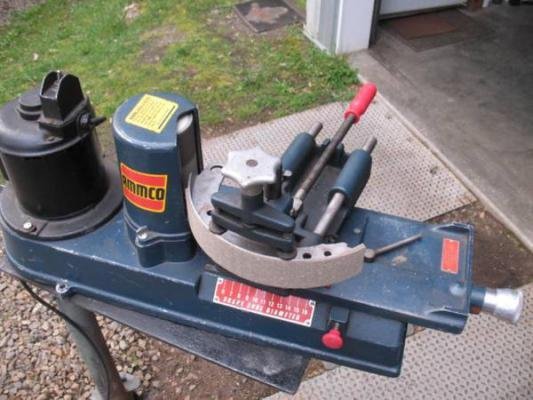
years ago when we rebuilt brakes(re-rivet shoes)we had to grind the shoes to fit the drum.
That actually makes sense, but this is a different animal altogether...they are talking about "breaking in" pads to rotors
 

Yup, it's called burnishing and should be a process of any proper brake job. First, I make sure the vehicle will stop. Then, I run it up to about 50 and brake HARD down to about 25. Rinse and repeat 2 or 3 more times and done. You may smell HOT brake pads, but that's ok.
 
What you are doing is mating the friction material to the metal surfaces.
Also transferring some of the friction material to the drum/rotor giving the friction material more bite.
Be sure to carefully follow the friction materials manufacturer procedure. There may be differences in procedures.

AI Overview

Bedding in Brakes: What is a Brake Bed-In and How Does It ...

Bedding brakes, also known as burnishing, is the process of transferring a thin, even layer of brake pad material onto the rotor surface. This process improves braking performance by creating a more consistent and effective braking surface. It also helps to reduce noise and brake fade.

Why Bedding Brakes Matters:

  • Improved Stopping Power: Bedding ensures optimal friction between the pads and rotor, leading to better stopping power.

  • Reduced Noise: Proper bedding can minimize brake squeal and other noises.

  • Enhanced Modulation: It allows for more controlled and predictable braking.

    • Prevents Brake Fade: Bedding can help prevent brake fade by releasing gas from the pad material.
    • Avoids Vibration: Skipping the bedding process can lead to uneven pad material transfer, causing brake judder (vibration).
    • Extends Brake Life: It promotes even wear across pads and rotors, potentially extending their lifespan.
How to Bed Brakes:
    • 1. Start with New Pads and Rotors:
      Bedding is crucial for new brake pads and rotors.
    • 2. Gradual Heating:
      The bedding process involves gradually heating the brakes to transfer material.
    • 3. Controlled Stops:
      Perform a series of controlled braking applications, typically from moderate to higher speeds, gradually increasing braking pressure and speed.
    • 4. Avoid Complete Stops:
      Avoid coming to a complete stop while the brakes are hot, as this can imprint pad material onto the rotor.
    • 5. Cool Down:
      Allow the brakes to cool down after the bedding process to prevent overheating and uneven transfer.
    • 6. Manufacturer Recommendations:
      Follow specific bedding instructions provided by the brake pad and rotor manufacturer.
 
This was especially important in the old drum brake days. You MUST have the shoes matched for curvature/ radius to the drum, or the thing will only contact a small part of the shoe lining, that part will be overworked and over heated and will become glazed. At that point you have terrible breaks.

All I was ever told, and all I ever did, for disk, was to "drive easy" for a few miles, maybe 10 or so, avoid sudden stops

I have literally turned thousands of drums and rotors in a previous life, at two different parts stores, one of which was established by my Dad. Back in those days, our small town had a number of small shops--and service stations--who did tuneups and brake work. There were some days at the store, where I spent nearly the entire day babysitting the lathes. Dad had an old Van Norman brake drum lathe, and a newer "Quick Way" rotor lathe, so you could do both at the same time.

The second store I worked bought a brand new Ammco drum/ disk lathe, with all three optional spindles. One was tapered, for the likes of VW and other small drums, one was larger and used on most stuff, and the other was substantially larger, for heavy truck drums.

I also have riveted my share of lining, including old '30s cars using bulk lining, because we could not get fitted lining, winch drum brakes, and heavy truck trailer shoes. I hated those, they are HEAVY

Dad's old riveting machine was all manual, all the time. The one at the second store was air powered, a bit easier.

And I almost forgot my point. I have arced my share of shoes. Dirty, dusty, and very likely life threatening.

881158688_Shoearcing.jpg.4a6064e4674232cfed10b47797635227.jpg
 
This was especially important in the old drum brake days. You MUST have the shoes matched for curvature/ radius to the drum, or the thing will only contact a small part of the shoe lining, that part will be overworked and over heated and will become glazed. At that point you have terrible breaks.

All I was ever told, and all I ever did, for disk, was to "drive easy" for a few miles, maybe 10 or so, avoid sudden stops

I have literally turned thousands of drums and rotors in a previous life, at two different parts stores, one of which was established by my Dad. Back in those days, our small town had a number of small shops--and service stations--who did tuneups and brake work. There were some days at the store, where I spent nearly the entire day babysitting the lathes. Dad had an old Van Norman brake drum lathe, and a newer "Quick Way" rotor lathe, so you could do both at the same time.

The second store I worked bought a brand new Ammco drum/ disk lathe, with all three optional spindles. One was tapered, for the likes of VW and other small drums, one was larger and used on most stuff, and the other was substantially larger, for heavy truck drums.

I also have riveted my share of lining, including old '30s cars using bulk lining, because we could not get fitted lining, winch drum brakes, and heavy truck trailer shoes. I hated those, they are HEAVY

Dad's old riveting machine was all manual, all the time. The one at the second store was air powered, a bit easier.

And I almost forgot my point. I have arced my share of shoes. Dirty, dusty, and very likely life threatening.

881158688_Shoearcing.jpg.4a6064e4674232cfed10b47797635227.jpg
Our auto shop had one of those as well as a brake shoe riveter!
 
Yup, it's called burnishing and should be a process of any proper brake job. First, I make sure the vehicle will stop. Then, I run it up to about 50 and brake HARD down to about 25. Rinse and repeat 2 or 3 more times and done. You may smell HOT brake pads, but that's ok.

That's similar to the method we were taught at C/J/D dealer tech school. For us specifically it was up to 30mph and make a firm stop then increase the speeds 2-3 times but basically the same idea.

Not a wives tale nor is it a new idea.
 
I just did this ! Had to put front pads on the day before a 1200 mile road trip. Put them on at 9pm. went to BED ! Got up the next morning and let them seat in the next 1200 miles ! All good ! And I went to BED that night ! :poke: :thankyou::mad:
 
Been fighting braking issues on my 88 chevy truck. Rear bounces pretty bad. Replaced everything and shocks. Its a little bit better. Wondering if a drum may have been dropped in transportation.
 
The trouble with these cheap chineseoizationized drums and rotors is, NObody has brake lathes anymore. I have an Ammco drum/ disk lathe. You do have to hold the cross carriage in gear by hand, something is worn in there. I put it to good use when doing the old Cummings to 4WD
 
anyone ever hear of this ?

im getting ready to put new brakes on the truck and apparently, you need to bed in the brakes nowadays
that company that made them even has a video with some freak talking about it

is this just a young wives tale or what?
Some guys live their entire lives NOT following the advice of others while never experiencing any adverse effects.
I am that guy. I went swimming immediately after eating. I made funny faces that never stayed that way. I rarely used "protection" when I was single. I wear seat belts to keep me in place when cornering....it being the law is only consequential. I skipped masks, walked against the arrows in stores and didn't get jabbed yet here I am, same as I ever was....
Bed in brakes? I heard about it years ago but didn't actually do it until 3 years ago when I installed a Dr Diff Cobra brake setup in a car. I only did it because the brake force from the new kit did not feel like an improvement over what I had before so I thought the bedding process would help.
I have bought a LOT of brake pads over the years in personal cars and work trucks.
I put over 300,000 miles on one work truck and am at 411,000 in my current driver so yeah, I've done numerous pad and shoe replacements.
How is it that I've only bedded in ONE set in all these years and have not encountered any problems? I've usually just made replacements and then gone out and driven normally. This is with a wide range of different brands and pad materials.
 
It’s your choice if you want to try something new and maximize the performance of the brakes or just finish the job as quickly as possible.

There’s no legal requirement to use jack stands/blocks of wood when going underneath your car. Some folks are fine with going under a car only supported by the jack.

You want to minimize or maximize safety?
 
Been fighting braking issues on my 88 chevy truck. Rear bounces pretty bad. Replaced everything and shocks. Its a little bit better. Wondering if a drum may have been dropped in transportation.

Go for a drive, on a dry straight stretch, no cars behind, pull and HOLD the emergency brake RELEASE HANDLE, then GENTLY apply the rear brake pedal, release pedal if nasty things happen.
If you had an out of round rear drum, you shoulda felt some emergency brake pedal oscillation thru the pedal, and vehicle, - and you shoulda experienced some of the rear bounce you were mentioning.

If it was smooth, even stopping, - drums aren't your problem.
Perhaps different rear shocks ?

Good luck
 
Go for a drive, on a dry straight stretch, no cars behind, pull and HOLD the emergency brake RELEASE HANDLE, then GENTLY apply the rear brake pedal, release pedal if nasty things happen.
If you had an out of round rear drum, you shoulda felt some emergency brake pedal oscillation thru the pedal, and vehicle, - and you shoulda experienced some of the rear bounce you were mentioning.

If it was smooth, even stopping, - drums aren't your problem.
Perhaps different rear shocks ?

Good luck
I did do that and it was smooth so yes you are right, should not be the drum. Sorry for the hijacking. I should start my owne thread.
 
It’s your choice if you want to try something new and maximize the performance of the brakes or just finish the job as quickly as possible.

There’s no legal requirement to use jack stands/blocks of wood when going underneath your car. Some folks are fine with going under a car only supported by the jack.

You want to minimize or maximize safety?
The people who made the brakes seemed to make a big deal about it...they even printed it on the box the pads came in

So i decided to listen to the experts and install them as they suggested and did the bedding procedure


I just thought it was strange, since i never heard of it before
 
Many. Many, years ago. In search of better racetrack braking and lack of readily available info, I took 6 sets different brand/composition brake pads outta our cabinet, and a few from our parts store, took them to the racetrack a spent the afternoon changing pads, doing tests etc.
I was shocked by the different manufacturers bedding processes.
They do make a difference, composition, metal, didn't have ceramic, all different.
 
Last edited:
Many. Many, years ago. In search of better racetrack braking and lack of readily available info, I took 6 sets different brand/comosition brake pads outta our cabinet, and a few from our parts store, took them to the racetrack a spent the afternoon changing pads, doing tests etc.
I was shocked by the different manufacturers bedding processes.
They do make a difference, composition, metal, didn't have ceramic, all different.

Exactly. The pad material itself determines the bedding process. The rotor material can affect it as well if your rotor is something other than standard, think newer high end cars that have ceramic rotors too or race stuff that could actually be carbon.

The bedding in process isn’t anything special for the generic run of the mill kind of pad/shoe compounds that are typically used on these cars on the street. Because of that the performance results of not bedding in the standard organic or even semi-metallic compounds is usually insignificant. So you get people that have never done it and “never had a problem”. Typically couple light stops followed by a couple of aggressive stops that don’t involve locking anything up or superheating the brakes does the job fine.

But if you get more exotic compounds, race pads etc then the bedding in process can be VERY important, and depending on the pads has to be performed with the brakes at the proper temperatures. Which is where different bedding procedures come in.
 
-
Back
Top Bottom