What affects power more in a camshaft....high lift or longer duration?

-
The engine is in, I'm not changing anything until something breaks!
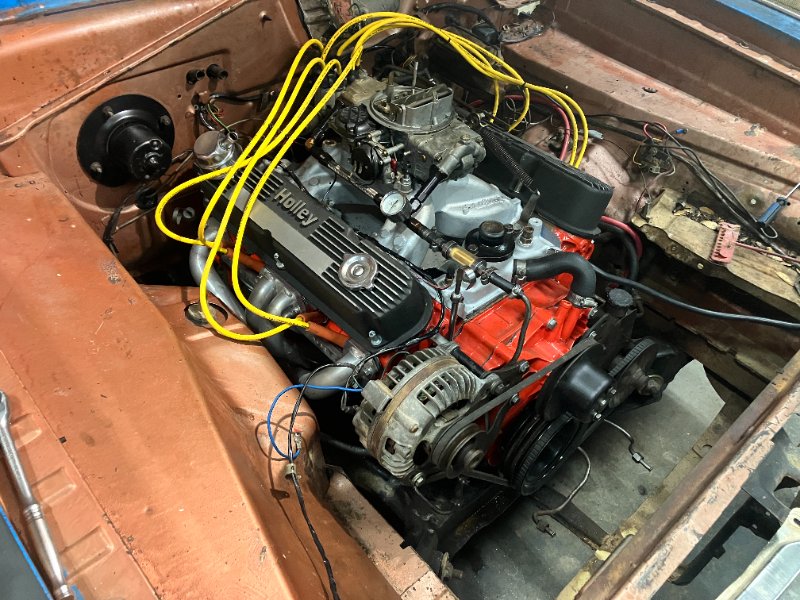
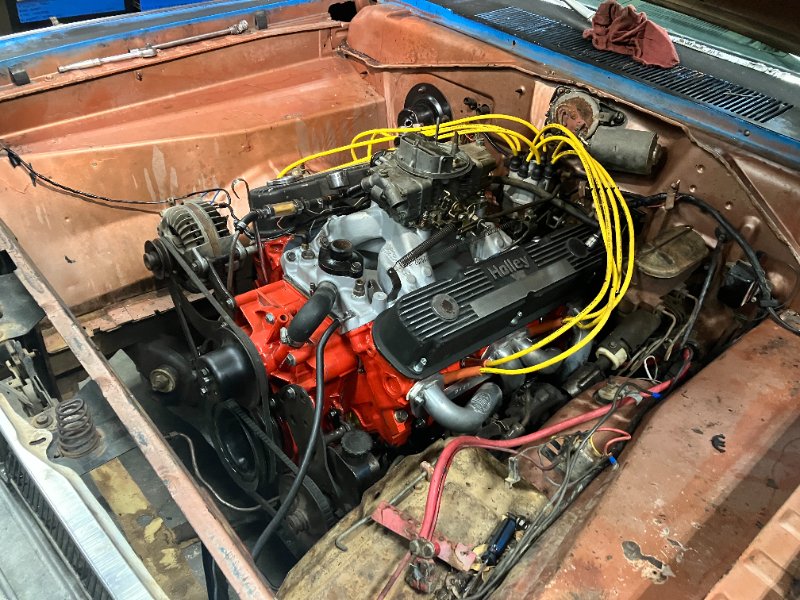
360 C25.JPG


360 C26.JPG
 
Ok, just a question for the uninitiated...

Doesn't more lift inherently result in slightly more duration for a given base circle?

I get faster ramps but comparing old to old (slower ramps), or modern to modern (faster ramps), doesn't a measurable amount of duration come along for the ride as the lift increases? My ASSumption is the higher lift will require the ramps to widen slightly to accommodate the additional lift.

??
I've wondered along the same lines the difference 1.5 vs 1.6 vs 1.7 rockers make with everything else on a given engine being the same. Vs a cam swap
 
only way to know is to experment
wish i had time,its a lot of work to find out what you like the best
like rusty said mopar did it for you ,but you need to build your car how you want to drive it
 
duration will impact where the peak power/torque is. the more duration the higher the torque peak RPM. the higher the torque peak (since HP is a function of torque@ RPM), the more horsepower you can make.

Lift will impact overall power potential. the more lift, the more area under the curve at higher flow levels, so the more air and fuel can be crammed in for a given duration....to a point, at least. no reason to use a .6" lift cam when your head's peak flow is at .450"

I like to evaluate 3 data points when looking at a cam lobe. advertised, .050, and .2" lobe lift durations. you need those 3 points to understand the whole story on how aggressive a cam really is. you want to maximize the .2" duration, since you get more flow at higher lifts...advertised will give you an indication of overlap (when no pressure can build in the cylinder), .050 will give you an indication of duration when any actual flow happens, and .2" give you an indication of duration when real meaningful flow for power production happens. comparing the rate of lift between .050 and .2 will also give you an indication of the aggressiveness of the cam.

for example, in my old 5th ave, I had a 360 similar to your first one....it was a stock long block '78, but with an edelbrock air gap, 600 eddy carb, hedman headers, and a comp XE262 (262 adv, 218@.050, . ran pretty damn good, I'd estimate it was an honest 330 HP. allowed my 5th avenue with a 42RH and 3.55's to keep pace with a 2005ish Chrysler 300C with a 5.7. if you look here, https://images.carid.com/comp-cams/items/pdf/comp-cams-product-catalog.pdf on page 14, you can see that the lobe has 128 degrees duration at .2" lift.

I replaced that engine with the stock '85 roller cam 318 shortblock, Magnum heads, and the same induction and exhaust. I had the cam reground by Bullet Cams, and used their HR259/316 lobe in the intake 259(adv) 208(.050) 127(.200) 0.3160 lobe lift, (.506 valve lift with magnum rockers). that engine actually pulled as hard or harder than the old 360, even though it was 42 CID smaller. also got 5mpg better on highway cruise.

That engine had a bit more compression (measured around 9:1 as I used the thin mopar gaskets available at the time), but the heads flowed about 10% better, and the camshaft, even with the 10 degrees shorter .050 duration had as much or more area under the lift curve, due to the same .200" (which if you compare the ramp if you use .050 and .2 as data points, the "smaller" reground roller actually had MORE duration at .21, .22, .23, .24, .25 etc lift than the "bigger" flat tappet).
 
The Comparison between flat tappet and roller cams is another conversation altogether but yes a roller cam has more duration mid lift but the flat tappet comes of the seat faster improving low lift flow.

With anything related to timing events in the camshaft there are trade offs when you start moving numbers around. But if you’re using camshafts with shorter lift to fit stock heads or aftermarket heads that only allow 5.60 lifts because of the spring package they come with you can play with the duration and center line and move the power curve up or down the rpm range making the most power possible.
 
Most of the best engines now have verible lift and timing
On intake and exhaust
A lot of them will run different cold start timing to get the cat hot so they don't need an air pump
And run low lift at low rpms for more complete cylinder combustion (emissions and fuel economy)...and higher lift for more higher rpm hp...
So knowing what you want and at what rpm goes a long way to choosing the right cam
 
Most of the best engines now have verible lift and timing
On intake and exhaust
A lot of them will run different cold start timing to get the cat hot so they don't need an air pump
And run low lift at low rpms for more complete cylinder combustion (emissions and fuel economy)...and higher lift for more higher rpm hp...
So knowing what you want and at what rpm goes a long way to choosing the right cam
Any of our old engines with hydraulic lifters also have variable lift and duration. Not by much, but they do. That's why I don't like hydraulics.
 
This dude hauls *** from idle to the high end. Power is up at every point which makes me wonder how bad the valve springs are on the other engine. The '76 engine flattened out as rpms climbed up. It was like it accelerated great but then felt like the axle gearing went from a 4.10 to a 2.45.
 
Last edited:
This dude hauls *** from idle to the high end. Power is up ate every point which makes me wonder how bad the valve springs are on the other engine. The '76 engine flattened out as rpms climbed up. It was like it accelerated great but then felt like the axle gearing went from a 4.10 to a 2.45.

I'll bet a large part of that improvement was switching from manifolds to headers.
 
I'm sure there's lots of good info in this thread, but I've only read Greg's first post (looking forward to the rest!)
I have a hypothetical
Using a typical 230 at .050, .480 lift white box cam as a baseline, which mod do you think will make more horsepower?
230 at.050, .530 lift.... or...
250 at .050, .480 lift.
I think I'd bet on the 250 to give quite a bit more top end power....
...and the .530 to give more usable, drivable torque
So, depending on intended use, which would you want?
Street car, I'll take the short duration/big lift cam every time.
Bracket racer (1/8 mile) I'd shoot for the duration I want, and look for as much lift as I could get.
 
I don’t know enough to give a good answer. That is why I asked here.
 
I'm sure there's lots of good info in this thread, but I've only read Greg's first post (looking forward to the rest!)
I have a hypothetical
Using a typical 230 at .050, .480 lift white box cam as a baseline, which mod do you think will make more horsepower?
230 at.050, .530 lift.... or...
250 at .050, .480 lift.
I think I'd bet on the 250 to give quite a bit more top end power....
...and the .530 to give more usable, drivable torque
So, depending on intended use, which would you want?
Street car, I'll take the short duration/big lift cam every time.
Bracket racer (1/8 mile) I'd shoot for the duration I want, and look for as much lift as I could get.
Most stock heads stall out a tic before .500 lift. IF we're talkin about stock heads.
 

Most stock heads stall out a tic before .500 lift. IF we're talkin about stock heads.

So the answer is 250@.050 and .530 :)

IMO, always lift past peak flow a little if possible, Valve doesn't stay at peak lift long enough to access the flow rates there. Peak accessible is usually a bit lower .030-.050 on the flow sheet
 
-
Back
Top Bottom
















