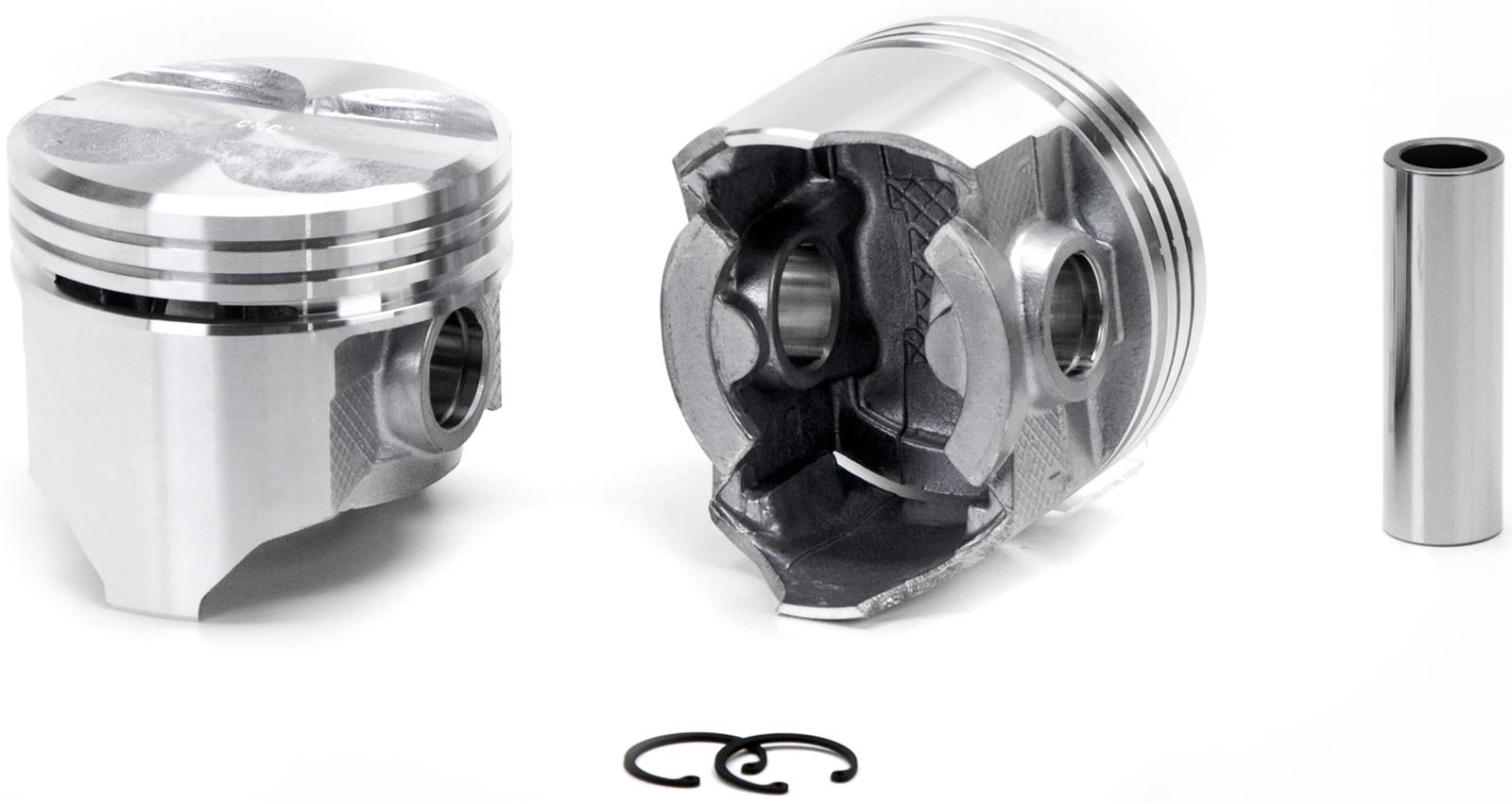
If you want accurate numbers CC the piston & the head.... Take the guess work out of the equation...
The heads I have here were checked last Spring and I did get 72 ccs.
Like with other stuff that I’m unfamiliar with, I’m just using common sense on this. I set the piston to TDC and see that here is plenty of volume in the valve reliefs. I put approximately 23 ccs of rubbing alcohol in the reliefs to essentially make the pistons flat across them. I took the 23 cc number and entered it in the ratio calculator. It still seems that by using this…
With Vaseline on the deck to seal the edges…
With the vent hole blocked, it filled the crevices of the piston and was ready to come up out of the fill hole. I don’t see how the engine sitting out of level would matter if the plexiglass was sealed and didn’t leak. If I’m wrong, I don’t mind being told why on this. I’d rather learn that to keep doing it wrong.
Stepping back, here are the only marks on these pistons:
Just the F. That is it.
I put this small torpedo level on the deck and checked. The piston is not above deck.
I used a dial indicator to verify that I was at TDC.
Yes, I rotated the crank to get the highest reading on the gauge. Once it was correct, I got this:
Yeah… .004 below deck. Those reliefs are huge, man.
My measuring method may not be what is commonly used but it is what made sense to me.
Wouldn’t the
downfill method only be needed with pistons that really do sit above deck?
Shouldn’t the method I used still work?