RPM drop and electric fans!

-

FDNY340

Well-Known Member
Joined
Nov 24, 2015
Messages
222
Reaction score
76
Location
NY
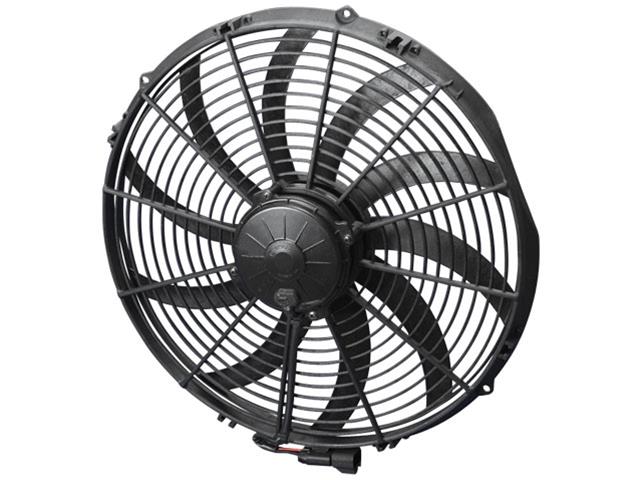
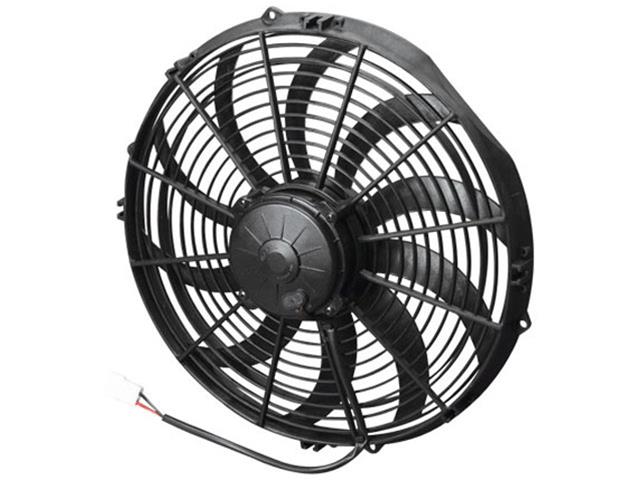
Running 2 SPAL electric fans on my 340 and lose 400 RPM when they turn on. At cruise not an issue but at idle its annoying! First... is it typical?? Second, how can you mitigate it???
They are wired with relays and on individual circuits. They recommend 20 Amp fuses. Running a Jones Racing alternator 70 Amp wth 1 Optima yellow in the trunk.
 
Sounds like you have an amp draw. Take a multimeter and check at battery when they turn on and off. Might have to upgrade or rewire the system to prevent the draw
 
You need a control which applies the power to the fans in a couple stages. Electric items draw twice as much amperage when they start up bs what they require when they are running.
 

Those fans draw less than 1hp. No way they are dragging down the engine by 400 rpm. I would think something is up with your ignition system.
 
70 amps but what does it put out at idle? Are the fans drawing more than being put out? The alternator may be dragging the idle down although 400 rpms seems like a lot.
 
70 amps but what does it put out at idle? Are the fans drawing more than being put out? The alternator may be dragging the idle down although 400 rpms seems like a lot.
Sorta where I was goin. What wiring does the car have? If it's the original charge harness, then there you go.
 
70 amps but what does it put out at idle? Are the fans drawing more than being put out? The alternator may be dragging the idle down although 400 rpms seems like a lot.
That's what I was thinking. I gotta check to see what it puts out at idle.
 
Possibly put in a new battery with some reserve in it.

Kind of sounds like your fully charged (used) battery can't hold the needed 13 volts, so as soon as the fans kick on the "Fields" in the alternator get energized to keep the battery topped up.

This is what is dragging down your engine rpm, when the alternator goes into charging mode. Like when your AC compressor gets engaged to pump the freon.

Not so much the fans turning on, but the alternator turning on to recharge the 12 volt system.


☆☆☆☆☆
 
Possibly put in a new battery with some reserve in it.

Kind of sounds like your fully charged (used) battery can't hold the needed 13 volts, so as soon as the fans kick on the "Fields" in the alternator get energized to keep the battery topped up.

This is what is dragging down your engine rpm, when the alternator goes into charging mode. Like when your AC compressor gets engaged to pump the freon.

Not so much the fans turning on, but the alternator turning on to recharge the 12 volt system.


☆☆☆☆☆
Got a 1 year old Yellow Optima battery that's always on a tender. Would a second battery help?
 
I used to work in a Union 76 Service Station as a young man.

We had a battery tester that would hook up solid to the positive and negative posts, then you turn the big dial and put one heck of a heavy load on the battery to test it. It was pretty obvious when the battery could not cut it and failed the load test.

Load test your battery.

Maybe even go back to a normal new battery. Those high fangled aftermarket batteries are not what they are cracked up to be. Just another way to repackage a battery and make more money for them. Like a lot of new stuff > quality out the window.


☆☆☆☆☆
 
Running 2 SPAL electric fans on my 340 and lose 400 RPM when they turn on. At cruise not an issue but at idle its annoying! First... is it typical?? Second, how can you mitigate it???
They are wired with relays and on individual circuits. They recommend 20 Amp fuses. Running a Jones Racing alternator 70 Amp wth 1 Optima yellow in the trunk.

Your engine produces little power at idle. The fans are clearly making the alternator work hard creating a drag on the engine.
This SPAL shows 20 amps at unknown volts, probably something between 12 and 15 but you'll have to look that up.
This one 19.5 amps, also at unknown volts.
And you say you've got two fans. So when they turn on they could be trying to draw 39 amps.
We can be almost certain that a '70 amp' alternator will produce that 70 amps only at 1500 or 2000 engine rpm or higher.
That alternator is also running the ignition, any fuel pumps, and recharging the battery.
Battery recharging is a huge variable. It could be sucking 20 or 25 amps or it could be drawing none.

Kind of sounds like your fully charged (used) battery can't hold the needed 13 volts, so as soon as the fans kick on the "Fields" in the alternator get energized to keep the battery topped up.

This is what is dragging down your engine rpm, when the alternator goes into charging mode. Like when your AC compressor gets engaged to pump the freon.

Not so much the fans turning on, but the alternator turning on to recharge the 12 volt system.

Not quite George. The system voltage is regulated by the voltage regulator and does not, or should not, change after starting.

The battery gets charged at whatever voltage the alternator is regulated at. The car system runs around 14.2 Volts. A "12 v" battery will be around 12.7 volts when fully charged. Fully charged it will draw less than 0.1 amps when the alternator is supplying the system power. When the battery is low it draws more current. The more its been discharged the more current it will draw. For systems with ammeters, thats why they swing toward 20 amps charge after starting, then gradually move to zero. System voltage doesn't change, current drawn by the battery changes.
 
Last edited:
Thank you Mattax. Would a second battery help? I'm leaning toward it not helping much if any. Other option maybe stagger the temp range on the fans with one lower and one higher start up. Thoughts??? And thank you for the response.
 
insufficient output from alternator draggin things down is my guess.

Get a slope chart for the alternator. You need at least 50 amps at idle to keep up when the fans turn on

Part of the reason many run big amp, 150-200, with a bunch of accessories. You don't need 150 all the time or any time, the low RPM output is high enough to run things at idle. You have 70 max, it's not likely starting out anywhere close to that at low RPM. As it spins up, output increases.
 
Last edited:
Would a second battery help?
Maybe. Depends on whether the issue is drawing down the battery with the engine off, or whether there is too much load with the engine running.
Other option maybe stagger the temp range on the fans with one lower and one higher start up.
Might help. But presumably the fans come on when needed, or maybe a little below. I assume this doesn't have some sort of fancy predictive system like sometimes used in HVAC.

I think you can go about this two ways. One is to add up on paper all of the power needs. Then, like Rob just posted, get power output graphs or the info for your alternator. What you want is power at X several rpms (it may be in alternator rpms and you'll have to do the conversion to engine rpm). They might have it in Watts, but more typically it will be amps at some voltage. Then you'll know if all of the power needs at idle can be met by the alternator. All but the battery, that is. The battery recharging after startup should be only temporary, but if the alternator can be able to provide 10 or 15 amps that s probably all the battery can safely handle anyway.

The other approach is to measure the actual current draw of the items and the alternator output after starting etc. These days many multimeters will accept a clamp type ammeter. Sometimes on e-bay an old fashion deflecting type ammeter can be found. They're really only good for higher current cables.
[FOR SALE] - MT-1112 Inductive ammeter set
I have those but generally I use Innova's Current Clamp 3347 with their Automotive Multimeter 334A.

Here's another version
[FOR SALE] - MAC TOOLS EM110 inductive pick up amp clamp

 
Last edited:
Maybe. Depends on whether the issue is drawing down the battery with the engine off, or whether there is too much load with the engine running.

Might help. But presumably the fans come on when needed, or maybe a little below. I assume this doesn't have some sort of fancy predictive system like sometimes used in HVAC.

I think you can go about this two ways. One is to add up on paper all of the power needs. Then, like Rob just posted, get power output graphs or the info for your alternator. What you want is power at X several rpms (it may be in alternator rpms and you'll have to do the conversion to engine rpm). They might have it in Watts, but more typically it will be amps at some voltage. Then you'll know if all of the power needs at idle can be met by the alternator. All but the battery, that is. The battery recharging after startup should be only temporary, but if the alternator can be able to provide 10 or 15 amps that s probably all the battery can safely handle anyway.

The other approach is to measure the actual current draw of the items and the alternator output after starting etc. These days many multimeters will accept a clamp type ammeter. Sometimes on e-bay an old fashion deflecting type ammeter can be found. They're really only good for higher current cables.
[FOR SALE] - MT-1112 Inductive ammeter set
I have those but generally I use Innova's Current Clamp 3347 with their Automotive Multimeter 334A.

Here's another version
[FOR SALE] - MAC TOOLS EM110 inductive pick up amp clamp

Not quite Mattax...


☆☆☆☆☆
 
The alt also loads the engine. No free lunches here. So going to a larger alt might make the rpm drop worse. Use a flex fan!!!!
 
@Mattax and @crackedback are right on.

What model SPAL fans are you running?

Assuming that those fans are powerful enough to handle the cooling duties of your engine, they could easily be pulling 30 amps between them even after the initial big amperage hit to start them. Your 70A alternator might not even be putting out 20A at idle- you see the problem.

A second battery is just a band aid, it won't solve the issue. What you need is an alternator that puts out more amps at idle than what your fans AND other accessories put out.

If you have a brand new American Autowire wire harness, you're probably already running a single wire alternator (standard config for AA) and your system can handle a lot more amperage. I have a full AA harness, run a dual electric fan set up (Ford Contour) and use a 180 amp alternator. Like crackedback said, I don't need 180 amps, probably ever. But at idle that alternator is putting out enough amps to run my fans without discharging the battery.

And if your battery is in the trunk (mine is too), if you're pulling from the battery to keep the car running when the fans are on you have to pull a significant amperage from the battery though all the wire to the front of the car, which loses a ton of efficiency. Charging the battery is a low amp draw, so that's not a big deal with the battery in the trunk. Cranking the starter pulls a ton, but, that's a short period of time. The fans running is a large draw for a long time, and that trunk mounted battery, even with large cable, is going to take some work to pull amperage from.
 
-
Back
Top Bottom