What affects power more in a camshaft....high lift or longer duration?

-

Kern Dog

Build your car to handle.
FABO Gold Member
Joined
May 23, 2010
Messages
14,831
Reaction score
42,708
Location
Granite Bay CA
Here is why I ask.....
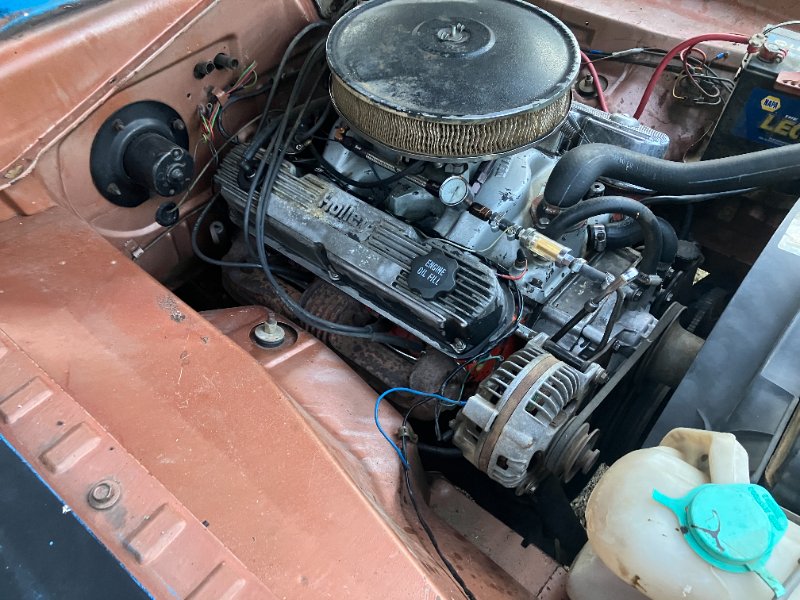
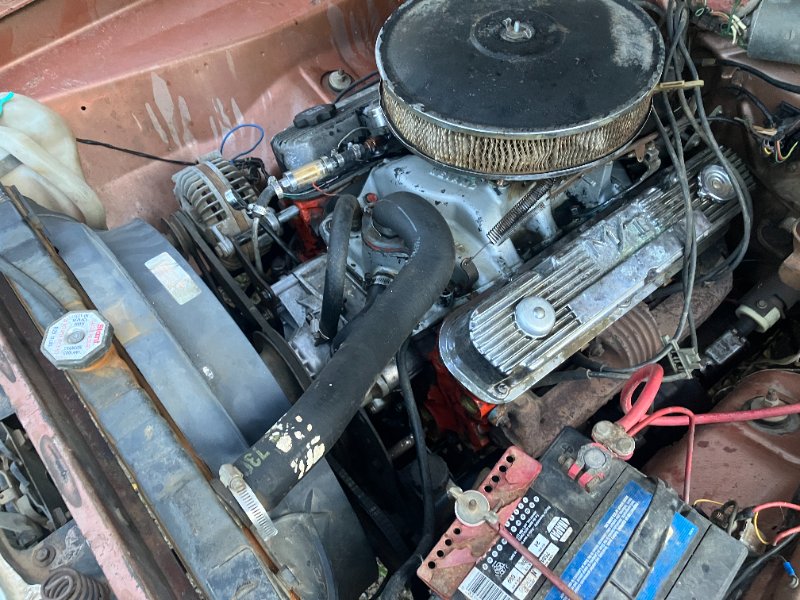
The '76 360 of mine has been in my 67 Dart since 2006:
IMG_3566.JPG


IMG_3567.JPG


This is a standard bore mill with #308 heads and Fel Pro gaskets, maybe 8 to 1 compression. It has a MP 280/474 hydraulic cam, 1.5 rocker arms, a Weiand intake and Holley 750.
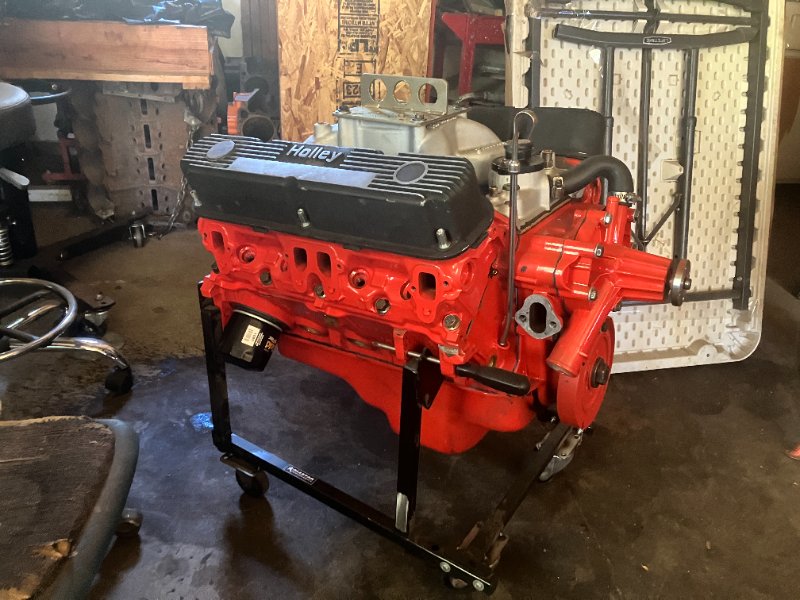
A friend wanted to unload a 360 he had....1990 roller cam engine with 2 blown head gaskets. I went through it...new pistons, rings and gaskets but I retained the cam since it is a Hughes with 218/228 degrees of duration and .544 lift. It has an Air Gap intake and will use the same Holley carburetor but with 1 5/8" Dougs headers.
IMG_3475.JPG


Comparing the two, the '76 has 1.5 points LESS compression, the same style heads, a better intake and exhaust, more duration but less lift.
Is it fair to say that higher lift only helps if the heads can flow enough air to take advantage of it?
The old style Mopar Performance cams always seemed to be long on duration and short on lift compared to other brands. Conversely, the Hughes cams are the opposite.
What do you think the logic was behind each principle?
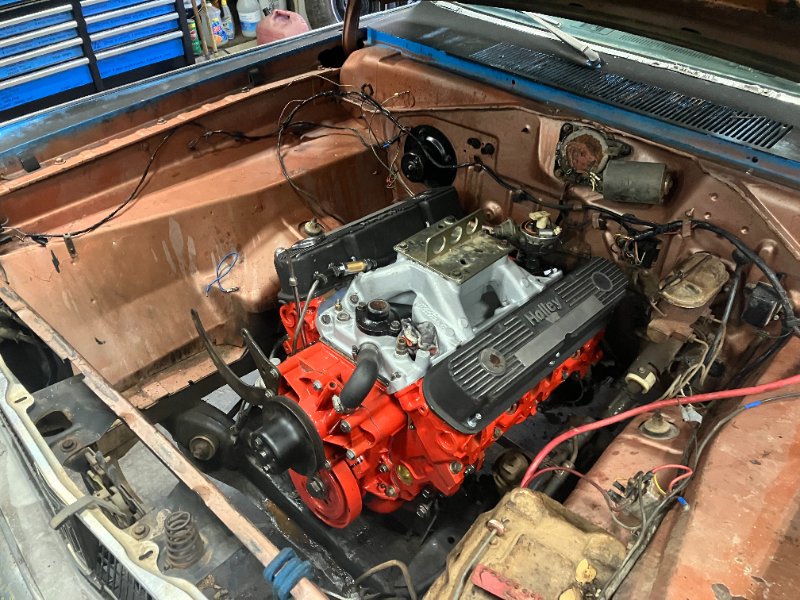
The '90 engine is in and I'm still finishing up with it but I'm curious about how the two will compare in performance. I'd expect the fresher, higher compression engine with a better intake and exhaust system to run strong but the difference in duration and lift has me unsure.
IMG_3633.JPG
 
roller motor is gonna stomp guts on the old mill.

The '76 360 This is a standard bore mill with #308 heads and Fel Pro gaskets, maybe 8 to 1 compression. It has a MP 280/474 hydraulic cam, 1.5 rocker arms, a Weiand intake and Holley 750.
A friend wanted to unload a 360 he had....1990 roller cam engine with 2 blown head gaskets. I went through it...new pistons, rings and gaskets but I retained the cam since it is a Hughes with 218/228 degrees of duration and .544 lift. It has an Air Gap intake and will use the same Holley carburetor but with 1 5/8" Dougs headers.

Comparing the two, the '76 has 1.5 points LESS compression, the same style heads, a better intake and exhaust, more duration but less lift.

the hughes cam is actually 218/228 @ .050 while the advertised duration is more like 268/278, so it got quite a bit more lift than the 280/474 MP unit.

the air gap is also a better manifold. if it gives up anything to the wieand, it might be 5~7 hp/tq under 3K

[edited for clarity]
 
Last edited:
The info I've read is that the 280/474 is rated at 238 degrees @ .050.

1768897518179.png


The Hughes cam I have:

Hughes.png
 
Higher lift isn't hugely advantageous if the head doesn't flow well at the additional extension. But, I think there is something to be said for having lift above peak flow though. Air doesn't move instantaneously so the additional lift probably helps the system flow better by carrying the valve above the peak flow point.

The old style Mopar Performance cams always seemed to be long on duration and short on lift compared to other brands. Conversely, the Hughes cams are the opposite.
My impression is that the low lift long duration combo of the Mopar cams was to accommodate the stock iron heads which were lift limited without additional machine work/parts. They could be made to handle high lift, but it took machining time and parts which equals $$$. The easier/cheaper way to increase airflow through the head and thus performance, was with longer duration. It's a compromise solution, but they probably sold a lot more cams that way.
 
It depends on what you're doing. What the rules are if you're racing. Ask any stock eliminator guy and they'll say duration is king. It's important for what they do, because they have lift limits. Much the same with some of the dirt track classes. So the best answer is "it depends".
 
Ok, just a question for the uninitiated...

Doesn't more lift inherently result in slightly more duration for a given base circle?

I get faster ramps but comparing old to old (slower ramps), or modern to modern (faster ramps), doesn't a measurable amount of duration come along for the ride as the lift increases? My ASSumption is the higher lift will require the ramps to widen slightly to accommodate the additional lift.

??
 
It depends on what you're doing. What the rules are if you're racing. Ask any stock eliminator guy and they'll say duration is king. It's important for what they do, because they have lift limits. Much the same with some of the dirt track classes. So the best answer is "it depends".
1768925165854.png
 
Ok, just a question for the uninitiated...

Doesn't more lift inherently result in slightly more duration for a given base circle?

I get faster ramps but comparing old to old (slower ramps), or modern to modern (faster ramps), doesn't a measurable amount of duration come along for the ride as the lift increases? My ASSumption is the higher lift will require the ramps to widen slightly to accommodate the additional lift.

??
All depends on the slope of the ramp I think. A faster ramp should allow more duration and consequently, potential lift. Faster slope widens the width of the curve giving the designer the ability to optimize the lobe profile for duration, lift, or both. A slower ramp is going to limit both lift and duration that can reasonably be obtained for a given lobe. At least in my simplistic brain that's how it works. The faster ramp is also going to demand more consideration for components to control the valve at the higher velocity it sees.
 
All depends on the slope of the ramp I think. A faster ramp should allow more duration and consequently, potential lift. Faster slope widens the width of the curve giving the designer the ability to optimize the lobe profile for duration, lift, or both. A slower ramp is going to limit both lift and duration that can reasonably be obtained for a given lobe. At least in my simplistic brain that's how it works. The faster ramp is also going to demand more consideration for components to control the valve at the higher velocity it sees.
Thanks, in my head, it's reversed (faster vs slower). Just shows how much I don't know about the terminology.

Much appreciated.
 
Here is what I found. Oval track cams have more duration. Creates more torque off the turns and (pulls like a mother F-cker).

High lift cams create more horse power up in higher RPMs but lose bottom end torque for Drag racing using RPMs .

High lift with wide duration solid roller and high compression. That is a mans engine. Those are the cars you don't steer, " You aim them"

scan0002.jpg


spoiler pics 567.jpg
 
There’s more than just lift v duration because it can depend upon head flow and compression ratio. More lift will not necessarily help a head move more air if it already struggles with air flow but duration can. At the same time a duration usually doesn’t help lower compression ratio engines but lift will…
 
The info I've read is that the 280/474 is rated at 238 degrees @ .050.

View attachment 1716501150

The Hughes cam I have:

View attachment 1716501151

The duration at .050 in the first chart is just the number you get by multiplying the advertised duration by .85. Not accurate, not sure why Mopar Performance ever pushed that. The chart below (which I think I might have got off this site) I'm pretty sure has more accurate @.050 numbers:

1768948251672.jpeg
 
Ok, just a question for the uninitiated...

Doesn't more lift inherently result in slightly more duration for a given base circle?

I get faster ramps but comparing old to old (slower ramps), or modern to modern (faster ramps), doesn't a measurable amount of duration come along for the ride as the lift increases? My ASSumption is the higher lift will require the ramps to widen slightly to accommodate the additional lift.

??
Very slightly. I think the change in duration going from 1.5 to 1.6 for example, is under 2 degrees, but yes, it does make a very small difference.
 
Here is what I found. Oval track cams have more duration. Creates more torque off the turns and (pulls like a mother F-cker).

High lift cams create more horse power up in higher RPMs but lose bottom end torque for Drag racing using RPMs .

High lift with wide duration solid roller and high compression. That is a mans engine. Those are the cars you don't steer, " You aim them"

View attachment 1716501265

View attachment 1716501266
That last pic is super cool!
 
The duration at .050 in the first chart is just the number you get by multiplying the advertised duration by .85. Not accurate, not sure why Mopar Performance ever pushed that. The chart below (which I think I might have got off this site) I'm pretty sure has more accurate @.050 numbers:

View attachment 1716501320

That was for small blocks. Here's one for big blocks. Probably from the same source.

1768949214657.jpeg
 
The duration at .050 in the first chart is just the number you get by multiplying the advertised duration by .85. Not accurate, not sure why Mopar Performance ever pushed that. The chart below (which I think I might have got off this site) I'm pretty sure has more accurate @.050 numbers:

View attachment 1716501320
I've come to realize they pushed the 850 figure and didn't use it. They used "somewhere" in between the 777 standard everybody else used and 850. Because when you do the math, none of them math out using 850. I am almost 100% certain they did that for proprietary reasons. They simply did not want people to know their camshaft formula.

To add to that, I never really cared and here's why. In the Mopar engine book, there are recipes for different ET brackets. Wanna run 13? Here's the recipe. Wanna run 10s? Here's that recipe. Guess what? Fifty plus years later, THOSE RECIPES ALL STILL WORK!

Looking at it from that perspective, who gives a FIG what the camshaft specs are? Just pick out an ET bracket recipe, build accordingly and GO RACING! No other manufacturer ever did that.

Yeah, it'd be helpful NOW, since Mopar Performance is pretty much defunct for our old stuff, to know those cam grind formulas, but we don't. I don't think Mopar ever thought about a day when MP might not exist. I wish they had.

The best thing we have now besides the Mopar stuff, if you want close to those is Racer Brown. I'm sure he still has all those grinds filed away and he will whoop you one up real quick.

How old is Jim now? Rest assured he ain't no sprAng chicken. Everybody retires sometime. I don't know if he has family in the business or not. I sure hope so.

All you young guys (Not necessarily who I replied to) can piss ***** and moan about how "archaic" and "dated" those MP cams are and how there are "much better" grinds available now. All those grinds did and still do EXACTLY what Mopar said.

Here's the kicker. Yeah, their ramps are "slower" and "not as modern" as the latest and greatest, but you know what? MY valve train with an "old archaic dated Mopar cam will last longer because it's not being beat to death by what some consider to be "better" lobes.

There's always more than one way of lookin at things.
 

-
Back
Top Bottom